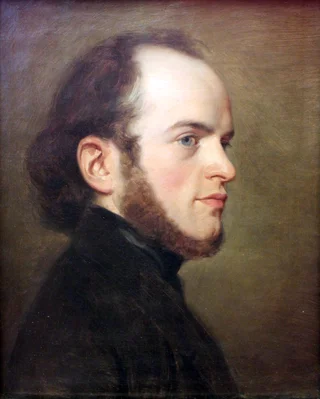
Adolph von Menzel
1815–1905 · Kingdom of Prussia · Realism
The story
Adolph von Menzel built his early fame on the ghost of a king. Self-taught and running the family lithography shop in Berlin, he produced hundreds of illustrations of the life of Frederick the Great, the 18th-century Prussian ruler, and paintings like the Flute Concert, imagining the vanished court by candlelight with startling exactness.
Then in 1872 he did something few painters of his standing would touch. He travelled to an ironworks in Silesia, spent weeks sketching the furnaces, and painted the Iron Rolling Mill, a huge canvas of half-lit workers straining at glowing metal in the steam and noise of heavy industry. It is one of the first serious paintings of the modern factory.
Menzel was tiny, barely five feet tall, awkward in company, and drew compulsively all his life, filling sketchbooks with hands, faces, crumpled sheets, anything in front of him. By the time he died in 1905 he was the most honoured artist in Germany, and the Kaiser himself walked behind his coffin.
More articles
Works
12 works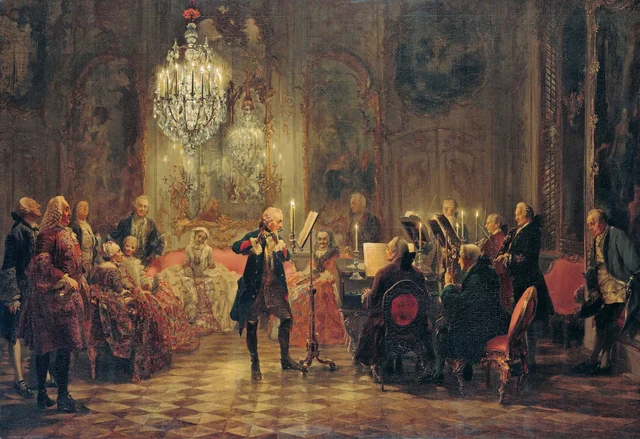 Frederick the Great Playing the Flute at SanssouciAdolph von Menzel, 1852
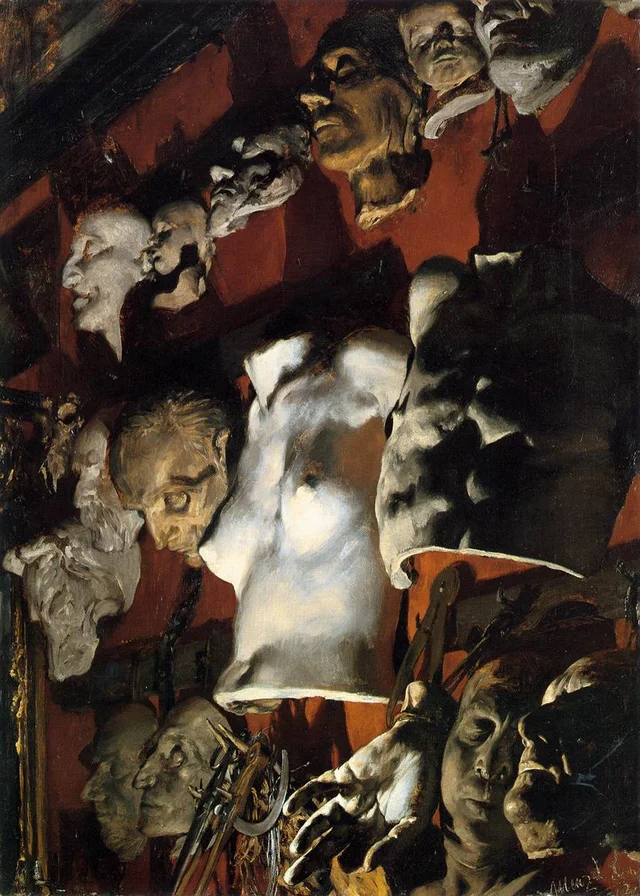 Studio WallAdolph von Menzel, 1872
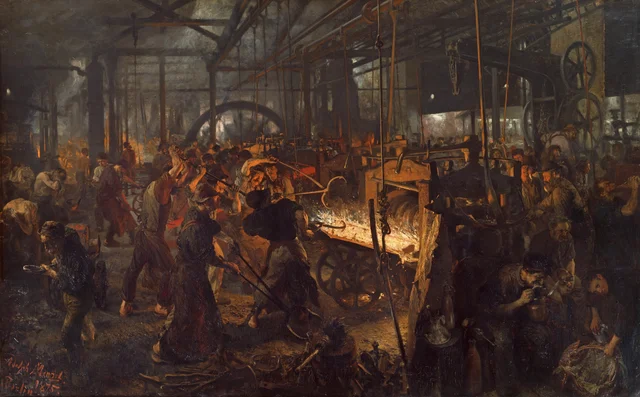 The Iron Rolling MillAdolph von Menzel, 1875
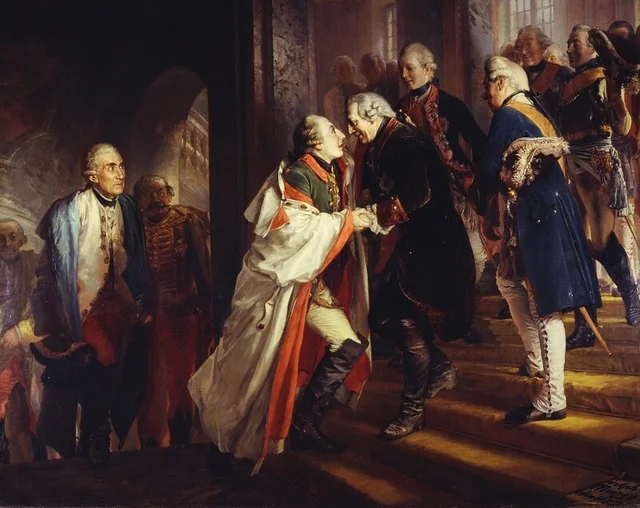 The Meeting of Frederick II and Joseph II in Neisse in 1769Adolph von Menzel, 1857
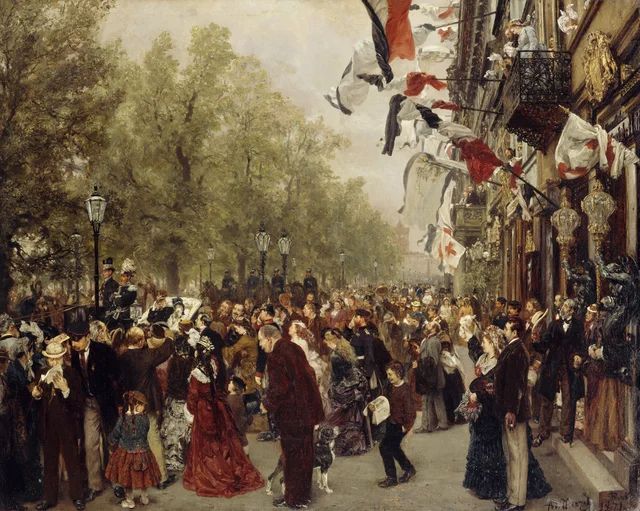 Departure of King Wilhelm I for the Army, July 31, 1870Adolph von Menzel, 1871
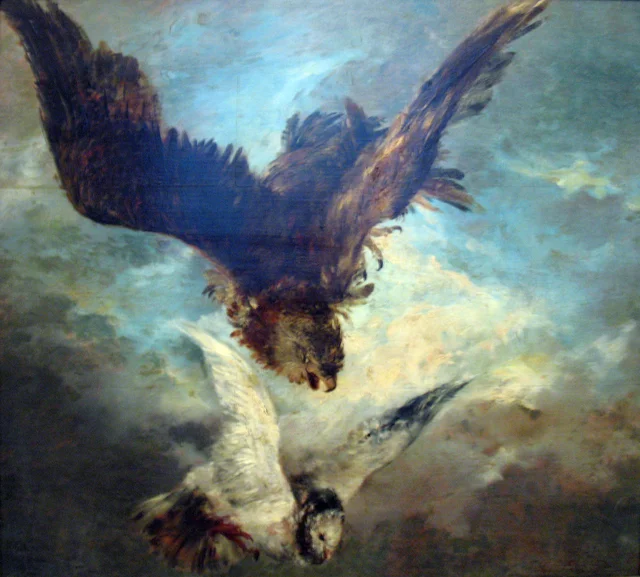 Falcon Attacking a PigeonAdolph von Menzel, 1844
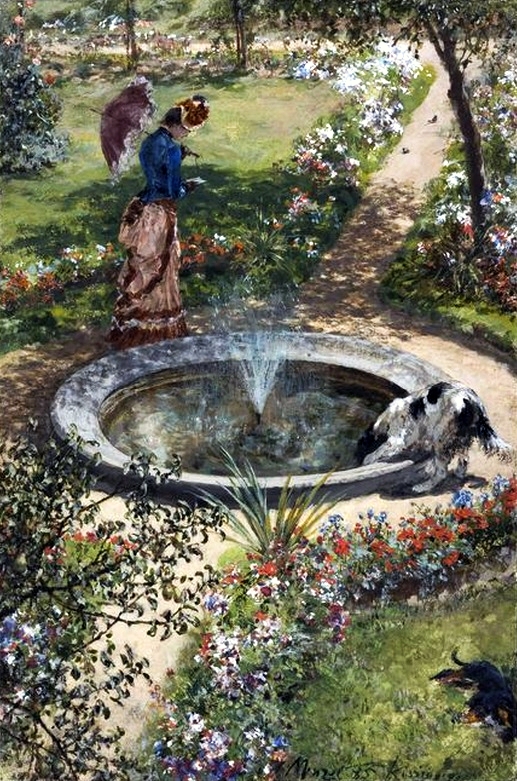 Garden in KissingenAdolph von Menzel, 1885
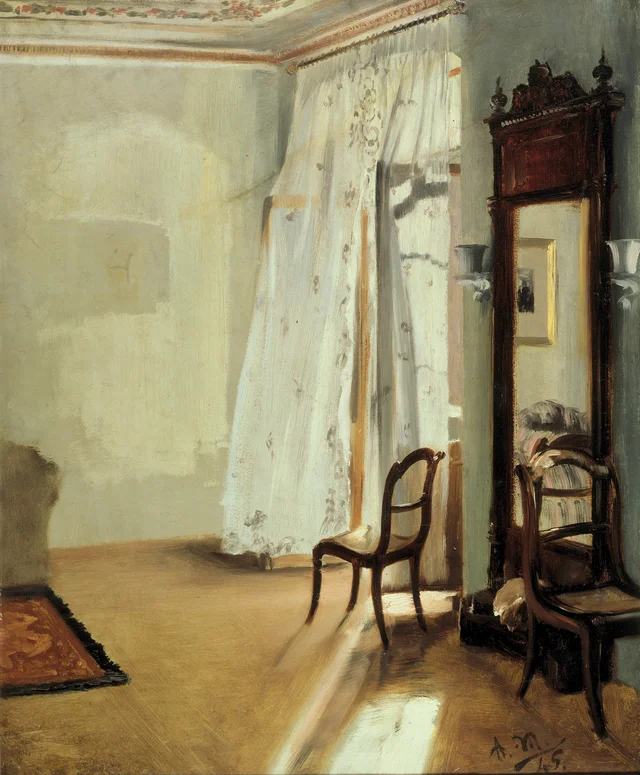 The Balcony RoomAdolph von Menzel, 1845
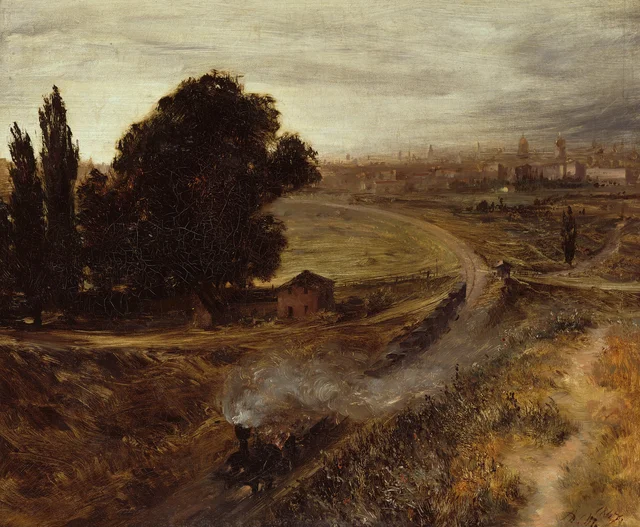 The Berlin-Potsdam RailwayAdolph von Menzel, 1847
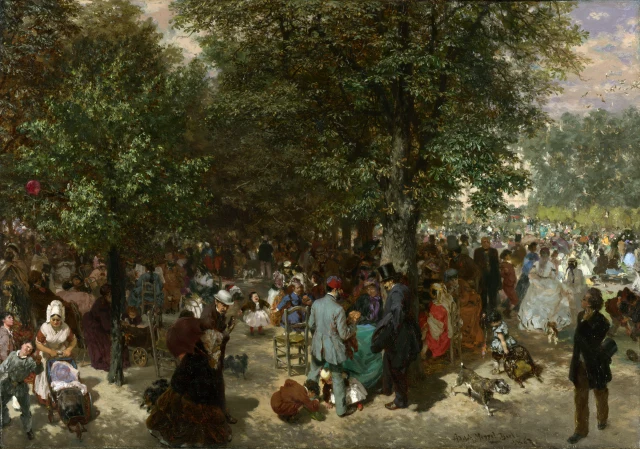 Afternoon in the Tuileries GardensAdolph von Menzel, 1867
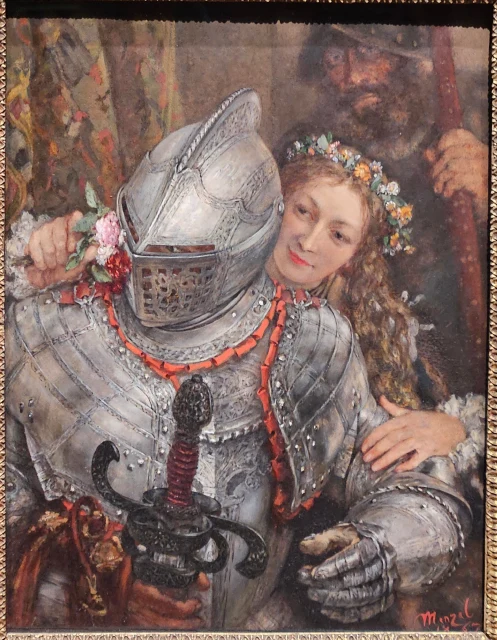 Blind Man's BuffAdolph von Menzel, 1867
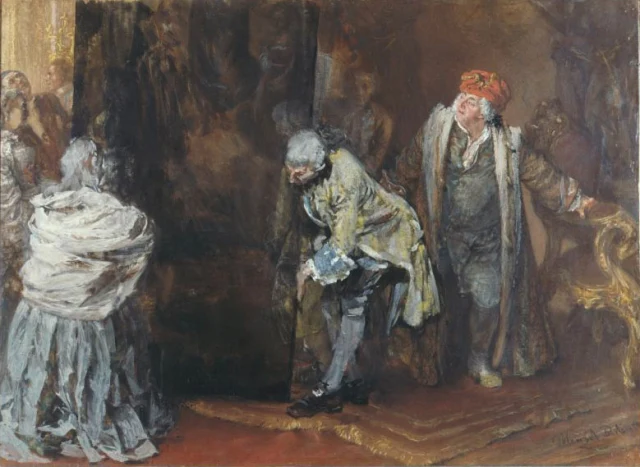 Make Way for the Great Raphael!Adolph von Menzel, 1859