Agesander, Athenodoros and Polydorus of Rhodes
Ancient Greece · Hellenistic art
The story
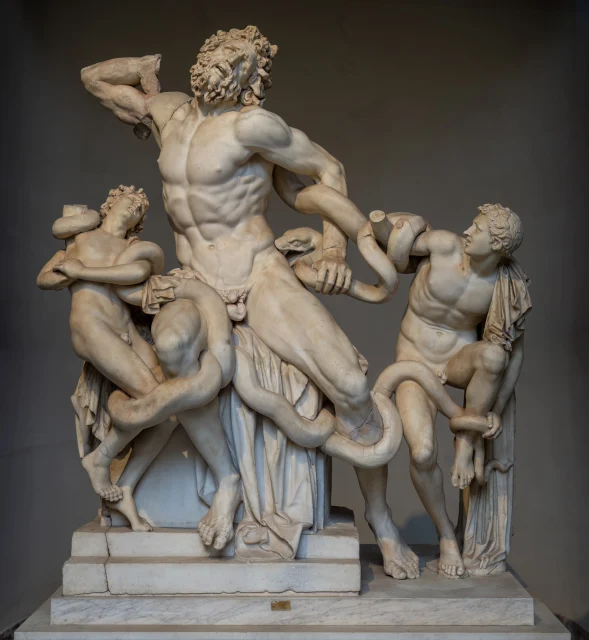
Writing in the 70s AD, the Roman author Pliny the Elder described a marble in the house of Titus, the emperor's son, as a work to be preferred to every painting and every bronze. It showed the Trojan priest Laocoön with his sons and the coiling snakes. Pliny names three sculptors of Rhodes, Hagesandros, Polydoros and Athenodoros, and says they planned it together and carved it from a single block. The group recognised from his words in 1506 is in fact made of several pieces of marble.
In 1957 road builders at Sperlonga, on the coast between Rome and Naples, opened a seaside grotto that the emperor Tiberius had used as a dining room. Among broken marble scenes from the Odyssey was a signature naming Athanodoros son of Hagesandros, Hagesandros son of Paionios and Polydoros son of Polydoros, all Rhodians. Rhodian families often passed names from grandfather to grandson, so whether these are Pliny's three men or their relatives is still argued. No dates survive for any of them.