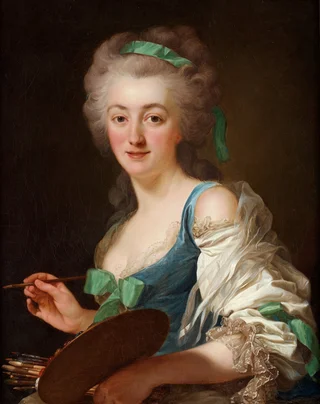
Anne Vallayer-Coster
1744–1818 · France · Rococo, Neoclassicism
The story
In 1770 the Académie Royale in Paris admitted a 25-year-old painter of flowers and fruit, and the critic Denis Diderot, who rarely handed out praise, wrote that if every new member painted at her level the Salon would look transformed. Still life ranked near the bottom of the academy's hierarchy, far below history painting, so a young woman making her name with peaches and bouquets was an unlikely arrival.
Anne Vallayer-Coster turned that specialty into standing. Her flowers drew collectors and fellow artists, and by 1780 she was named painter to Queen Marie Antoinette, who gave her lodgings in the Louvre, the only woman granted them. When she married the lawyer Jean-Pierre-Silvestre Coster the following year, the queen was one of the witnesses who signed the contract.
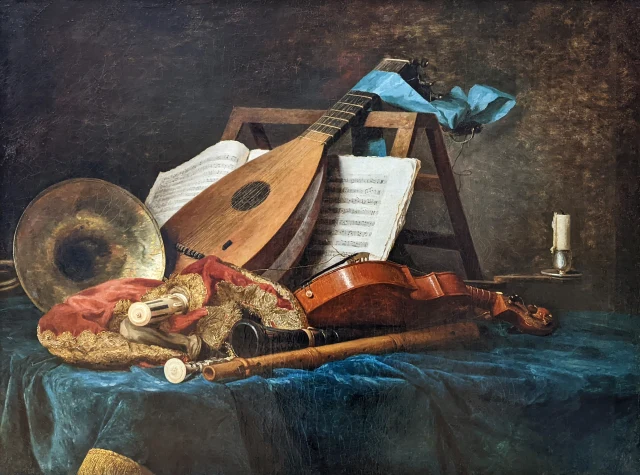
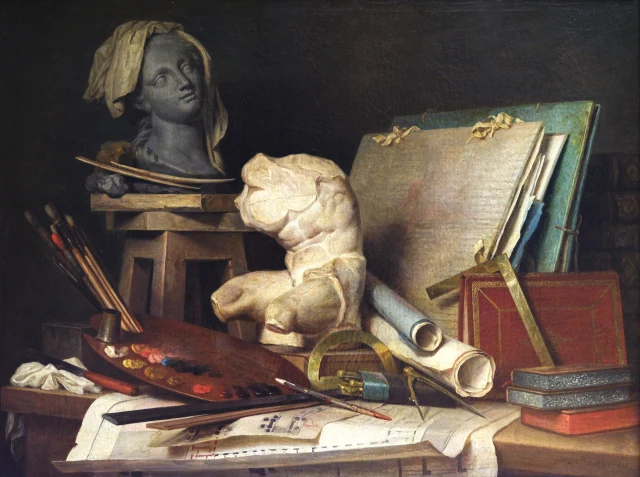
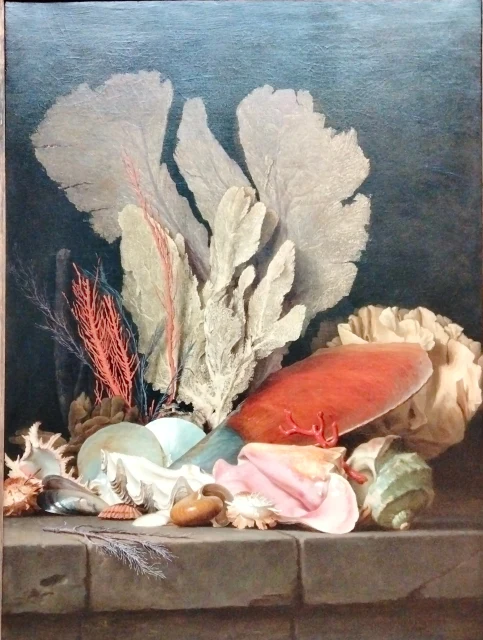
The Revolution ended that world of royal patronage, and her later years never regained its height. What kept her name alive was the work itself: dense still lifes of shells, musical instruments and cut flowers, painted with the precision that had impressed Diderot from the start.