Antoniazzo Romano
Papal States · Early Renaissance, Roman school
The story
While Florence was inventing perspective and Rome filled up with visiting stars, the city produced one major painter of its own, Antoniazzo Romano. From the 1460s he worked for the papal court, and in 1478 he helped found the painters' guild in Rome, the Accademia di San Luca, signing its first statutes.
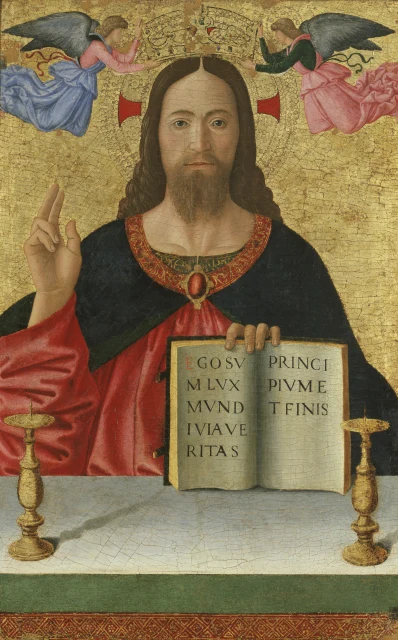
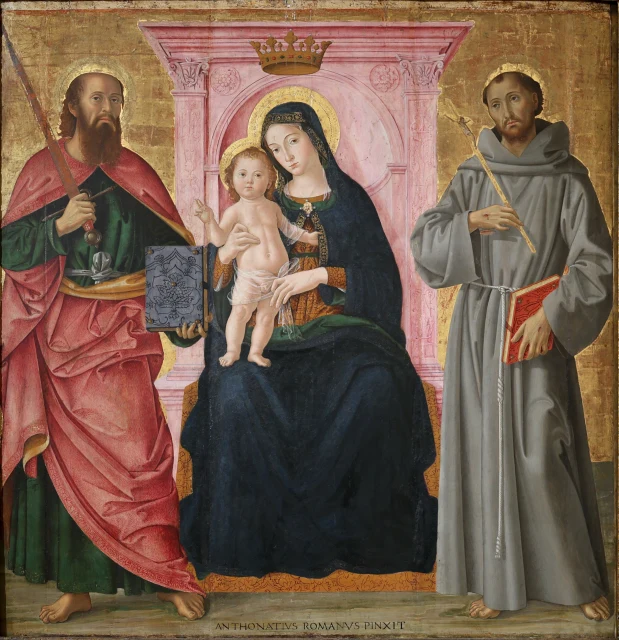
What sets him apart is a deliberate looking-backward. When most Italian painters had abandoned it, Antoniazzo kept using the medieval gold ground, the flat sheet of gold leaf behind a sacred figure, and specialized in repainting old miracle-working images or making new ones with that same archaic glow. Pope Sixtus IV was then promoting the cult of the Virgin, and demand for these devotional panels ran high.
The result is a distinctly Roman blend: Florentine solidity of body and face set against the old golden heaven that Roman worshippers still expected. He ran a busy workshop and painted frescoes and altarpieces across the city and the towns around it. He was active until about 1508. Within a decade the city's grandest commissions would go to newcomers like the young Raphael and Michelangelo.