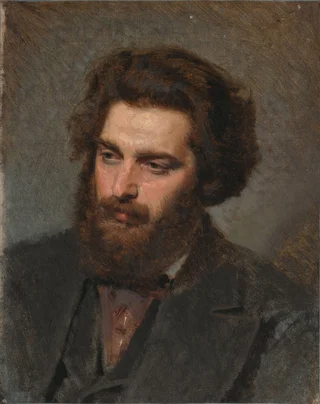
Arkhip Kuindzhi
1841–1910 · Russian Empire · Realism
The story
In 1880, in St Petersburg, Arkhip Kuindzhi did something no Russian painter had done: he exhibited a single picture, alone, in a darkened room. Moonlit Night on the Dnieper hung behind a black curtain, lit by one electric beam aimed straight at it, and the green-gold moon glowing on the river looked so real that visitors peered behind the canvas to find the hidden lamp. The queue ran down the street.
Kuindzhi had come a long way to that room. Born around 1842 in Mariupol, on the Sea of Azov, the son of a poor Greek shoemaker, he was largely self-taught and failed the Academy of Arts entrance more than once before his landscapes of pure, saturated light made him famous almost overnight.
At the height of that fame he stopped exhibiting for nearly 30 years, working in near-seclusion on his light effects. He taught landscape at the Imperial Academy, where his pupils included the painter Nicholas Roerich. Wealthy from a handful of celebrated canvases, he gave most of the money away, buying land for artists and leaving his estate to a society he founded to support them.
Works
8 works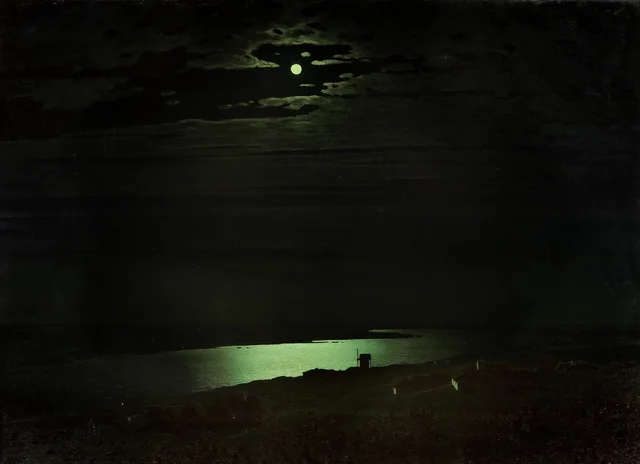 Moonlit Night on the DnieperArkhip Kuindzhi, 1880
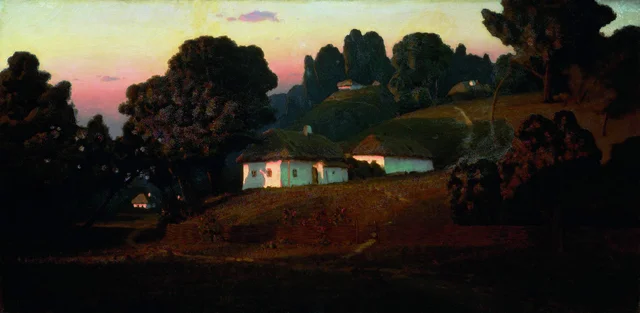 Evening in UkraineArkhip Kuindzhi, 1878
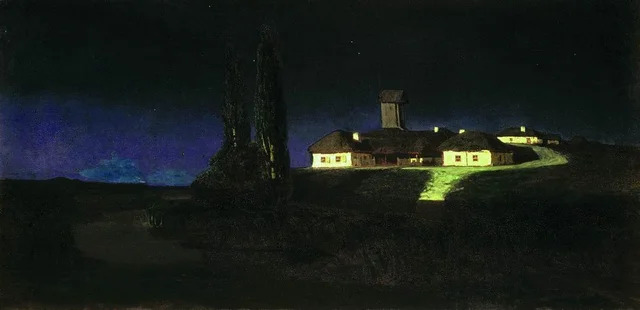 Ukrainian NightArkhip Kuindzhi, 1876
 A Birch GroveArkhip Kuindzhi, 1879
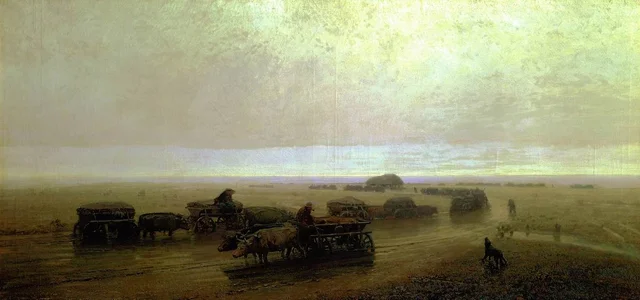 Chumaks path in MariupolArkhip Kuindzhi, 1875
 Lake LadogaArkhip Kuindzhi, 1873
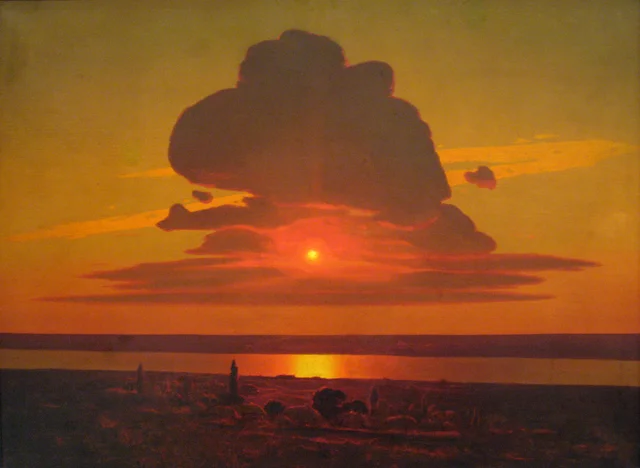 Red Sunset on the DnieperArkhip Kuindzhi, 1900
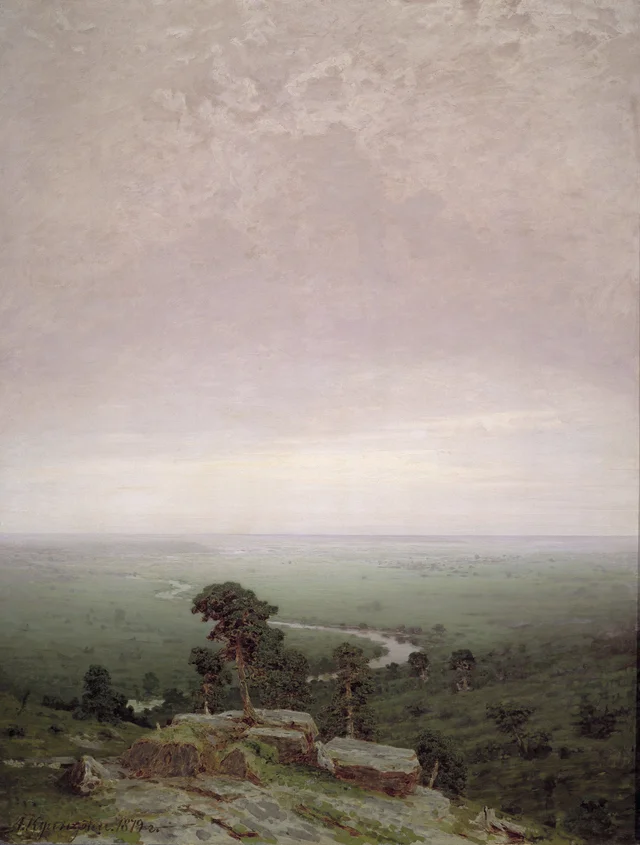 The NorthArkhip Kuindzhi, 1879