Asher Brown Durand
1796–1886 · United States · Hudson River school
The story
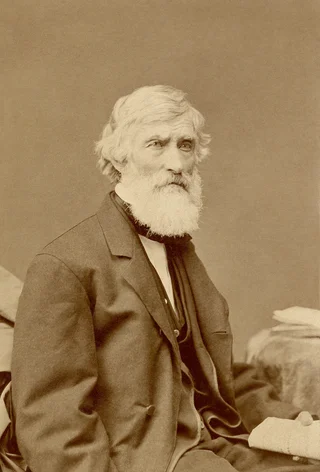
Asher Brown Durand made his first reputation as an engraver, working in metal long before he worked in oil. Trained in New Jersey, he cut the plate for John Trumbull's Declaration of Independence, the image that carried that scene into thousands of American parlours, and he engraved banknotes at a time when a young country badly needed money it could trust.
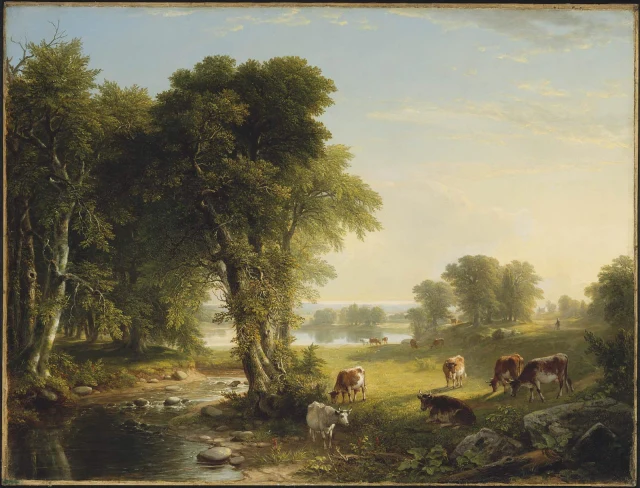
He turned to painting only in his forties, and became a leader of the Hudson River School, the first group of American artists to treat their own wild country as a serious subject. Durand painted the woods of New York State up close: single trees, tangled rocks, real light falling through real forest.
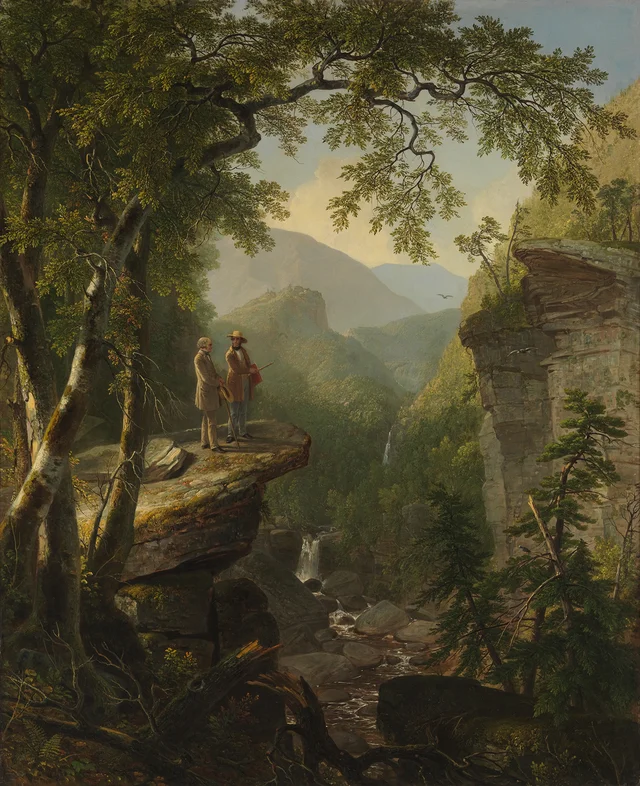
His best-known picture, Kindred Spirits of 1849, was a memorial. The painter Thomas Cole, who had opened up this kind of American landscape, had just died, and Durand set Cole and his friend the poet William Cullen Bryant together on a rocky ledge in the Catskill Mountains, small against the scenery they loved.
The painting hung in the New York Public Library for decades. In 2005 it sold to the founder of a new museum in Arkansas for a reported 35 million dollars, then among the highest prices ever paid for an American painting.