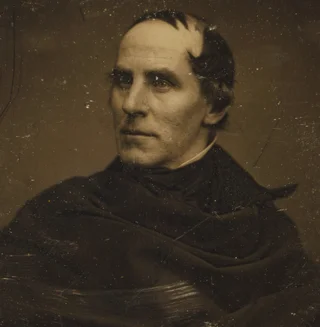
Thomas Cole
1801–1848 · United States · Hudson River school
The story
Thomas Cole taught America to look at its own wilderness. Born in England in 1801 and largely self-taught, he came to the United States as a young man and, on sketching trips up the Hudson River and into the Catskill Mountains, found a subject nobody had made grand art from, the untouched American forest. The painters who followed him became known as the Hudson River School, the first native landscape movement in the country.
Cole was uneasy about the very progress his new country celebrated. In his five-part series The Course of Empire, finished in 1836, he shows the same landscape pass from wilderness to a marble empire and then to ruin, a warning about where ambition leads. His single most famous view, The Oxbow, sets a dark storm over untamed forest against sunlit farmland on the bend of a river, wildness and settlement in one frame.
He settled in the village of Catskill, New York, and kept painting the mountains within sight of his home. He died there in 1848, only 47, just as the wild country he had made famous was beginning to be cut, farmed and crossed by railroads.
More articles
Works
22 works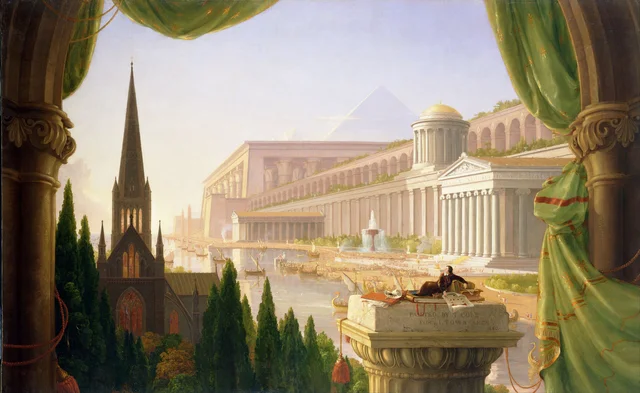 The Architect's DreamThomas Cole, 1840
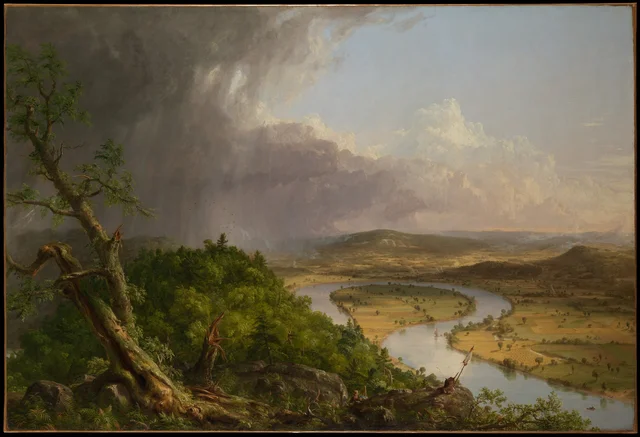 The OxbowThomas Cole, 1836
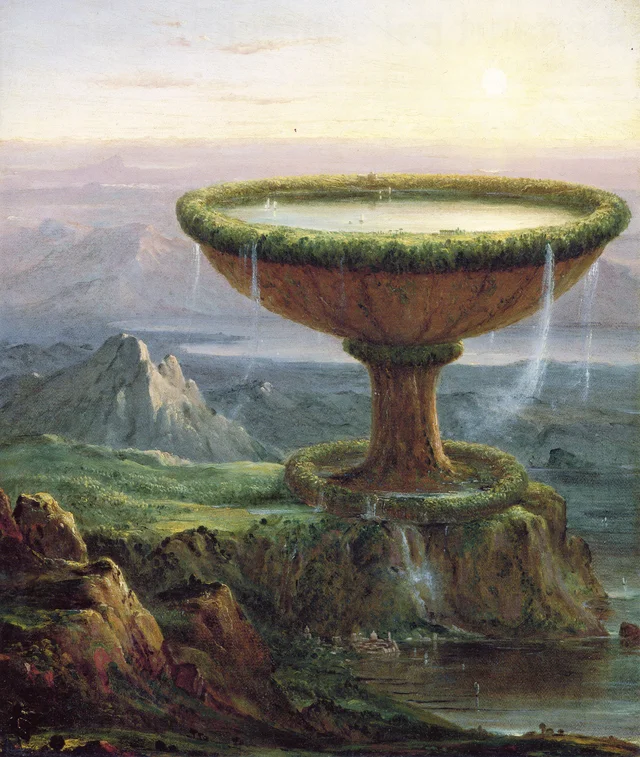 The Titan's GobletThomas Cole, 1833
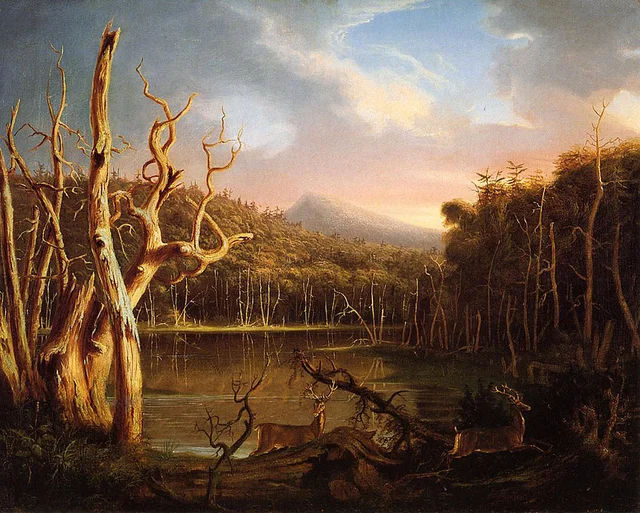 Lake with Dead Trees (Catskill)Thomas Cole, 1825
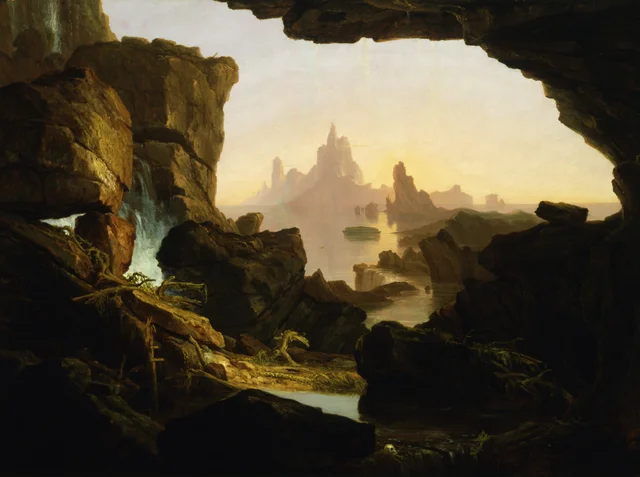 The Subsiding of the Waters of the DelugeThomas Cole, 1829
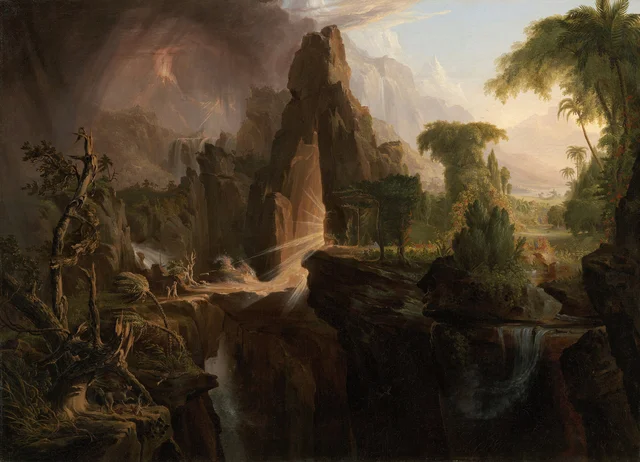 Expulsion from the Garden of EdenThomas Cole, 1828
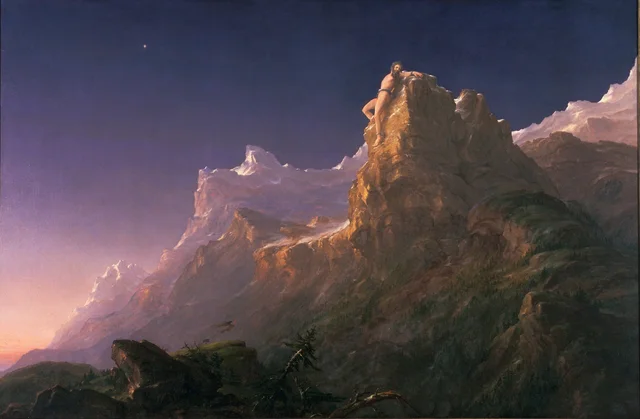 Prometheus BoundThomas Cole, 1847
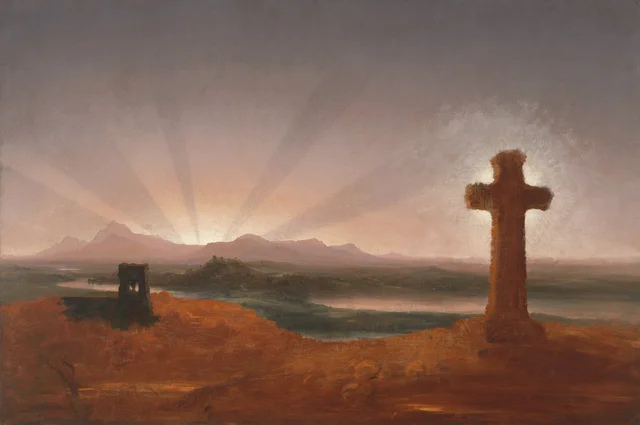 Cross at SunsetThomas Cole, 1848
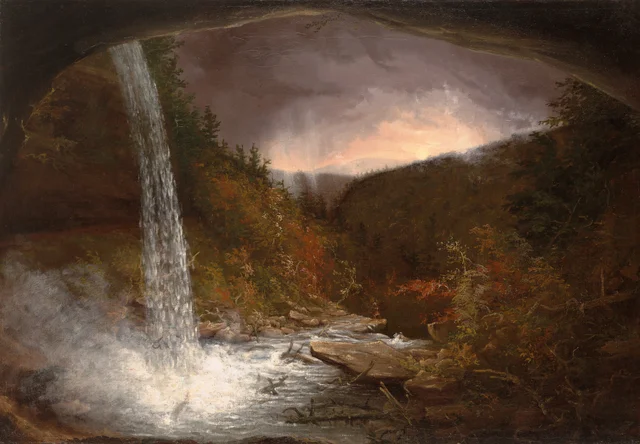 Kaaterskill FallsThomas Cole, 1826
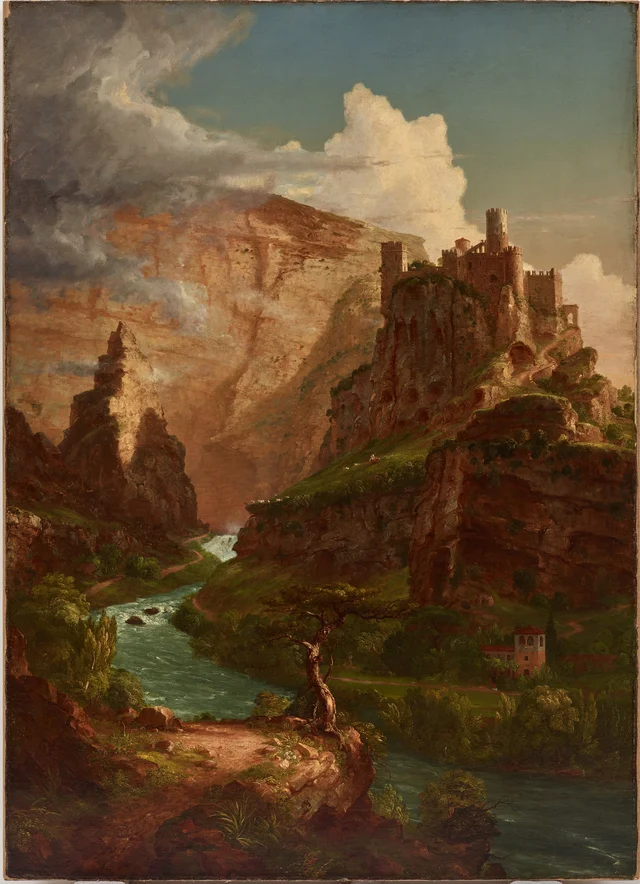 The Fountain of VaucluseThomas Cole, 1841
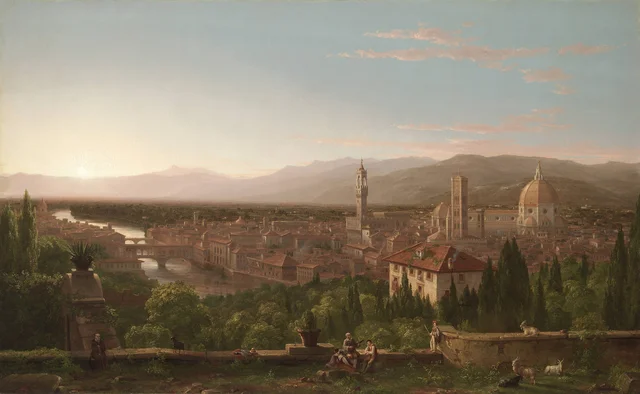 View of FlorenceThomas Cole, 1837
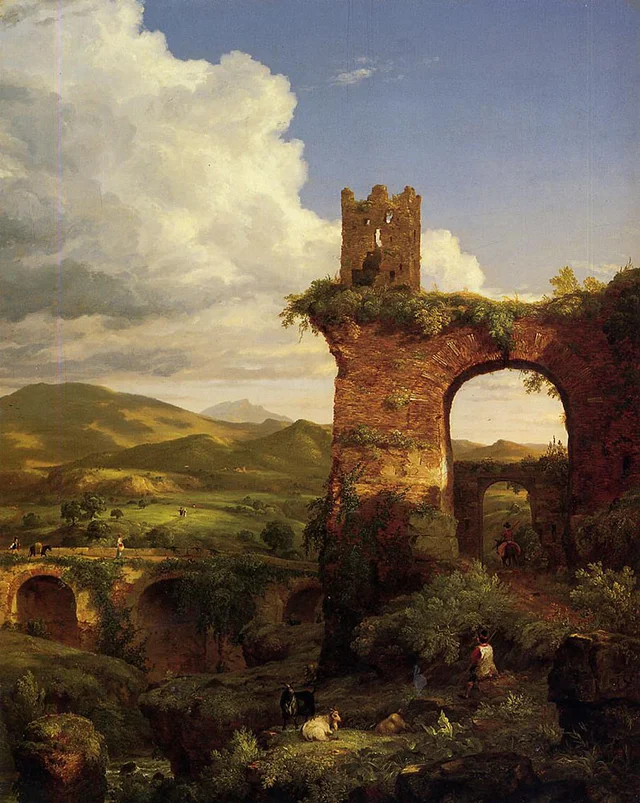 Arch of NeroThomas Cole, 1846
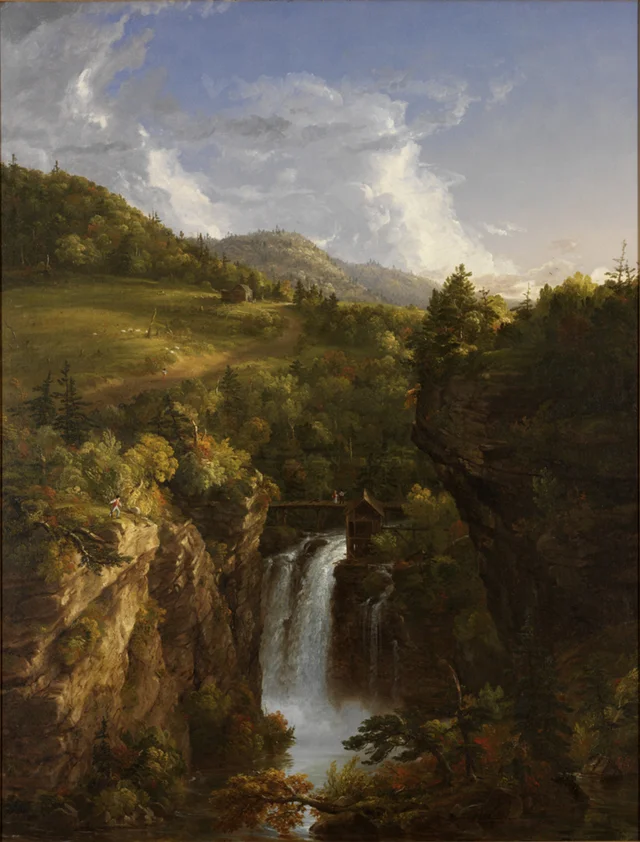 Genesee SceneryThomas Cole, 1847
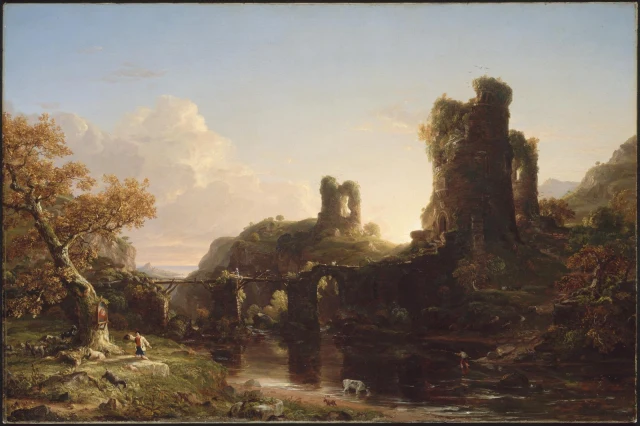 An Italian AutumnThomas Cole, 1844
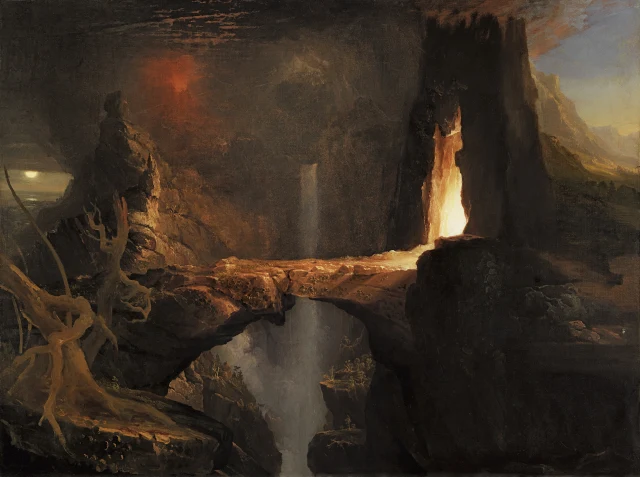 Expulsion. Moon and FirelightThomas Cole, 1828
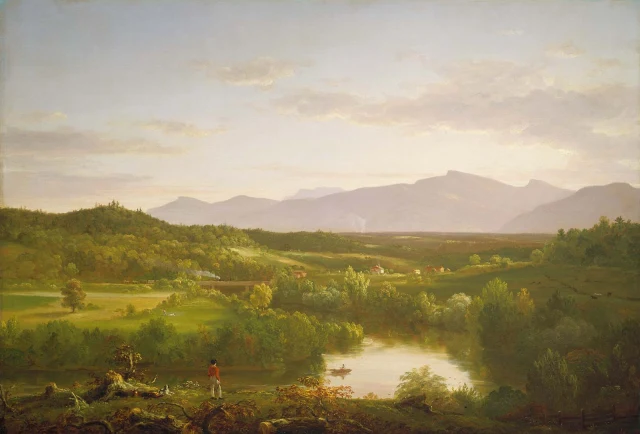 River in the CatskillsThomas Cole, 1843
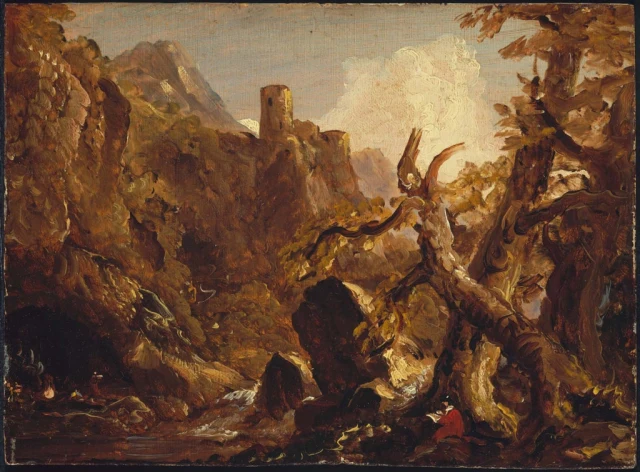 Salvator Rosa Sketching BandittiThomas Cole, 1836
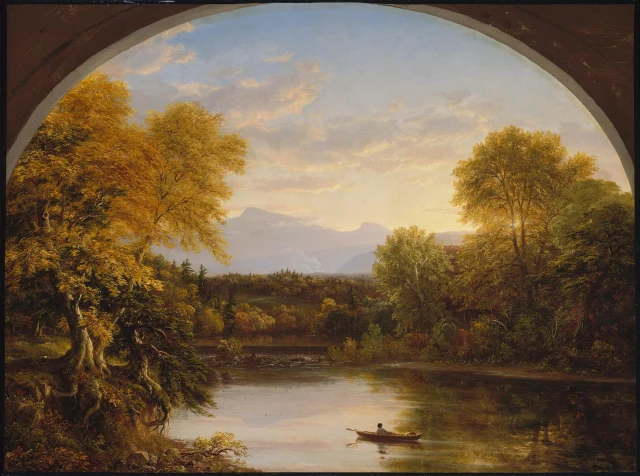 Sunset in the CatskillsThomas Cole, 1841
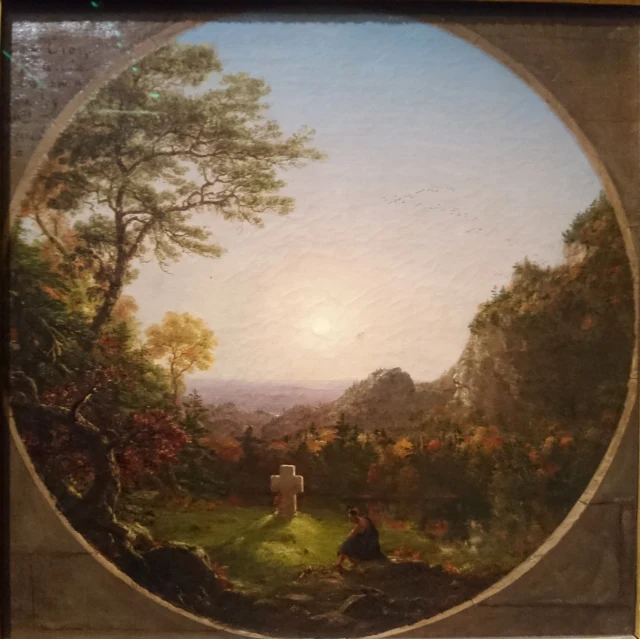 The Cross in the WildernessThomas Cole, 1845
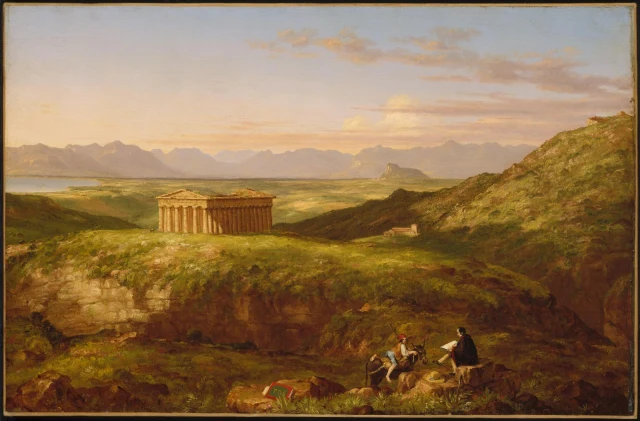 The Temple of Segesta with the Artist SketchingThomas Cole, 1842
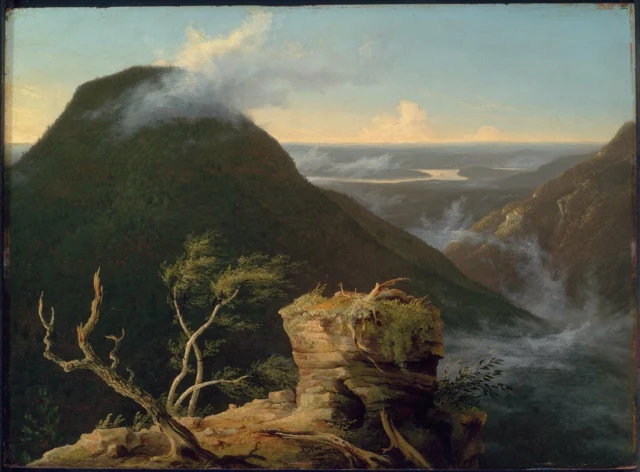 View of the Round-Top in the Catskill MountainsThomas Cole, 1827
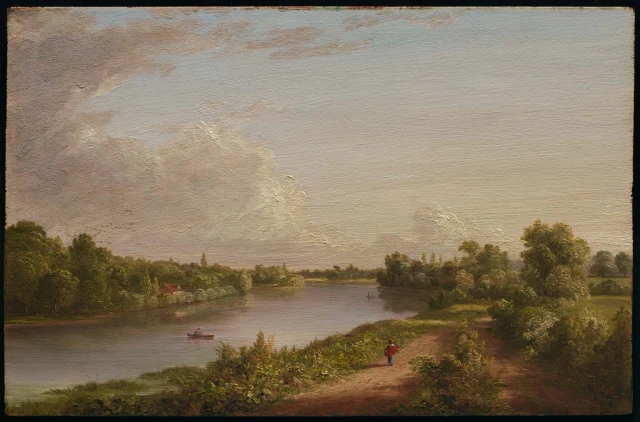 View of the ThamesThomas Cole, 1845