Attributed to Caravaggio
Baroque
The story
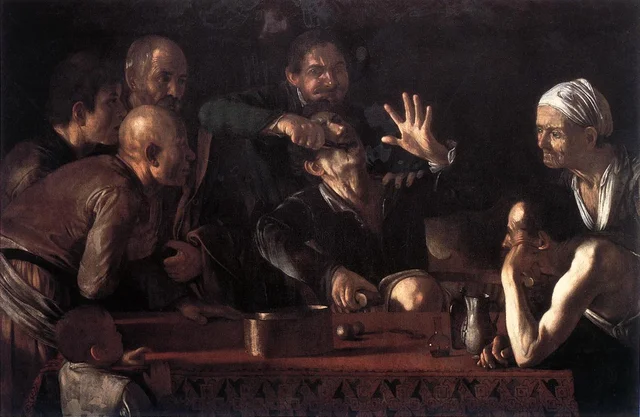
A Medici inventory drawn up in 1637 lists a picture of a toothpuller at work and gives Caravaggio as its painter. The picture still hangs at Palazzo Pitti, and the gallery will not repeat that name without a qualifier in front of it. The qualifier is this heading. It reports the state of knowledge and stands one step below the bare name in the vocabulary that museums and salerooms share, meaning the work is thought to be his, in whole or in part, and nobody is willing to guarantee it. Nothing is being said about a workshop.
Old paperwork settles less than it appears to. Caravaggio was copied heavily in his lifetime and immediately after, and inventory clerks wrote down the famous name. Scanelli, whose book on painting came out in 1657, mentions the toothpuller picture again, and the argument has never closed. Some scholars accept the grimacing crowd around the surgeon as the late Caravaggio, others refuse it.
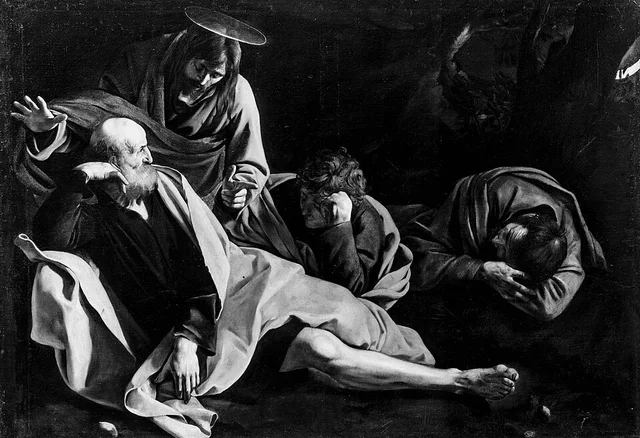
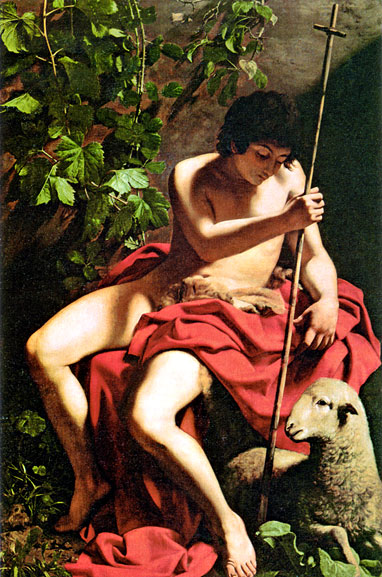
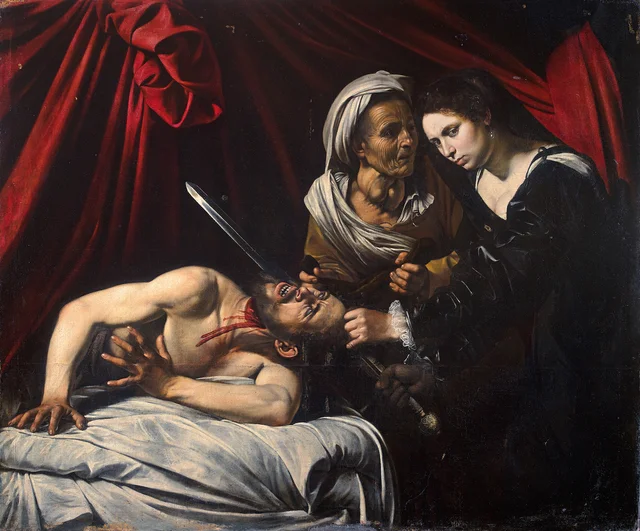
The rest of the group is in the same condition. A Judith Beheading Holofernes found in an attic in Toulouse in 2014 split specialists between Caravaggio and his Flemish colleague Louis Finson, who shared a Naples studio where Caravaggio had left a Judith behind in 1607. It was sold privately in 2019, two days before it was due at auction. A Saint John the Baptist in the cathedral museum at Toledo has been moved by most scholars into the circle around him. The fourth picture cannot be examined at all. Christ on the Mount of Olives was stored with the Berlin museums' paintings in the Friedrichshain flak tower and burned there in May 1945, and the argument about it now runs over a black-and-white photograph.