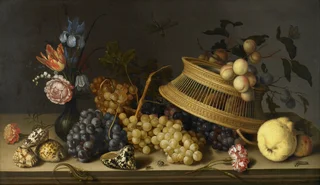
Balthasar van der Ast
1657 · Dutch Republic · Baroque
The story
In the Dutch Republic of the 1620s, a rare seashell could sell for more than a painting by a living master. Ships of the young East India trade were bringing cone shells and nautiluses back from tropical seas, and collectors paid startling prices for them. Balthasar van der Ast built a specialty out of that craze. He set shells beside tulips and ripe fruit and became one of the first Dutch painters to treat the shell itself as a subject worth a picture.
He learned the trade in Middelburg from Ambrosius Bosschaert, the flower painter who was his brother-in-law and became his guardian when the boy was orphaned. When Bosschaert died young, Van der Ast helped train his three sons, and the whole family is now remembered as the Bosschaert dynasty of still-life painters.
Look closely at his tabletops and you will almost always find an insect or a small lizard, a caterpillar creeping across a petal or a fly on a plum. In Utrecht he took on a pupil named Jan Davidsz de Heem, who would push the Dutch still life toward the piled-up banquet pieces of the next generation.
Works
6 works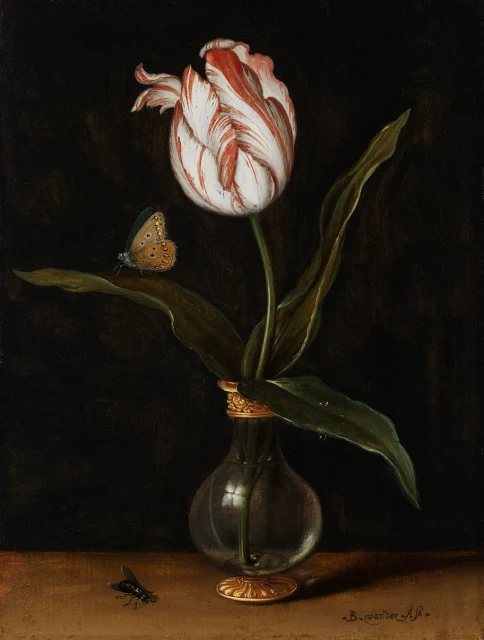 A Single Tulip in a VaseBalthasar van der Ast, 1625
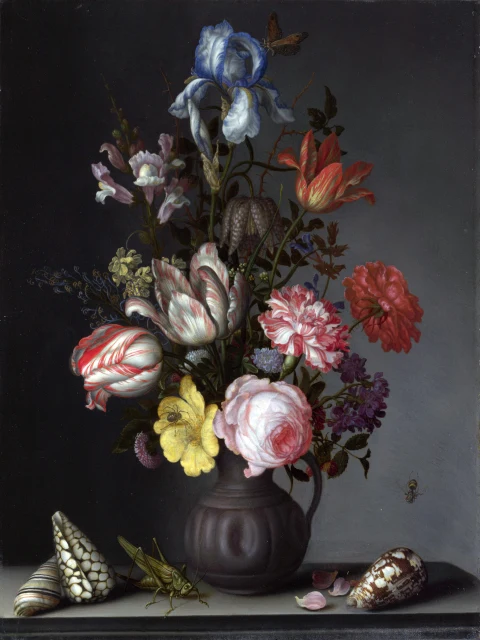 Flowers in a Vase with Shells and InsectsBalthasar van der Ast, 1630
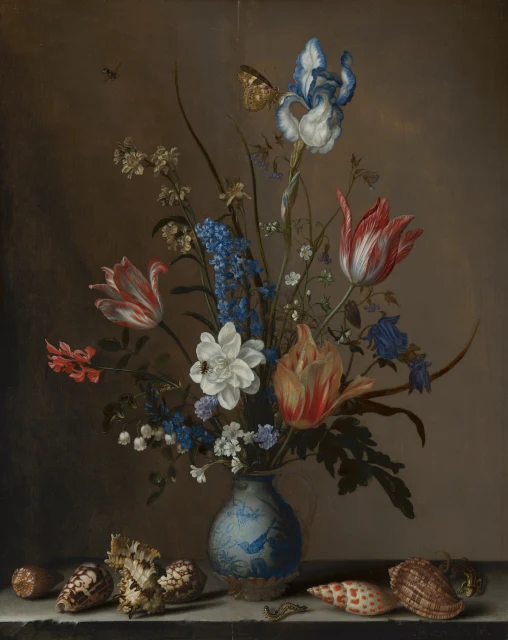 Flowers in a Wan-Li Vase, with ShellsBalthasar van der Ast, 1645
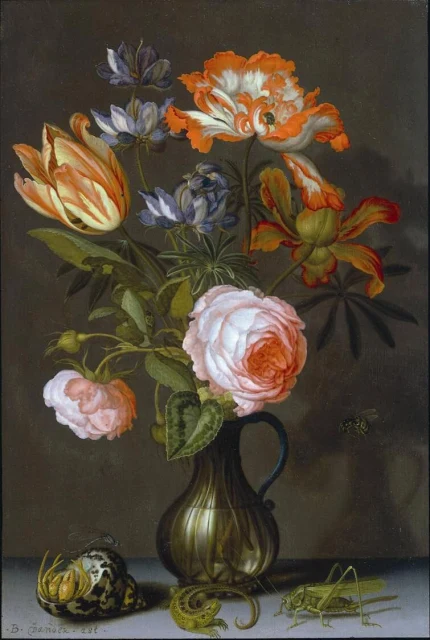 Still Life with FlowersBalthasar van der Ast, 1630
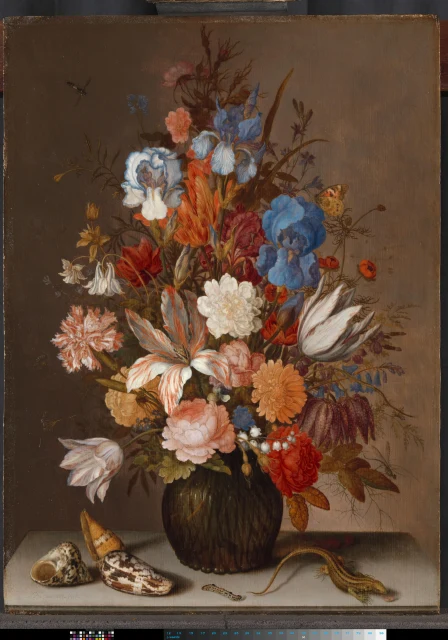 Still Life with FlowersBalthasar van der Ast, 1627
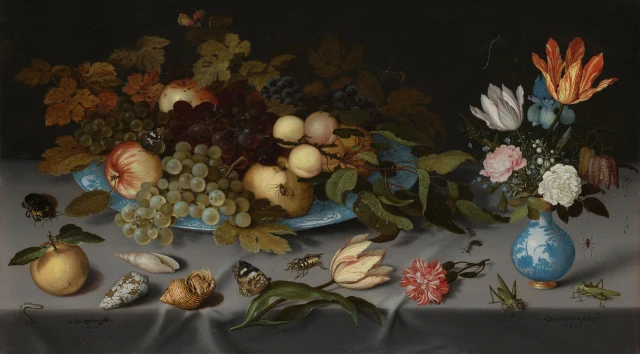 Still Life with Fruits and FlowersBalthasar van der Ast, 1620