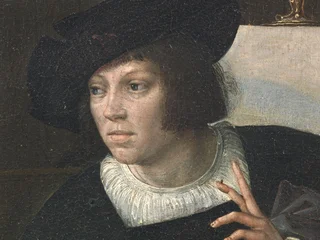
Bernard van Orley
1541 · Southern Netherlands · Renaissance, Romanist, Flemish Renaissance
The story
Around 1516 a set of ten huge painted cartoons arrived in Brussels from Rome: Raphael's designs for tapestries meant for the Sistine Chapel, sent north because Brussels was where Europe's finest weavers worked. Bernard van Orley never crossed the Alps, yet he hardly needed to. The most celebrated Italian painter of the day had, in effect, been unrolled in his own city, and van Orley studied those figures closely.
He was already the leading painter in Brussels, and in 1518 he became court painter to Margaret of Austria, the Habsburg regent of the Netherlands, later serving her successor Mary of Hungary. Much of his finest work was never meant to hang as a painting. He drew cartoons for the weavers, joining Raphael's monumental figures to the crowded, anecdotal detail of Flemish tradition, and the great Hunts of Maximilian series, a stag hunt spread across the months of the year, was woven from his designs around 1531.
He also designed the windows for the cathedral of Saint Michael and Saint Gudula in Brussels, where his stained glass still stands. Van Orley ran one of the busiest workshops in the city, and he died there in 1541, in the parish where he had spent almost his whole life.
More articles
Works
6 works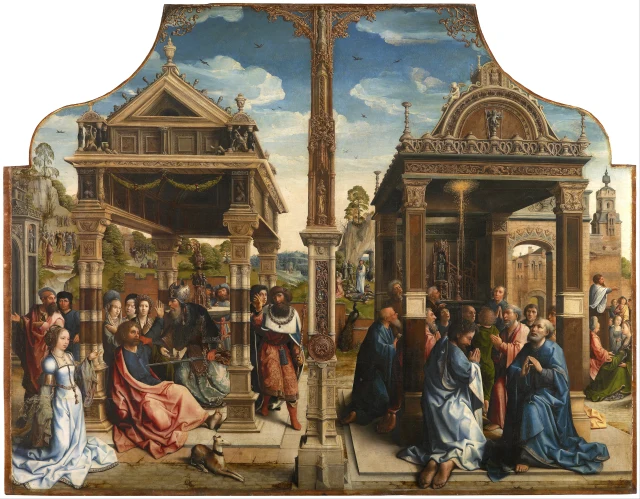 Altarpiece of Saints Thomas and MatthiasBernard van Orley, 1515
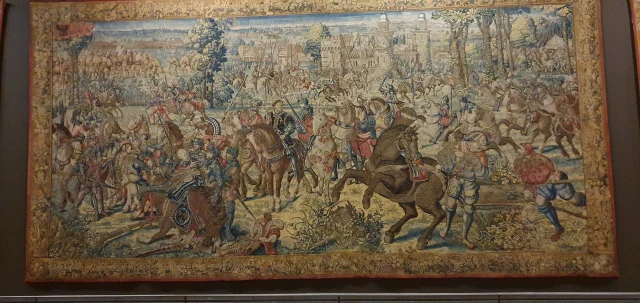 Battle of Pavia: The Capture of King Francis IBernard van Orley, 1530
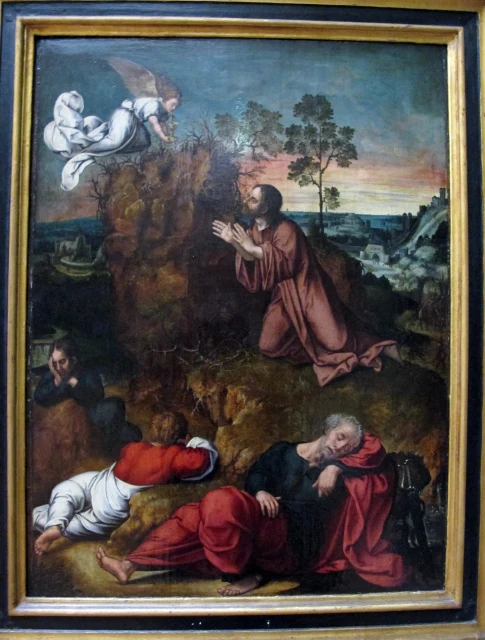 Christ in the Garden of Olives with the Sleeping ApostlesBernard van Orley, 1520
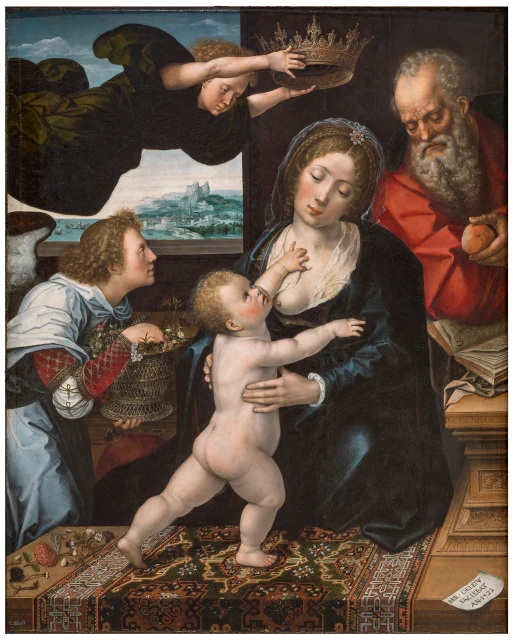 The Holy FamilyBernard van Orley, 1522