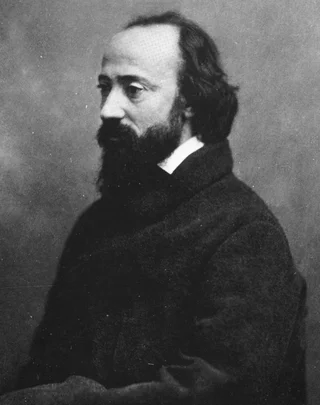
Charles-François Daubigny
1817–1878 · France · Barbizon school
The story
In 1857 Charles-François Daubigny bought a small ferry boat, fitted it with a cabin and oars, and named it Le Botin, the little box. For years he floated down the Oise and the Seine in it, painting the riverbanks straight from the water, one of the first artists to make finished pictures entirely outdoors rather than working them up later in a studio.
He belonged to the Barbizon painters, a group who left Paris to paint the forest and farmland around the village of Barbizon, and he was a close friend of the landscapist Corot. But Daubigny pushed further toward the loose, light-filled look that would soon be called Impressionism, and his roughly brushed water and skies drew complaints from critics that his canvases were only half finished.
His real importance may be as a bridge. As a member of the Salon jury, the panel that decided which paintings the public got to see, he fought to admit the work of much younger painters like Monet and Pissarro, and resigned in protest when they were kept out. Monet, who studied Daubigny's river pictures closely, bought a studio boat of his own in 1872 and painted the water from it for years.
Works
13 works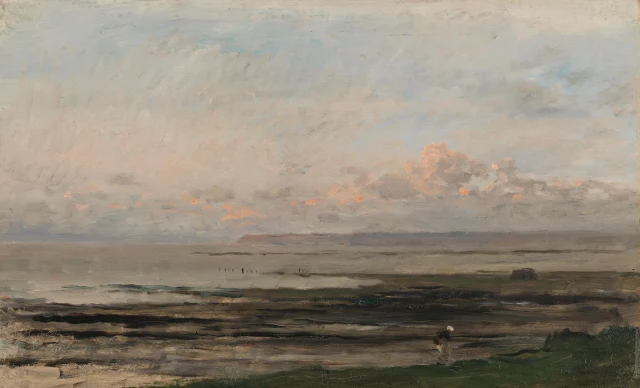 A Beach at Ebb TideCharles-François Daubigny, 1864
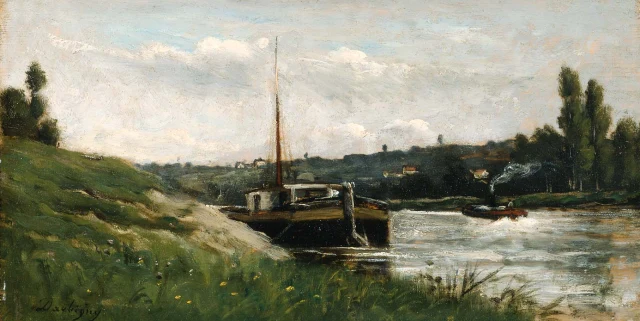 Barge on a RiverCharles-François Daubigny
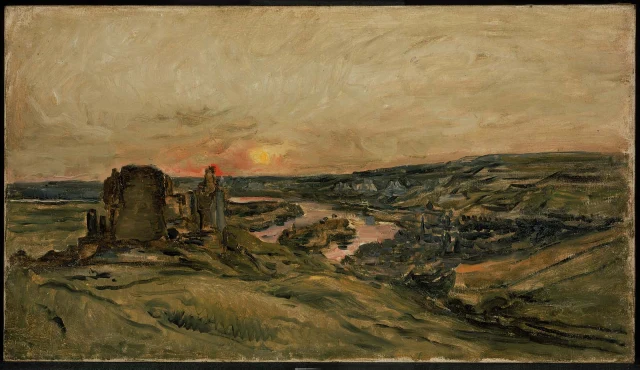 Château-Gaillard at SunsetCharles-François Daubigny, 1873
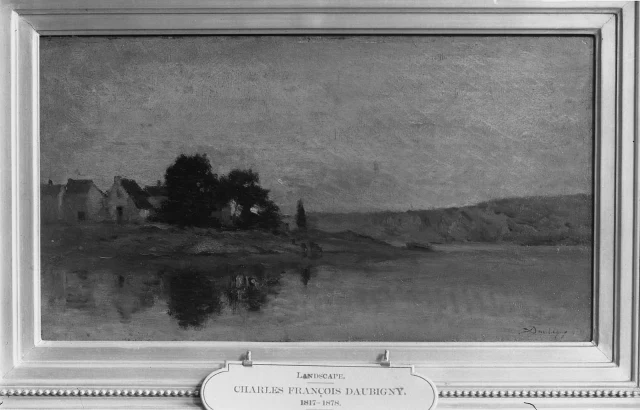 Farm by a RiverCharles-François Daubigny
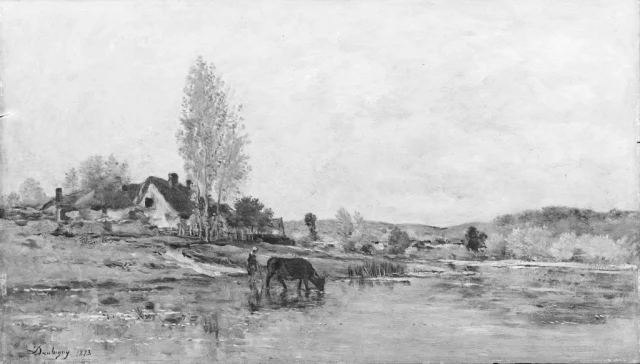 Farm on the Bank of a RiverCharles-François Daubigny, 1873
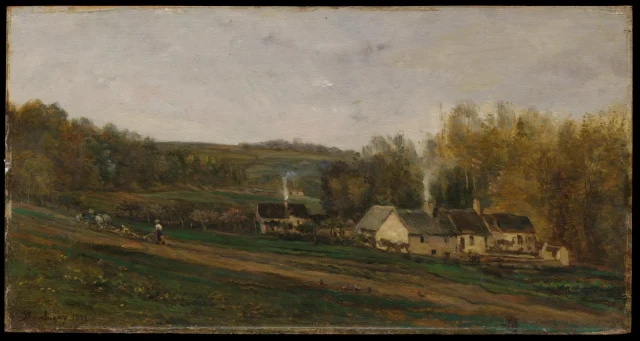 House of Mère Bazot, ValmandoisCharles-François Daubigny, 1872
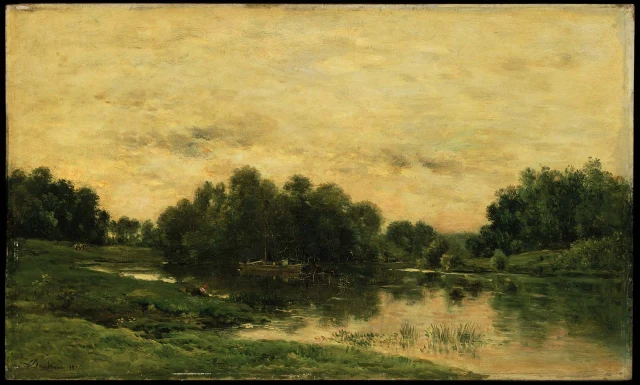 Ile-de-Vaux on the Oise near AuversCharles-François Daubigny, 1876
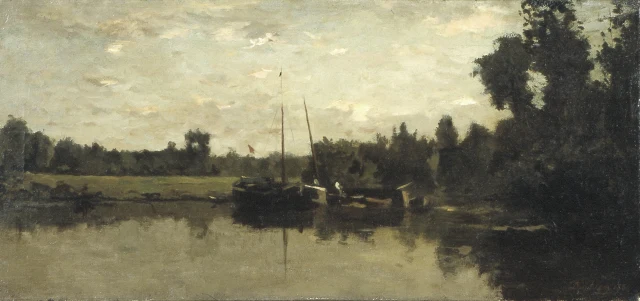 Landscape with Ships on a River in the EveningCharles-François Daubigny, 1866
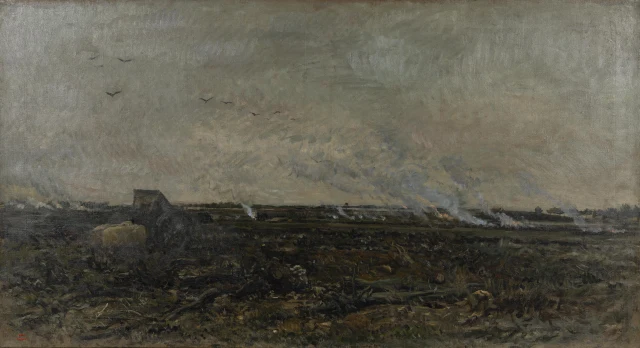 OctoberCharles-François Daubigny
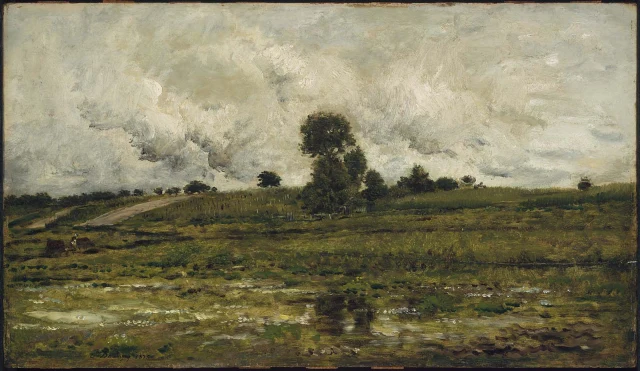 Rising Ground Near Villeneuve-St. GeorgesCharles-François Daubigny, 1875
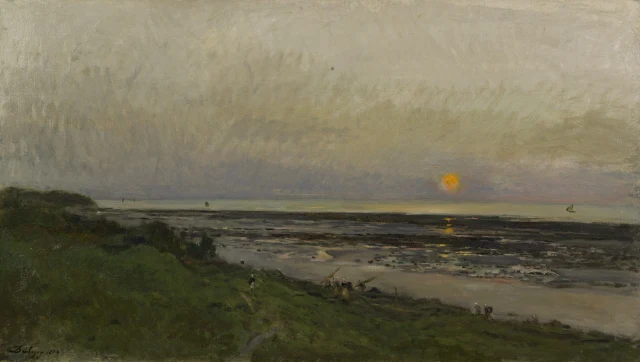 Sunset at VillervilleCharles-François Daubigny, 1874
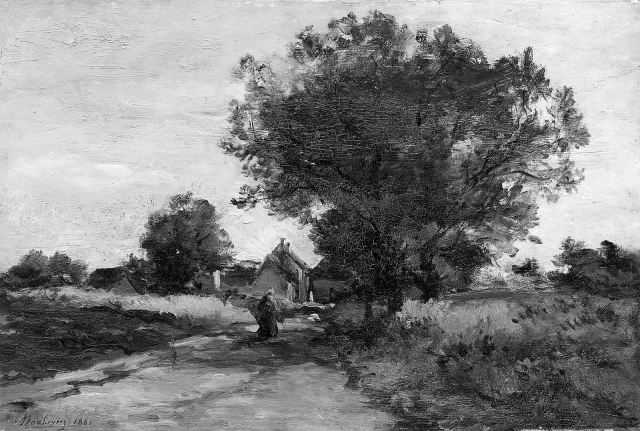 Village RoadCharles-François Daubigny, 1861
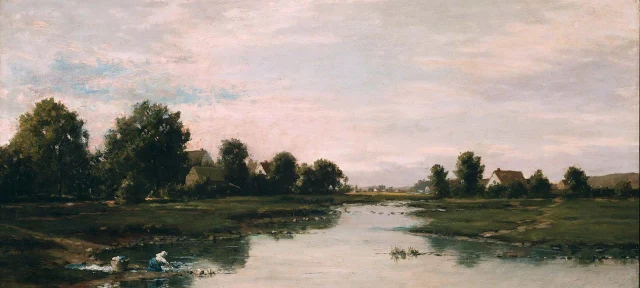 Woman Washing Clothes at the Edge of a RiverCharles-François Daubigny, 1865