Woman Washing Clothes at the Edge of a River
Details
The story
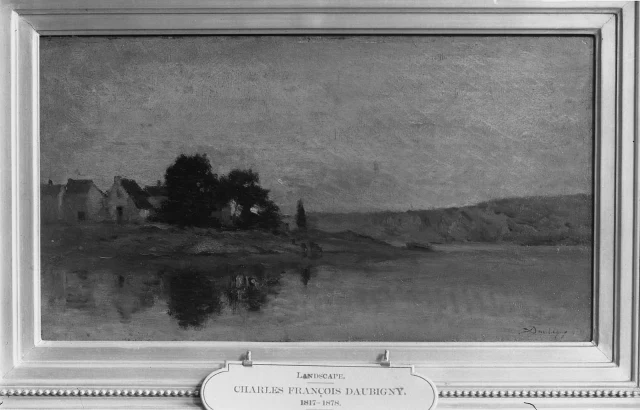
Until piped water reached the French countryside, the week's laundry went down to the river. Women worked at the water's edge, soaking the linen, beating it with a wooden paddle and rinsing it in the current. Daubigny, who spent long seasons painting the Oise and the Seine from close to the water, put women at this work into his river pictures more than once.
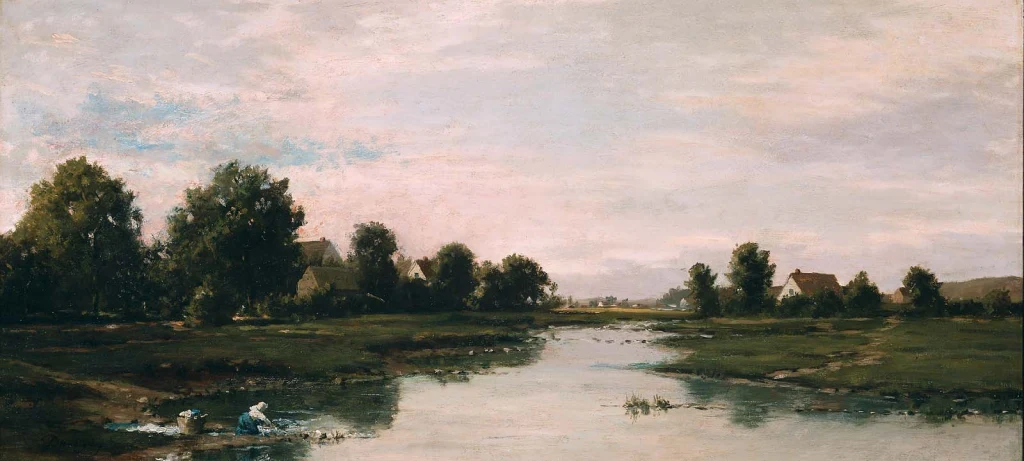
Here a single washerwoman works at the lower left of a long, low canvas, with the river and a few cottages filling the rest. The museum dates it only loosely, to about 1860 to 1870.
It belonged to James Brown Case, a Boston businessman and one of the first from the city to spend his summers in the country town of Weston. His daughters Louisa and Marian gave it to the museum in 1920. Marian had turned part of the family land into a summer farm school where local boys learned to work the fields, and when she died in 1944 the property went to Harvard's Arnold Arboretum.