Cristiano Banti
1824–1904 · Grand Duchy of Tuscany, Kingdom of Italy · Macchiaioli, Genre painting, Landscape painting
The story
In 1857 Cristiano Banti painted exactly the success a young Tuscan was supposed to want. His Galileo facing the Inquisition, a large and highly finished history picture, made his name, and within a few years he was asking for it to be taken down, saying he had dishonoured art without knowing it. He had moved to Florence in 1854 and taken to spending his evenings at the Caffè Michelangiolo, where a group of young painters, soon nicknamed the Macchiaioli, argued that a picture should be built out of patches of light and shadow seen outdoors. Telemaco Signorini, the great arguer among them, pulled him that way.
What made Banti unusual in that room was money. He had land at Montemurlo, in the hills north-west of Florence, and a villa there, and while his friends sold pictures to pay their rent he bought them. Giovanni Fattori, Silvestro Lega, Giuseppe Abbati, the young Giovanni Boldini. He put painters up at the villa and showed his own work rarely, being hard on it. The collection he built was one of the fullest records of what the group was doing, and it went to auction and was scattered ten years after his death.
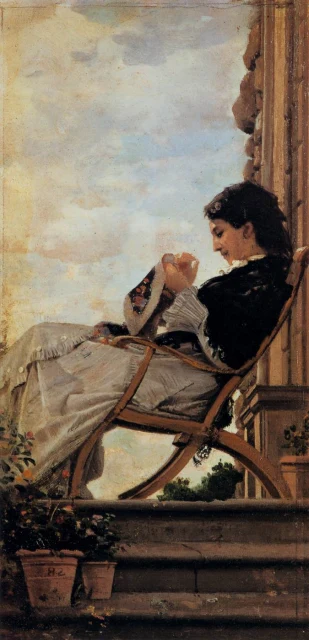
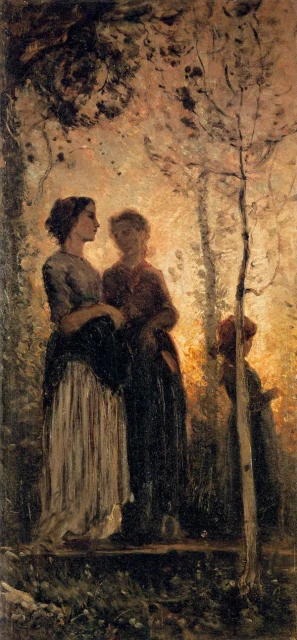
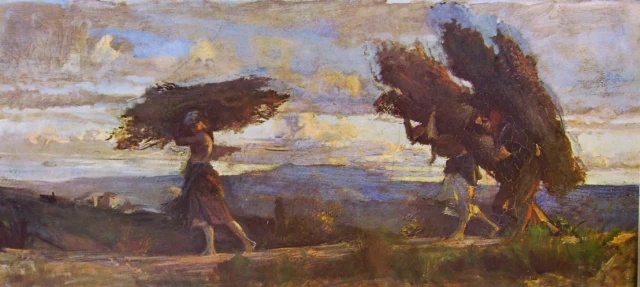
He kept painting to the end, mostly women at work in the Tuscan countryside. Three of those canvases hang in the modern-art gallery on the top floor of Palazzo Pitti, painted in 1881 and 1882, when he was in his late fifties: women carrying bundles of firewood, three peasant women among trees, and a woman at work on a terrace.