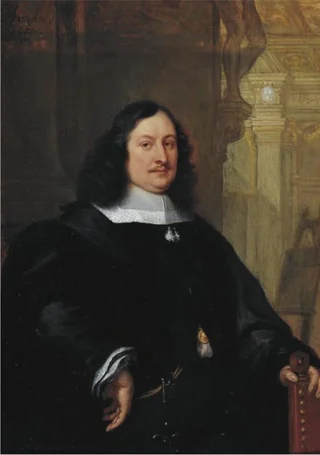
David Teniers the Younger
1610–1690 · Habsburg Netherlands · Baroque
The story
When King Charles I of England was executed in 1649, his magnificent art collection was broken up and sold, and much of the finest Italian painting in it was bought up by Archduke Leopold Wilhelm, the Habsburg governor of the Spanish Netherlands. To manage that vast new hoard he turned to a Flemish painter, David Teniers the Younger.
Teniers became the archduke's court painter and, in effect, the keeper of his gallery in Brussels. He painted the collection itself, wide views of a room with hundreds of pictures stacked frame to frame up the walls, the archduke standing among them in his black hat. These 'gallery pictures' are part portrait and part inventory, and they record works we can still identify today.
Then he went further. Teniers hired a team of engravers to reproduce the archduke's Italian paintings and published them in 1659 as the 'Theatrum Pictorium,' often called the first illustrated catalogue of an art collection, a direct ancestor of every museum catalogue since.
For all that, Teniers had built his early reputation on something quite different: small, lively scenes of peasants drinking, smoking, and dancing outside country taverns, which sold widely and were much imitated. He had married Anna Brueghel, daughter of the painter Jan Brueghel the Elder, and lived long and prosperously, dying in Brussels in 1690.
More articles
Works
13 works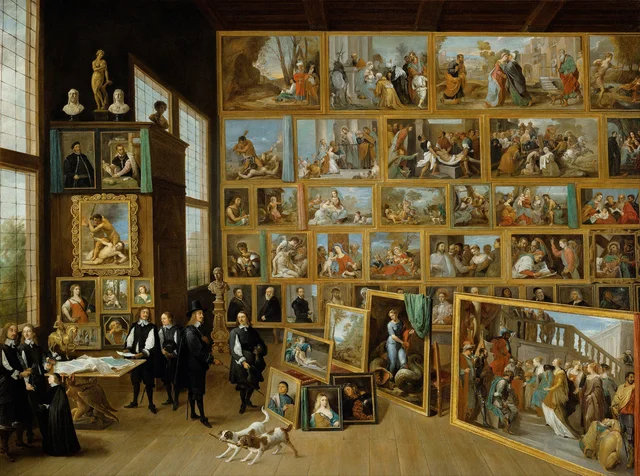 Archduke Leopold Wilhelm in his Gallery in BrusselsDavid Teniers the Younger, 1651
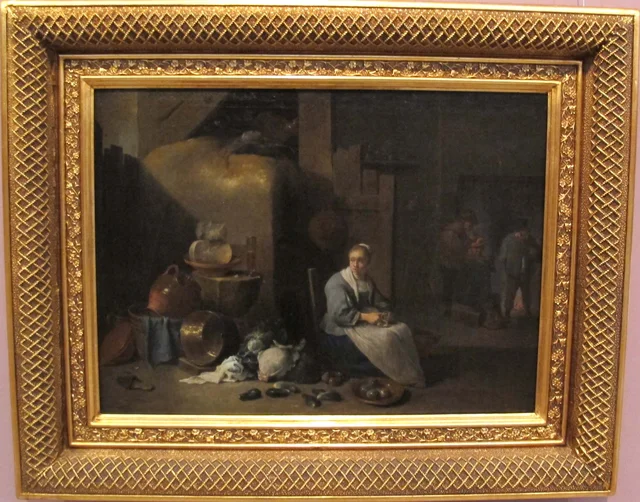 Flemish InteriorDavid Teniers the Younger
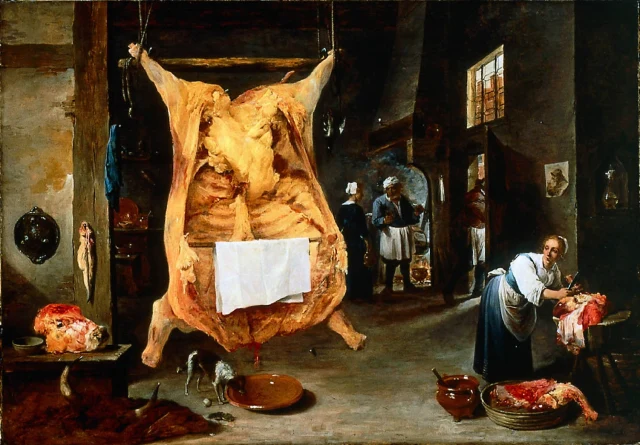 Butcher ShopDavid Teniers the Younger, 1642
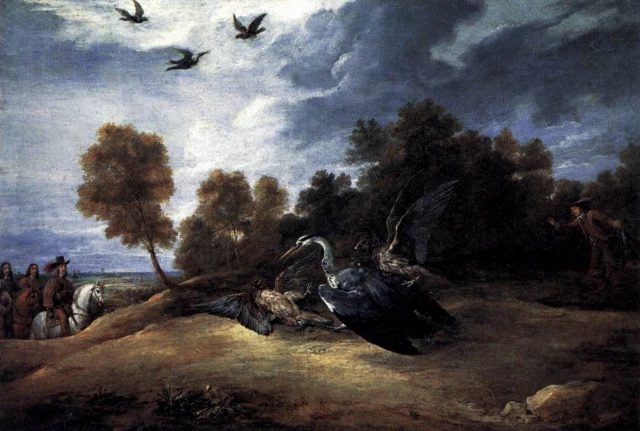 Heron Hunting with the Archduke Leopold WilliamDavid Teniers the Younger, 1654
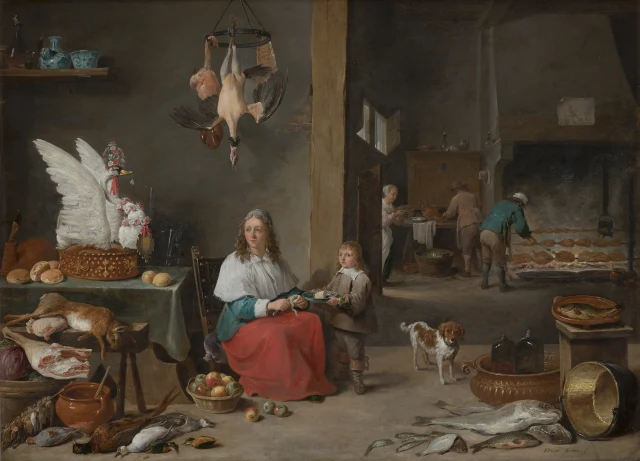 Kitchen InteriorDavid Teniers the Younger, 1644
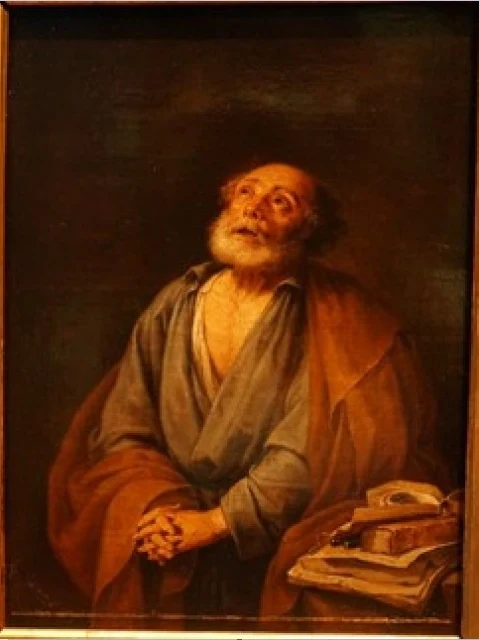 Penitent St. PeterDavid Teniers the Younger, 1654
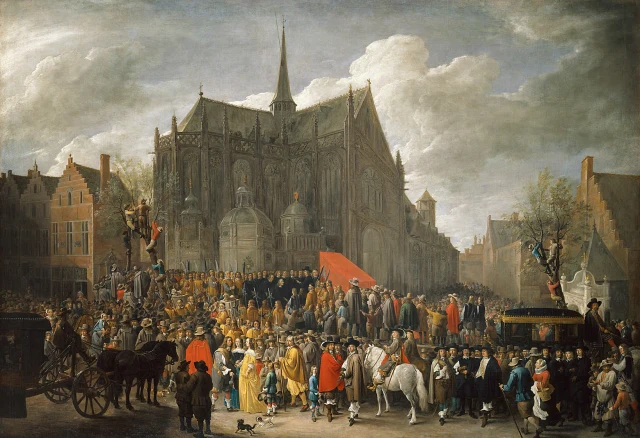 Popinjay Shooting in BrusselsDavid Teniers the Younger, 1652
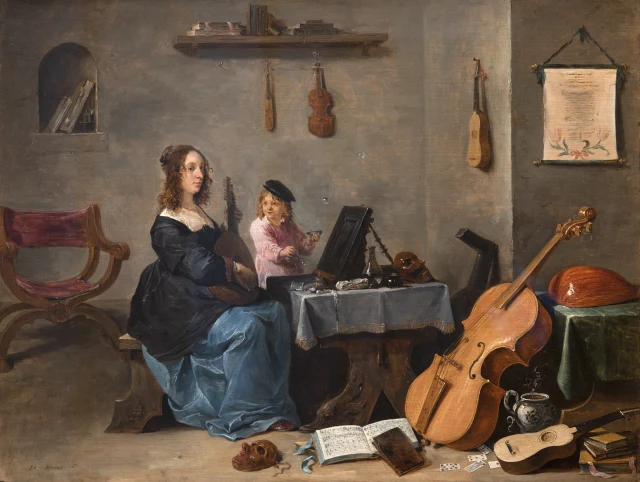 Portrait of the Artist's Wife Anna Brueghel Playing the Lute and Their Son David Blowing Soap BubblesDavid Teniers the Younger, 1644
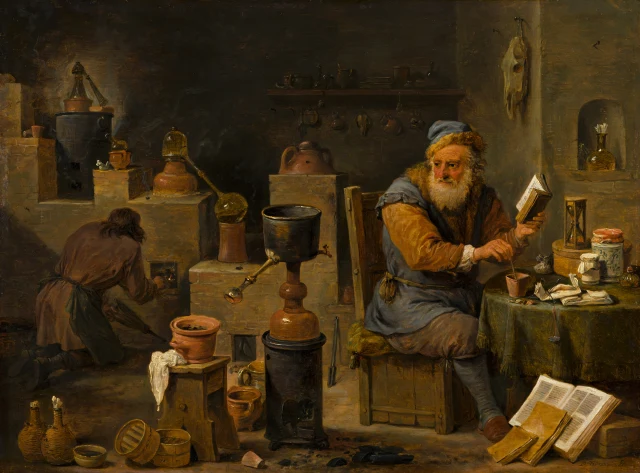 The AlchemistDavid Teniers the Younger, 1650
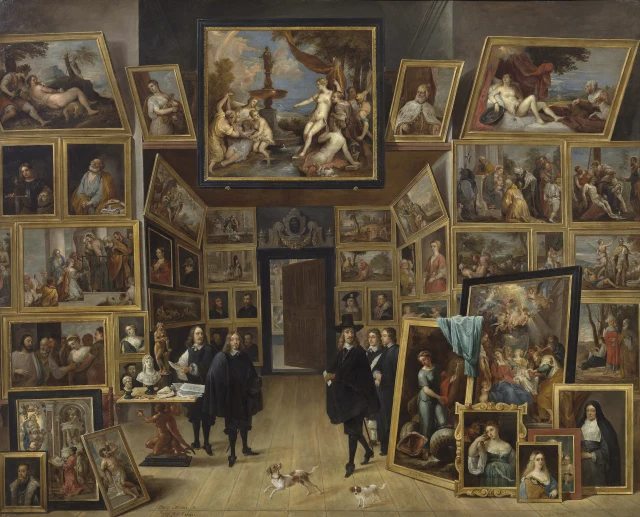 The Archduke Leopold Wilhelm in his Picture Gallery in BrusselsDavid Teniers the Younger
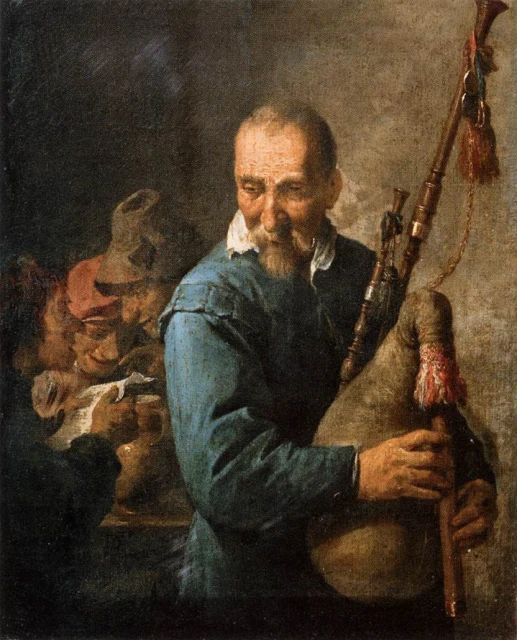 The Musette PlayerDavid Teniers the Younger, 1636
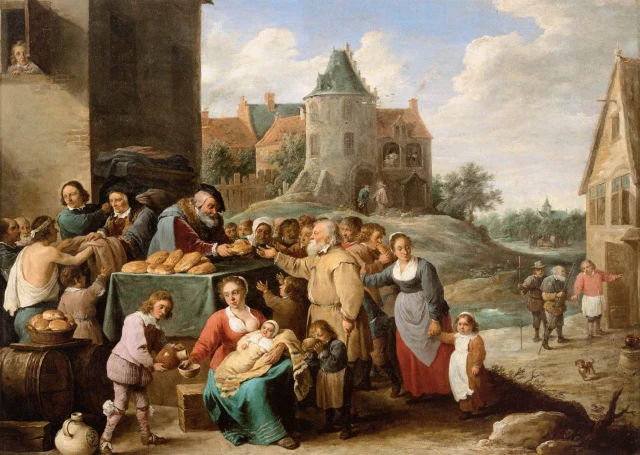 The Seven Works of MercyDavid Teniers the Younger, 1640
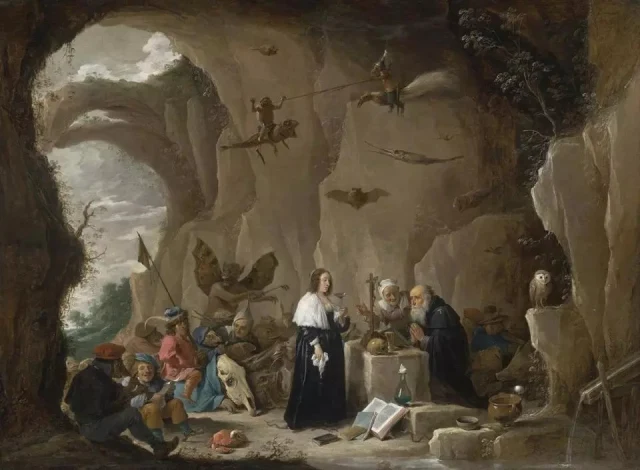 The Temptation of Saint AnthonyDavid Teniers the Younger, 1650