Edmond Aman-Jean
1858–1936 · France · Symbolism
The story
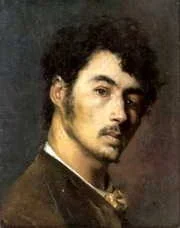
One of the most admired drawings of the 19th century is a portrait of this man made by someone else. In 1883 Georges Seurat, not yet famous, showed a soft conté-crayon portrait of his studio friend Edmond Aman-Jean at the Paris Salon, the first work Seurat ever exhibited. The two had shared a studio around 1879 and worked together as assistants to the muralist Puvis de Chavannes.
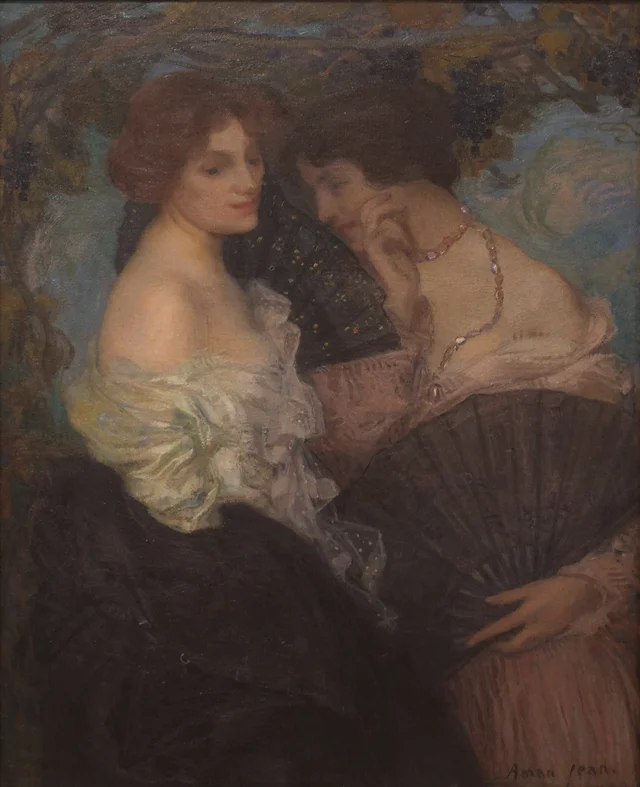
Aman-Jean went a gentler way than his pointillist friend. He settled into Symbolism, painting dreamy, softly lit women in reverie, and became a sought-after society portraitist. In 1892 he portrayed the poet Paul Verlaine, ill and worn, during a stay in a Paris hospital. Later he took on large decorative schemes, including murals for the Sorbonne, and in 1923 he helped found the Salon des Tuileries, a new independent exhibition.
Seurat died young in 1891. Aman-Jean lived on until 1936, long enough to see his old friend become a giant of modern art. His own dusky portraits of women, all hazy rose and grey, still hang quietly in French museums, the very look Seurat had caught in that early drawing.