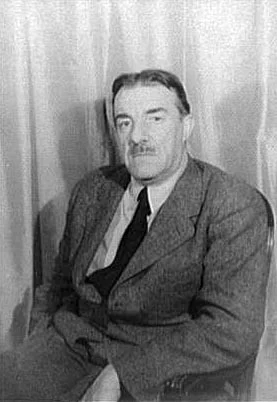
Fernand Léger
1881–1955 · France · Cubism
The story
Fernand Léger went into the First World War a young Cubist painter and came out with a different eye. Drafted in 1914, he spent two years in the trenches at the Argonne and Verdun, and he was nearly killed by a mustard-gas attack in 1916.
What struck him at the front was the machinery itself. He later said the gleaming breech of a 75-millimetre field gun taught him more than any museum. He filled sketchbooks with cannon, aircraft and gunners, and after the war his people and objects hardened into bright tubular forms, all cylinders and cones, like parts turned on a lathe. Critics nicknamed the style tubism.
Léger wanted this modern, mechanical beauty to reach ordinary people, and he pushed it well beyond gallery walls. He designed for theatre and film, made one of the first abstract movies, taught widely, and late in life turned to large public murals and mosaics. He joined the Communist Party after the Second World War, convinced that his clean, machine-age pictures spoke for working people. A museum devoted to his work opened at Biot, in the south of France, a few years after his death in 1955.
More articles
Works
20 works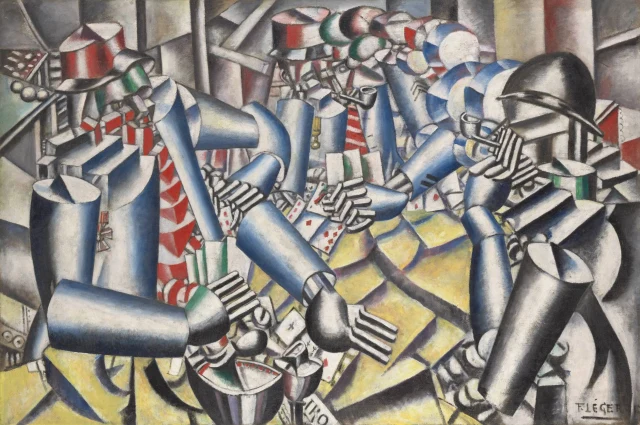 La Partie de cartesFernand Léger, 1917
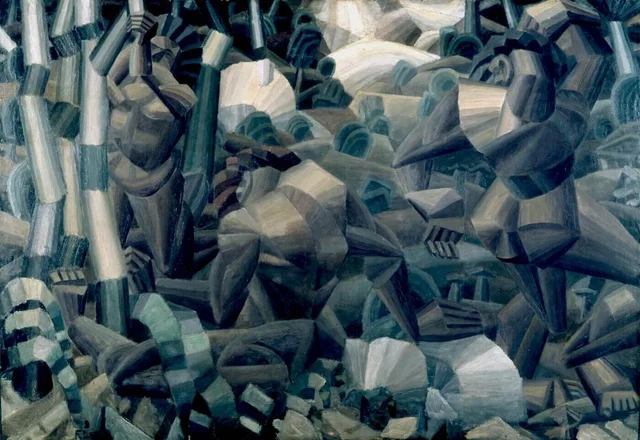 Nudes in the forestFernand Léger, 1910
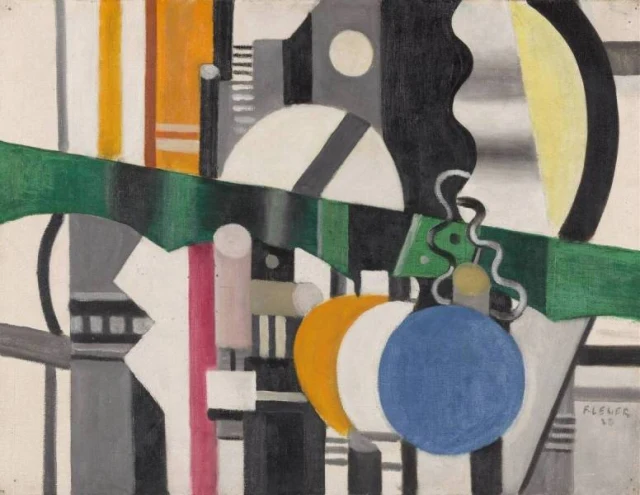 Mechanical ElementFernand Léger, 1920