Frans Post
1612–1680 · Dutch Republic · Baroque
The story
In 1636 a young painter from Haarlem in Holland boarded a ship for the other side of the world. Frans Post was going to Dutch Brazil, the sugar colony the Dutch had seized on the northeast coast of South America, in the retinue of its governor, Johan Maurits of Nassau, a prince with a scientific curiosity about his new territory.
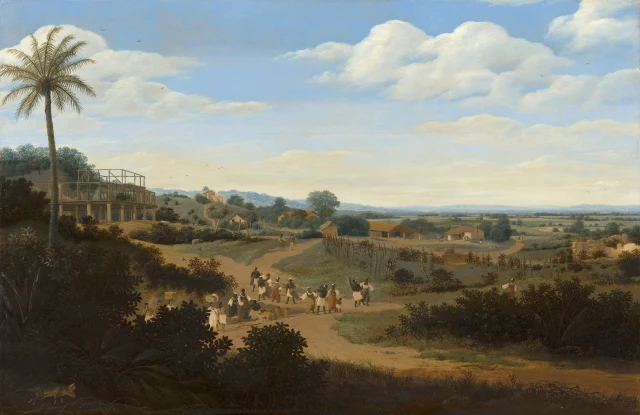
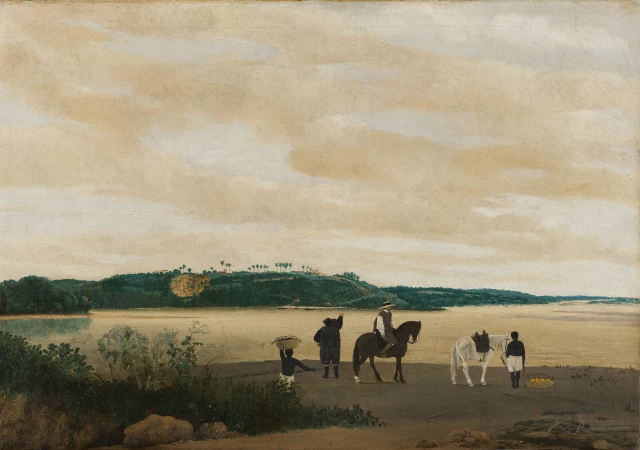
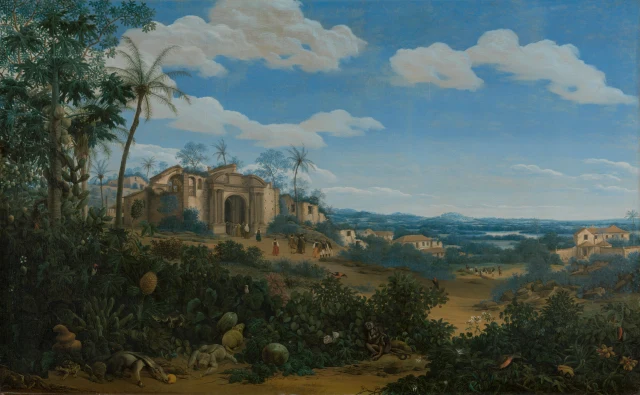
For about seven years Post painted what no European had painted from life before: the Brazilian land itself. Flat horizons under huge skies, sugar mills, ruined churches left by the Portuguese who had been there first, and in the foreground the plants and animals of the tropics, an armadillo, a giant anteater, a cactus. He was the first European artist to paint landscapes of the Americas.
Back in Haarlem after 1644 he kept painting Brazil for the rest of his life, working from the sketches he had carried home and turning out well over a hundred views for collectors who would never cross the ocean. Those later canvases grew softer and more idealised, the harsh business of a slave-worked colony smoothed into a sunlit paradise. His earliest picture done on the spot, a view of the island of Itamaracá, is the oldest known European painting of Brazil.