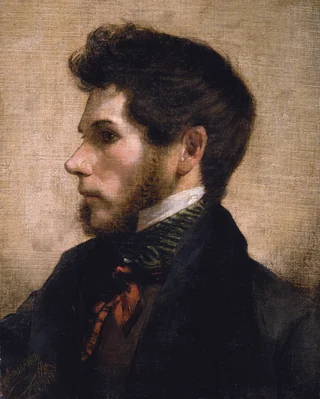
Friedrich von Amerling
1803–1887 · Austrian Empire · Realism, Romanticism
The story
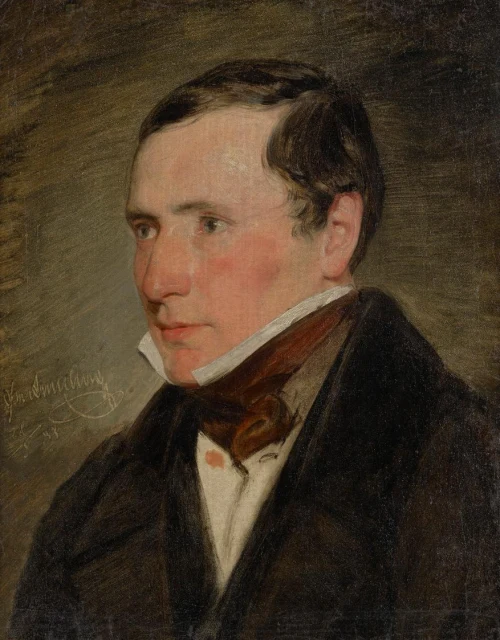
In 1832 a young Viennese painter delivered a state portrait of Emperor Francis I of Austria, and it made his name almost overnight. Friedrich von Amerling became the artist the Austrian aristocracy wanted for its likenesses, and for the next half-century he painted the faces of imperial Vienna.
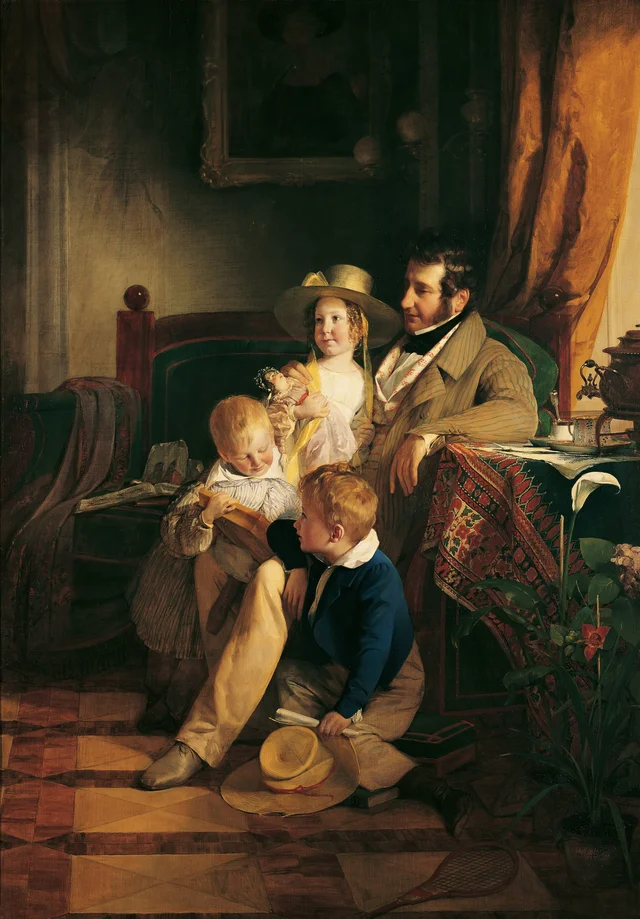
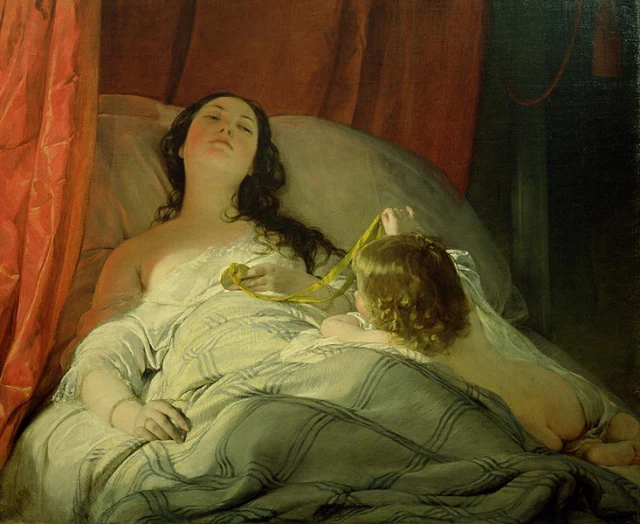
He worked through the Biedermeier years, the quiet, inward decades after the Napoleonic wars, when the comfortable Viennese middle class furnished its homes and liked to see itself on the wall. Amerling gave them exactly that: warm skin, soft light, silk and lace rendered so you could almost touch them, flattering yet alive. Alongside Ferdinand Georg Waldmüller, another Viennese realist, he is counted the finest Austrian portraitist of the century.
He was made court painter in 1835 and held the post until 1880, and he was prolific, leaving roughly 1,200 pictures. With his earnings he bought a small palace in Vienna and filled it with art. When he died in 1887, the city named a street after him.