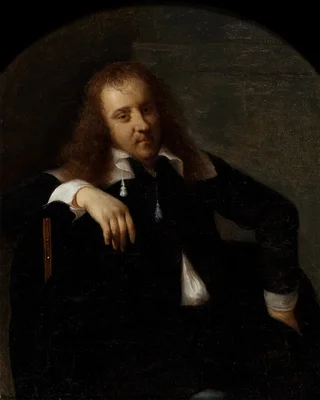
Gabriel Metsu
1629–1667 · Dutch Republic · Baroque
The story
Gabriel Metsu worked in the Dutch Republic in the 1650s and 60s, the same short golden span that produced Vermeer just down the road in Delft, and like Vermeer he painted quiet indoor moments of well-off people. His range was wider, moving from market stalls and kitchens to hushed, tender interiors.
His most famous pairing is two small pictures meant to hang together, one of a young man sealing a letter, the other of a woman reading one while her maid pulls back a curtain to peek at a painting of a ship at sea, a sly hint that the letter has come from a sailor far away.
Metsu had moved from his native Leiden to Amsterdam, where the money was, and married well. He died there in 1667, only in his late thirties, his reputation for fine finish already high enough that collectors later paid Vermeer-level prices for him.
Works
20 works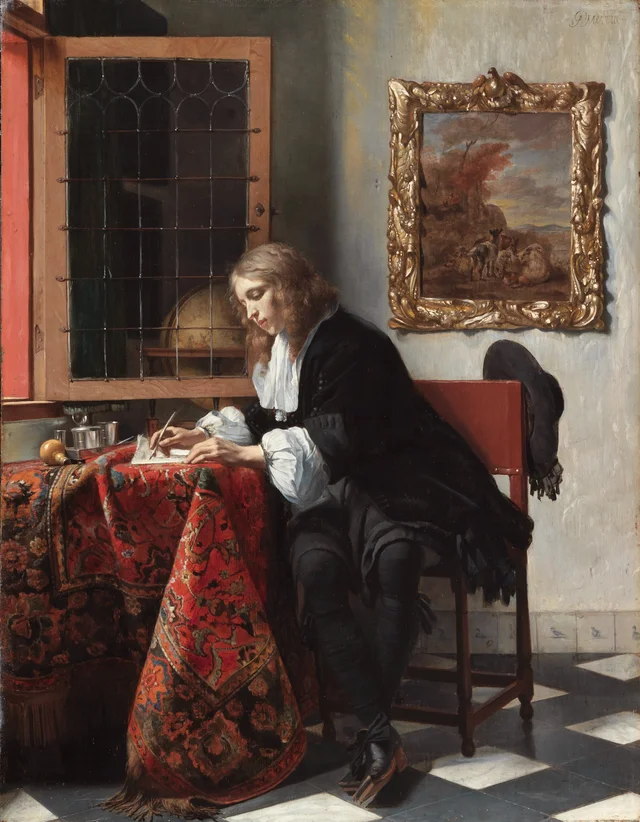 Man Writing a LetterGabriel Metsu, 1665
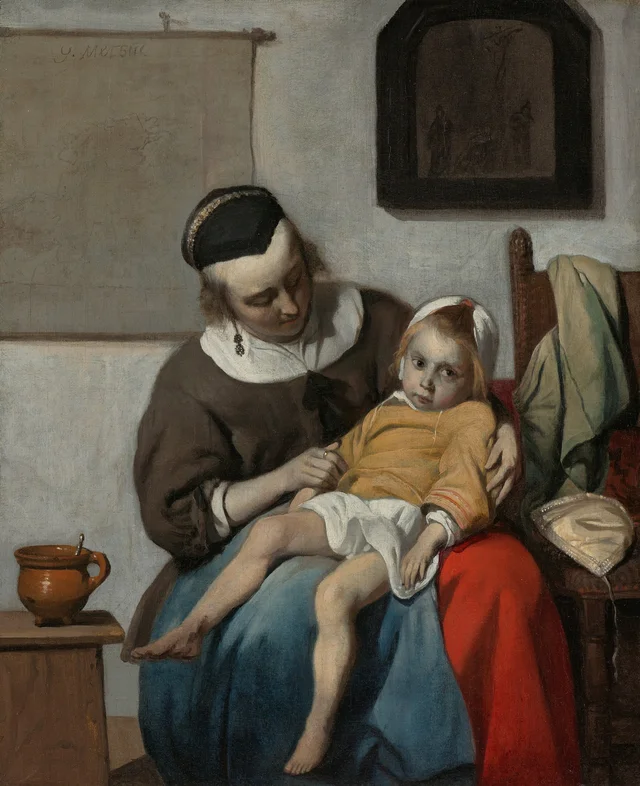 The Sick ChildGabriel Metsu, 1660
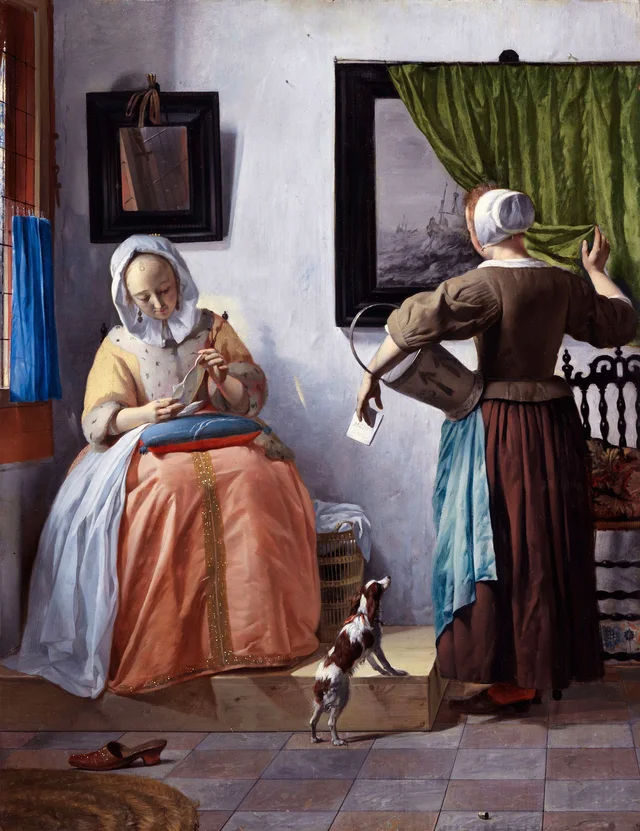 Woman Reading a LetterGabriel Metsu, 1665
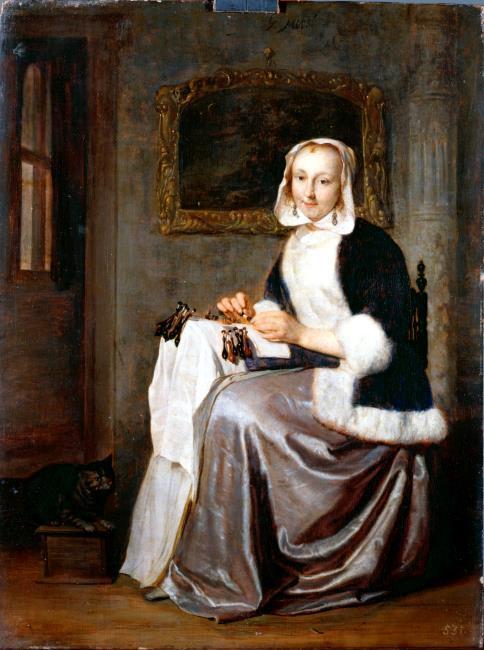 The Lace-MakerGabriel Metsu, 1663
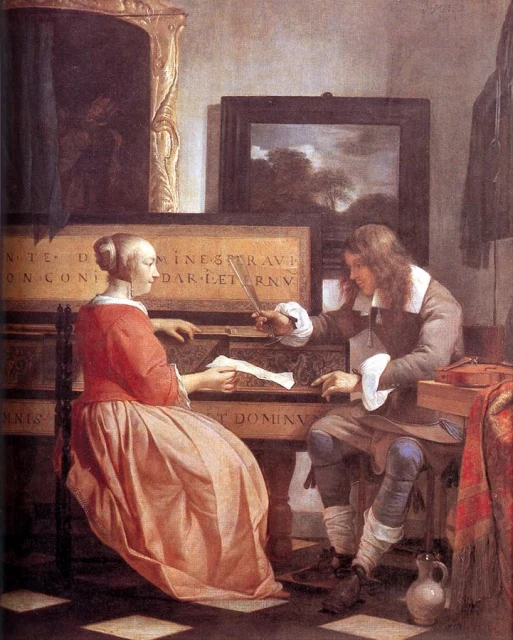 A Man and a Woman seated by a VirginalGabriel Metsu, 1665
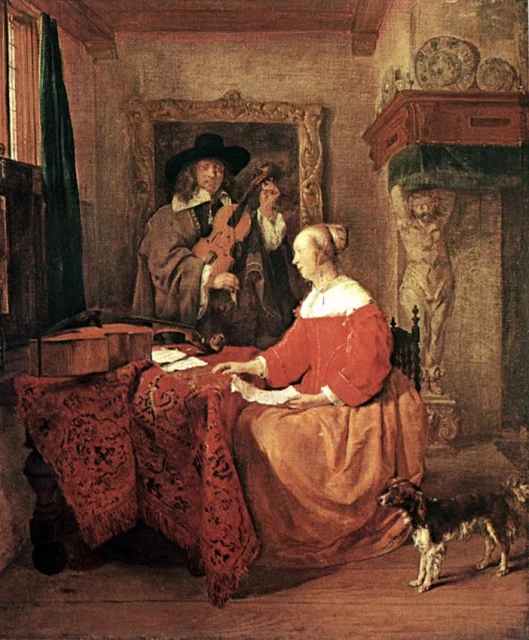 A Woman seated at a Table and a Man tuning a ViolinGabriel Metsu, 1658
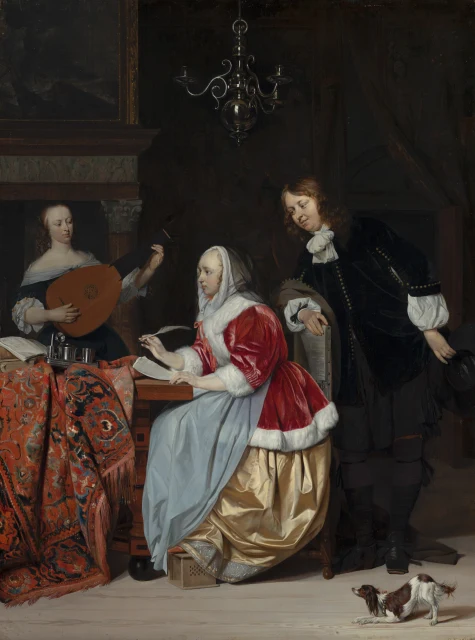 A Young Woman Composing a Piece of MusicGabriel Metsu, 1664
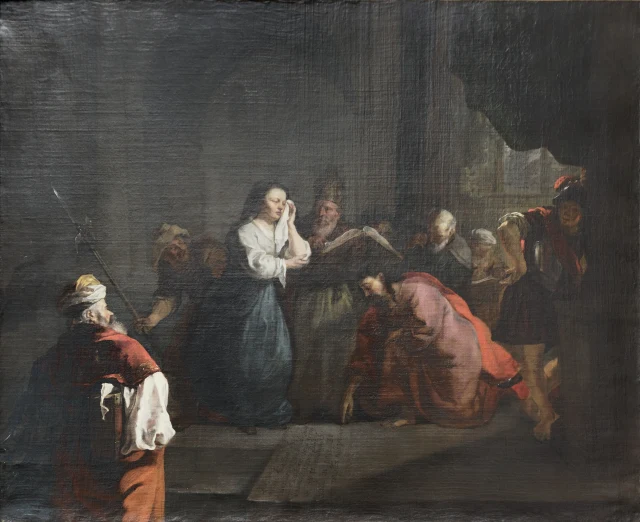 Christ and the Woman Taken in AdulteryGabriel Metsu, 1653
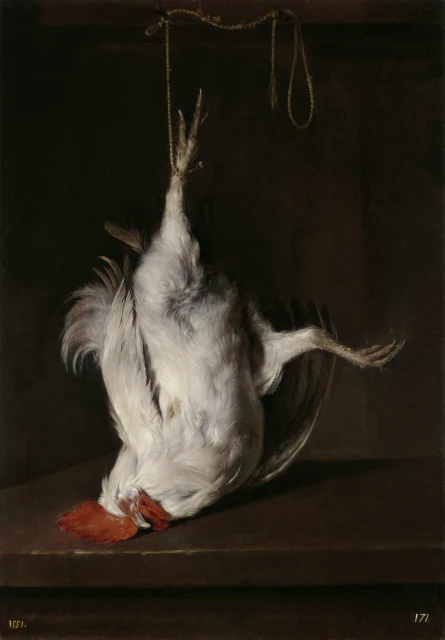 Dead CockGabriel Metsu
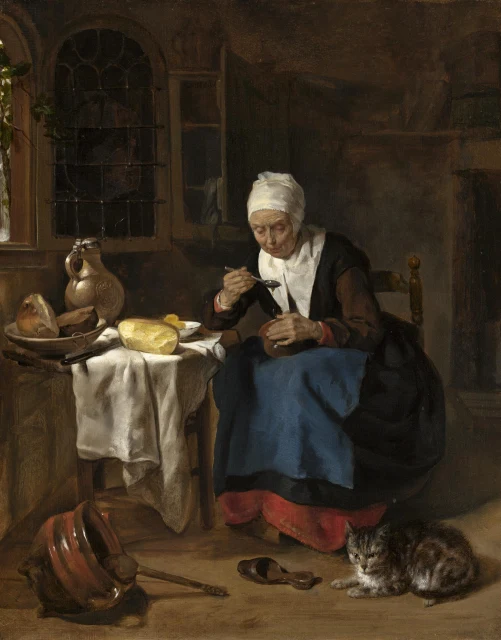 Old Woman Eating PorridgeGabriel Metsu, 1657
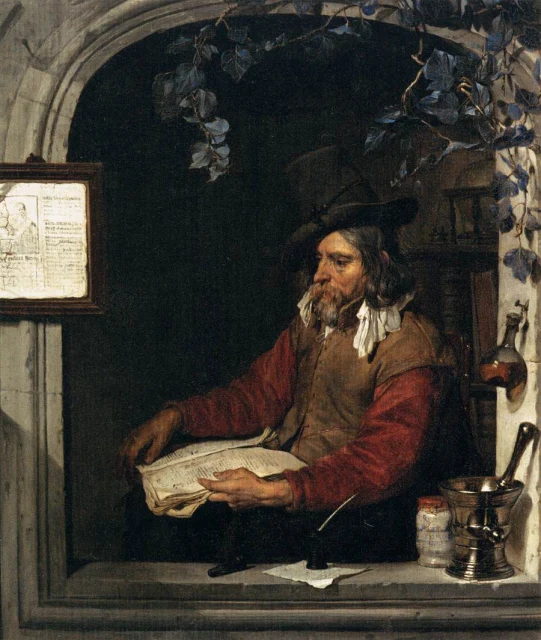 The ApothecaryGabriel Metsu, 1661
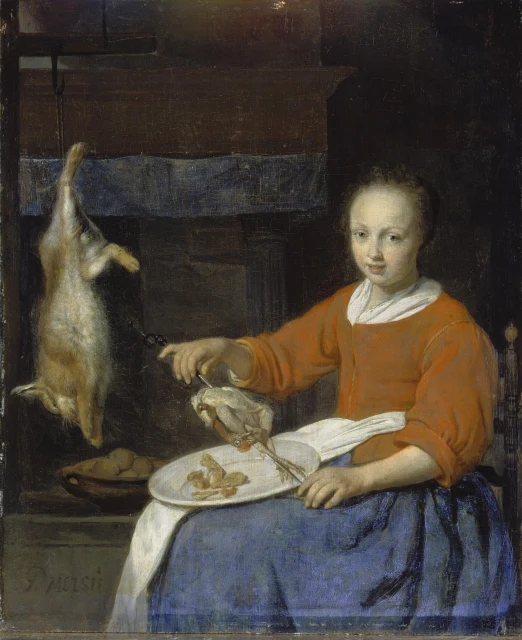 The CookGabriel Metsu, 1665
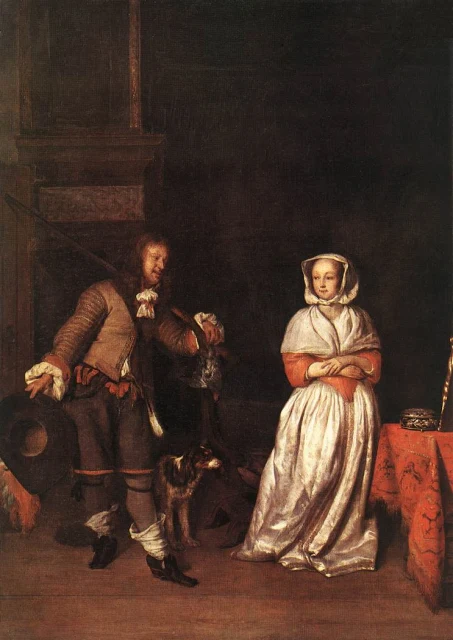 The Hunter and a WomanGabriel Metsu, 1659
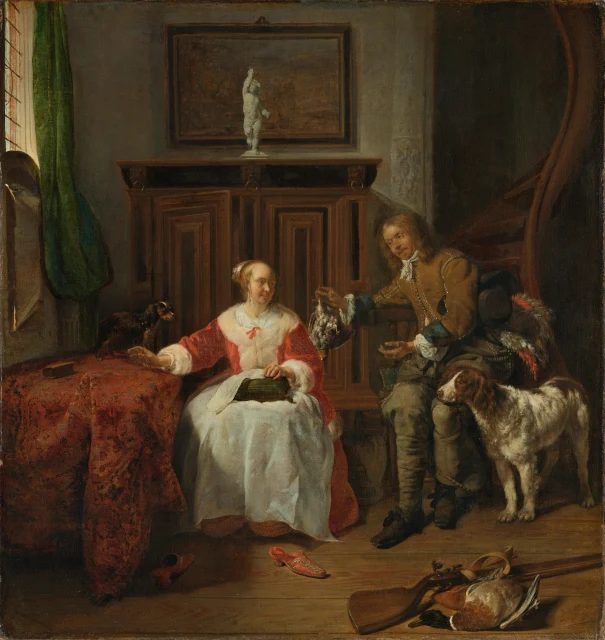 The Hunter’s PresentGabriel Metsu, 1659
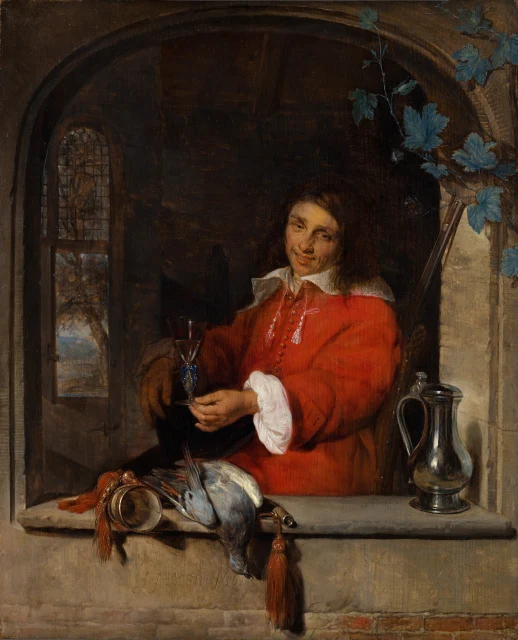 The HuntsmanGabriel Metsu, 1661
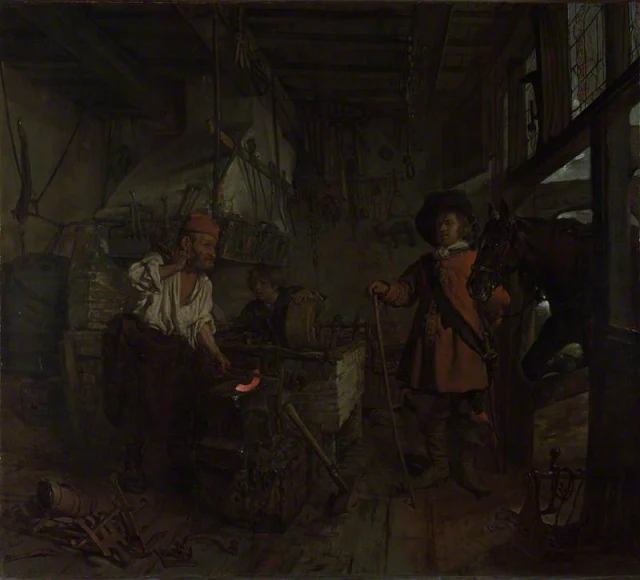 The Interior of a SmithyGabriel Metsu, 1657
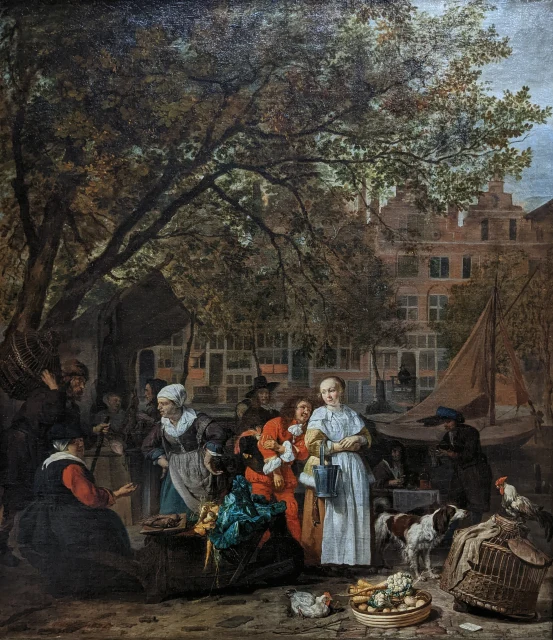 The Vegetable Market in AmsterdamGabriel Metsu, 1660
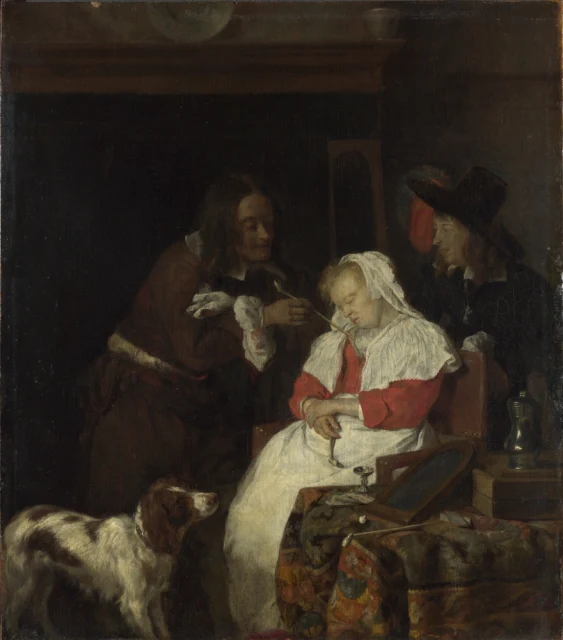 Two Men with a Sleeping WomanGabriel Metsu, 1657
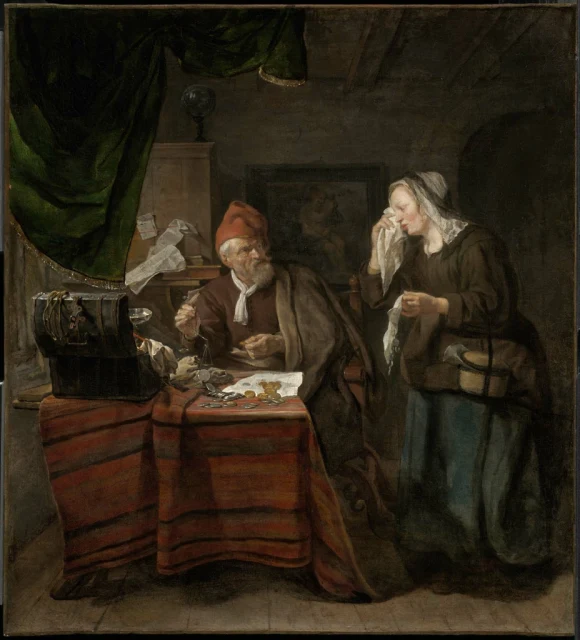 Usurer with a Tearful WomanGabriel Metsu, 1654
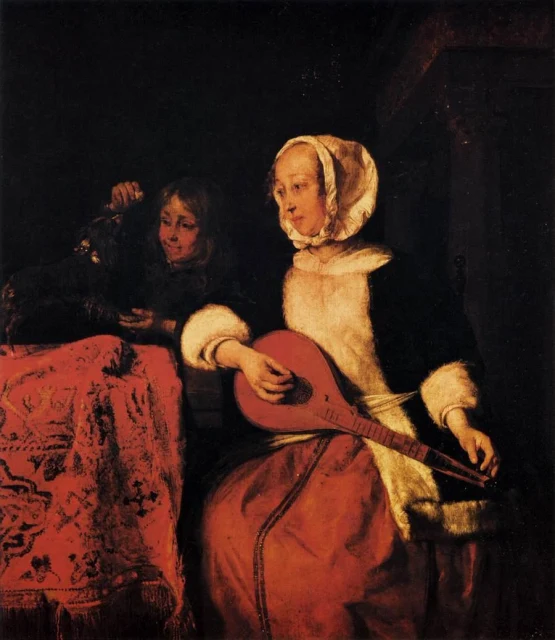 Woman Tuning a MandolinGabriel Metsu, 1658