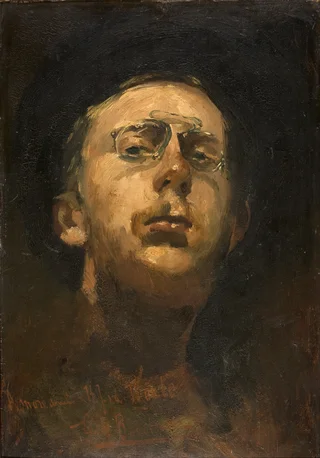
George Hendrik Breitner
1857–1923 · Kingdom of the Netherlands · Hague School
The story
In the winter of 1882, two young painters walked the poorest streets of The Hague together, sketchbooks in hand, looking for servant girls, labourers and ordinary passers-by to draw. One was Vincent van Gogh. The other was George Hendrik Breitner, and though the two never much cared for each other's work, both were after the same thing, the unposed life of the modern city.
Breitner found his real subject when he moved to Amsterdam in 1886. He painted the city as it actually looked in rain and grey light, its canals, building sites, horse-drawn trams and working people, in a loose, dark, atmospheric manner that made him the leading Amsterdam Impressionist. He is also known for a series of a young model wrapped in a Japanese kimono, then the height of fashion.
What almost no one knew in his lifetime was that he worked with a camera. Breitner took thousands of photographs of Amsterdam streets as raw material for his paintings, catching movement and weather before he turned to the canvas. That vast body of photographs stayed private and was only rediscovered decades after his death in 1923.
More articles
Works
7 works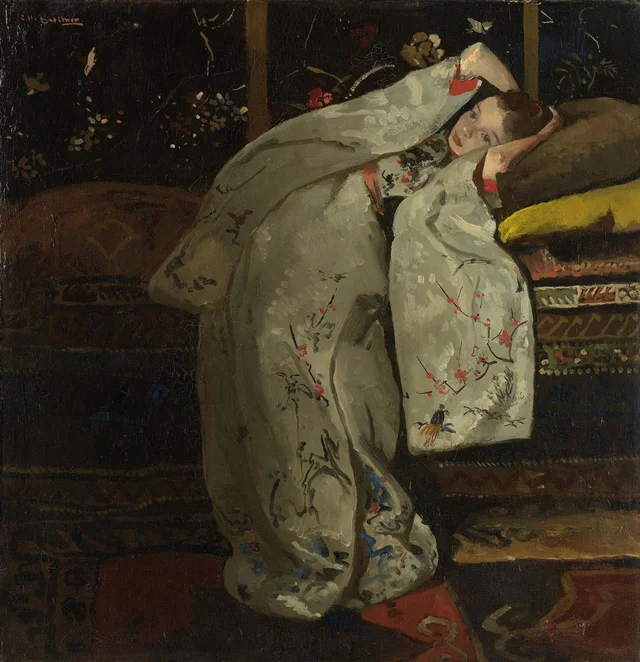 Girl in a White KimonoGeorge Hendrik Breitner, 1894
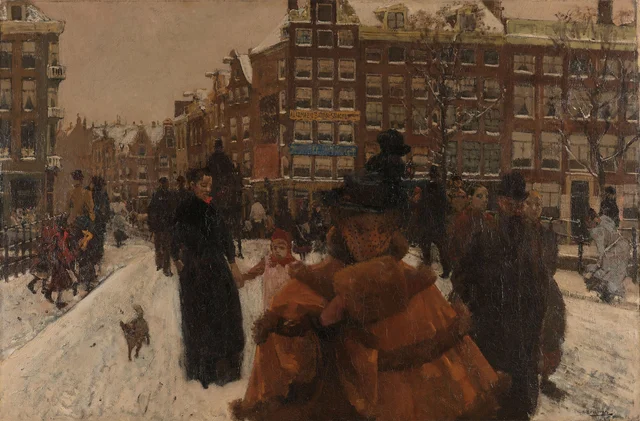 The Singel Bridge at the Paleisstraat in AmsterdamGeorge Hendrik Breitner, 1896
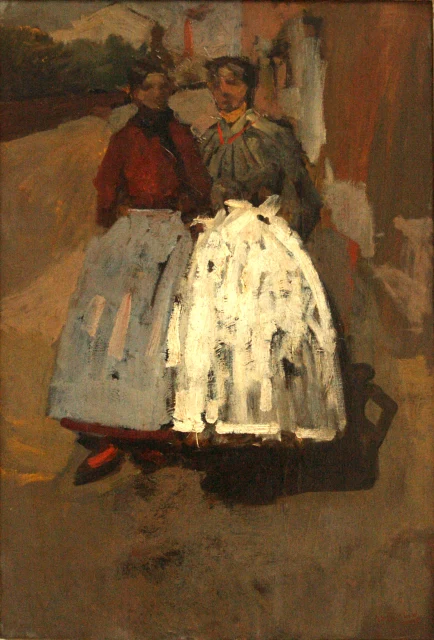 Factory GirlsGeorge Hendrik Breitner, 1898
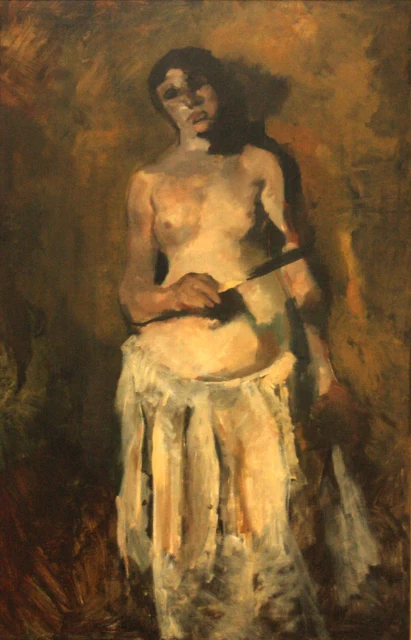 Female NudeGeorge Hendrik Breitner, 1892
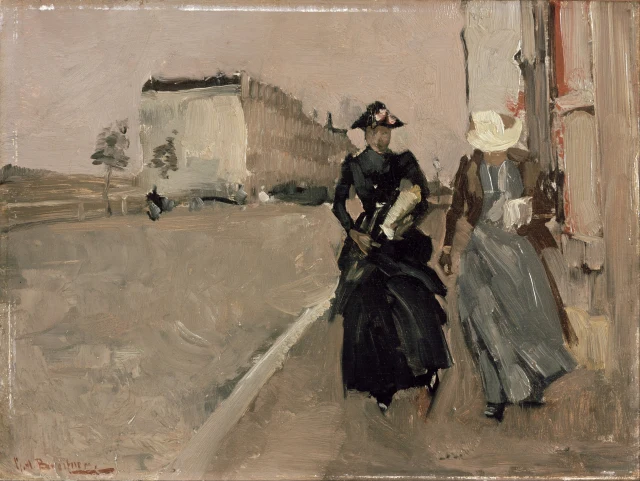 Gust of WindGeorge Hendrik Breitner, 1890
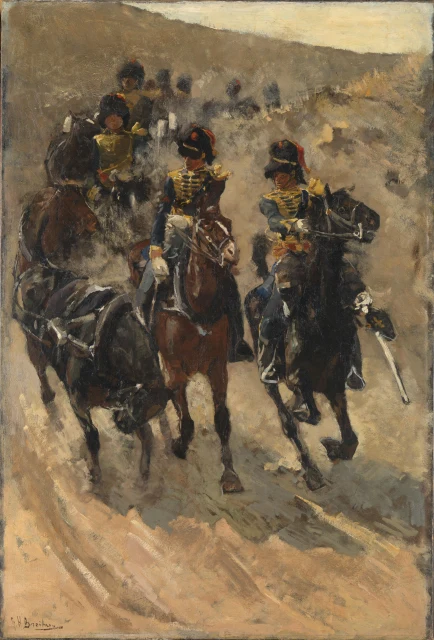 Horse ArtilleryGeorge Hendrik Breitner, 1885
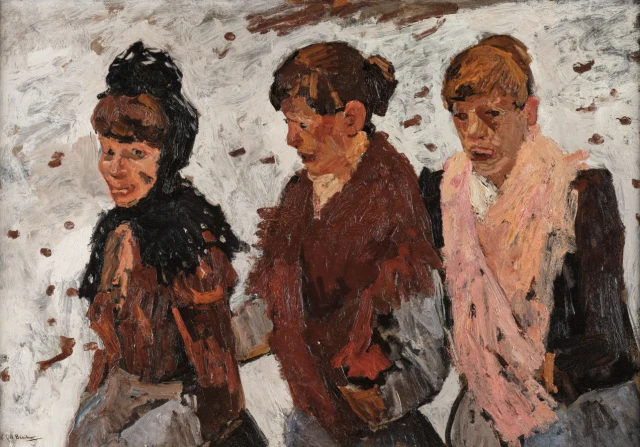 Three Women in the SnowGeorge Hendrik Breitner, 1893