Giovanni d'Alemagna
1450 · Holy Roman Empire, Republic of Venice · Renaissance, Venetian school
The story
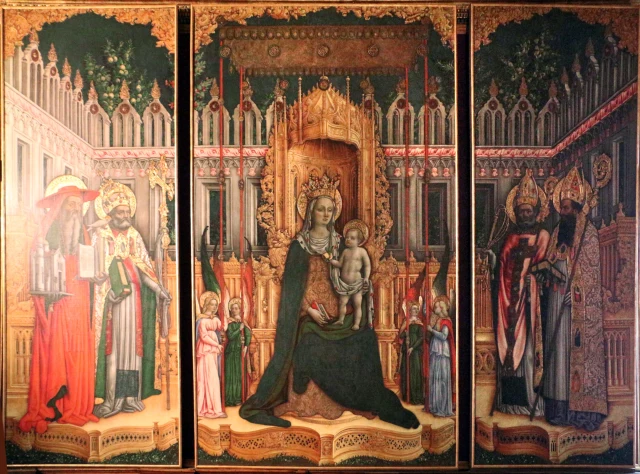
Giovanni d'Alemagna signed himself Johannes Alamanus, the German, and the name is most of what we know of his origins. By the 1440s he was in Venice, painting almost everything jointly with Antonio Vivarini, who had married his sister. The two hands are hard to tell apart on the panel, which is rather the point of a good workshop partnership.
Together they made glowing gold-ground altarpieces for Venetian churches, among them San Zaccaria and San Pantalon, and around 1448 a large polyptych now in the Brera gallery in Milan. In the late 1440s the pair moved to Padua and began a fresco cycle in the Ovetari Chapel of the Eremitani church, sharing the walls with a very young Andrea Mantegna, who would soon be the most talked-about painter in northern Italy.
Giovanni died in July 1450, before the Padua work was finished. Vivarini gave up the unfinished chapel and left the city, and the frescoes passed to Mantegna. That Eremitani cycle was destroyed by a bomb in 1944, so the pair's shared name now rests on the altarpieces they signed together in Venice.