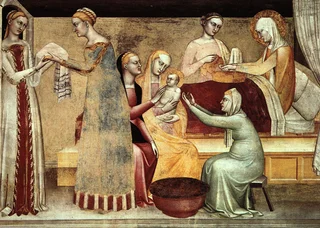
Giovanni da Milano
Republic of Florence · International Gothic
The story
On 17 October 1346 a painter from Caversaccio, a village near Como, turns up in a Florentine register of foreign artists working in Tuscany. Twenty years passed before the city naturalised him. Giovanni di Jacopo, whom Florence called Giovanni da Milano, took its citizenship in 1366.
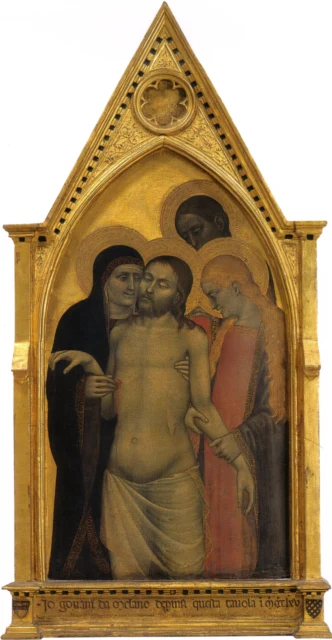
The decades in between were the hardest Florence had known. Plague reached the city in 1348 and killed a great part of it, and much of the painting made afterwards was made for people who had buried their households. Giovanni's Man of Sorrows, signed and dated 1365 and now in the Accademia in Florence, shows the dead Christ upright in the tomb, a panel meant to be prayed in front of at close range.
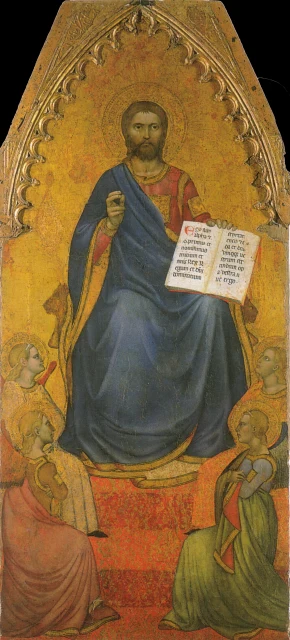
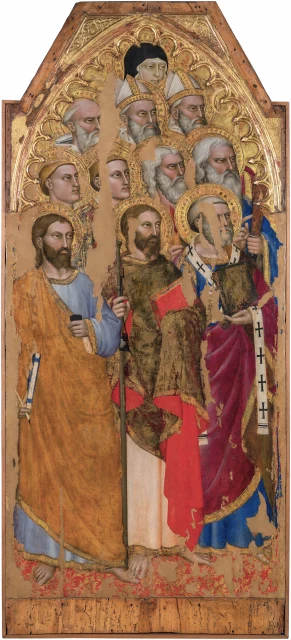
In the same years he frescoed the Rinuccini Chapel in Santa Croce with the lives of the Virgin and of Mary Magdalene, filling them with closely observed rooms, furniture and cloth. That attention is usually read as Lombard, carried south into a Florence still working in Giotto's wake. He left the chapel unfinished in 1369 and went to Rome to paint for Pope Urban V alongside the painter Giottino and the sons of Taddeo Gaddi, and after that the documents stop. The Brera panel of Christ enthroned and adored by angels, the centre of an altarpiece from around 1360, reached Milan only in 1970, from the collection of Alessandro Contini Bonacossi.