Hugo van der Goes
1440–1482 · Burgundian Netherlands · Early Netherlandish painting
The story
Hugo van der Goes was at the top of his profession in Ghent when he walked away from it. A master in the painters' guild by 1467, celebrated across Flanders, he closed his workshop around 1477 and entered a monastery near Brussels as a lay brother, though he went on painting there.
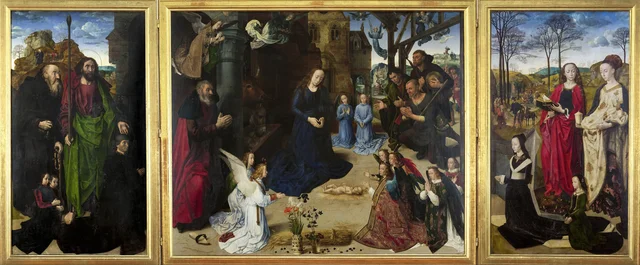
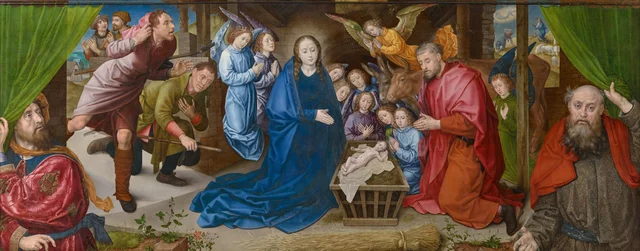
His masterpiece had already travelled south. The Florentine agent Tommaso Portinari commissioned a vast altarpiece of the shepherds adoring the newborn Christ, and when it reached Florence it stunned local painters with its scale, its cold realism and the raw grief on ordinary faces. Italian artists studied its northern detail for decades.
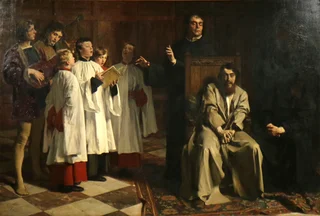
The monk who chronicled his cloister recorded what happened next. On a journey home van der Goes fell into a deep depression, became convinced he was damned, and tried to take his own life, and the brothers played music to calm him. He recovered enough to paint a little more, then died in 1482, leaving work unfinished and one of the strangest biographies in early Netherlandish art.