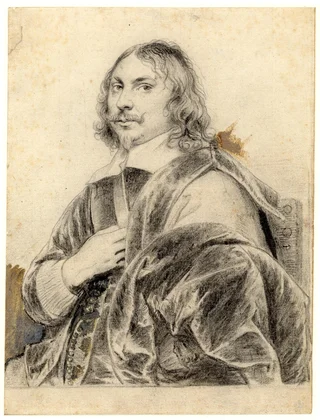
Jan Davidsz. de Heem
1606–1684 · Dutch Republic · Baroque, Dutch Golden Age, Flemish Baroque
The story
Jan Davidsz. de Heem trained in the sober still-life tradition of the Dutch Republic, learning to render a lemon peel or a single dewdrop with almost scientific patience. Around 1636 he moved south to Antwerp and joined its painters' guild, and something opened up. The restrained Dutch table became a Flemish feast of oysters, lobsters, wine glasses, silver and half-peeled fruit, piled high and lit for sheer abundance.
These sumptuous displays had a name, pronkstilleven, the 'ostentatious' still life, and de Heem became its greatest hand, working for patrons on both sides of the border through the middle of the century.
He also wove flowers and fruit into garlands, sometimes ringing a portrait or a Madonna inside a wreath. One late price captures his standing. A portrait of Prince William III of Orange, framed by his flowers and fruit, fetched 2000 guilders, among the highest sums paid for any picture in the Dutch Golden Age.
More articles

Works
6 works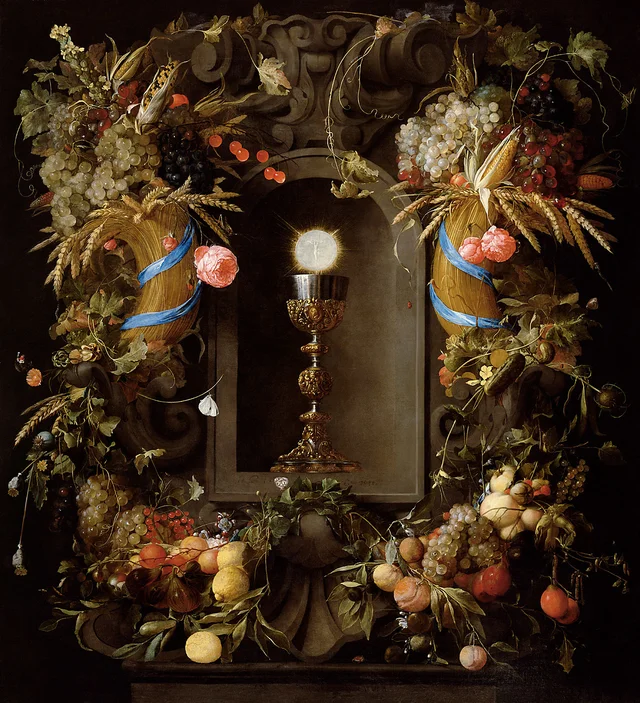 Chalice and Host in a Niche, within a Cartouche of Roses and FruitJan Davidsz. de Heem, 1648
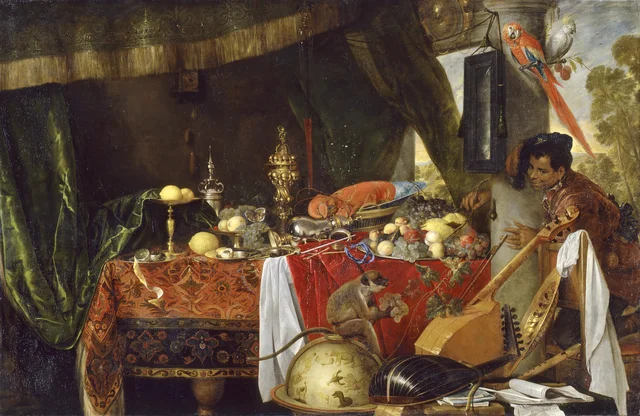 The meal in peril. Still life with black servant and parrotJan Davidsz. de Heem, 1641
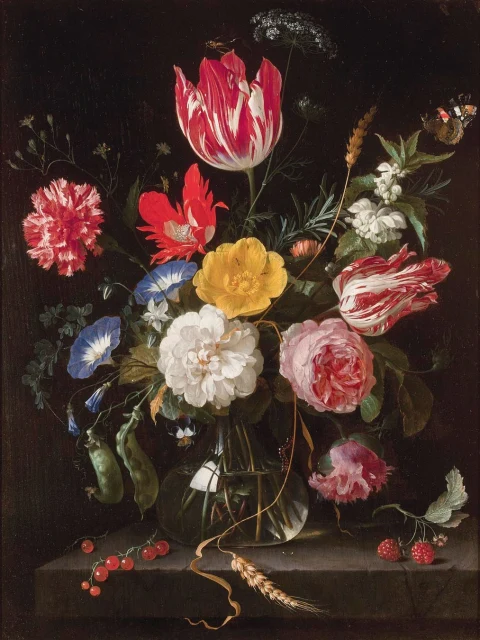 Glass Vase with Flowers on a Stone LedgeJan Davidsz. de Heem, 1657
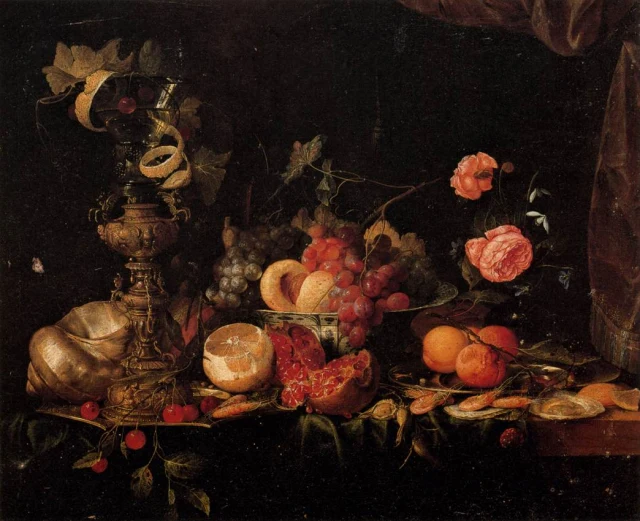 Still-Life with Flowers and FruitJan Davidsz. de Heem, 1660
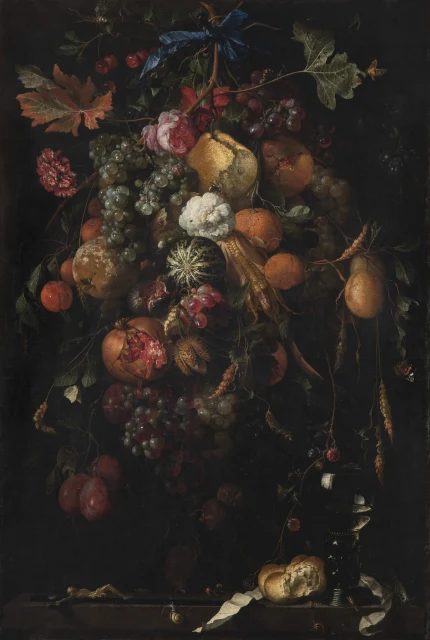 Still Life with Fruit and FlowersJan Davidsz. de Heem, 1667
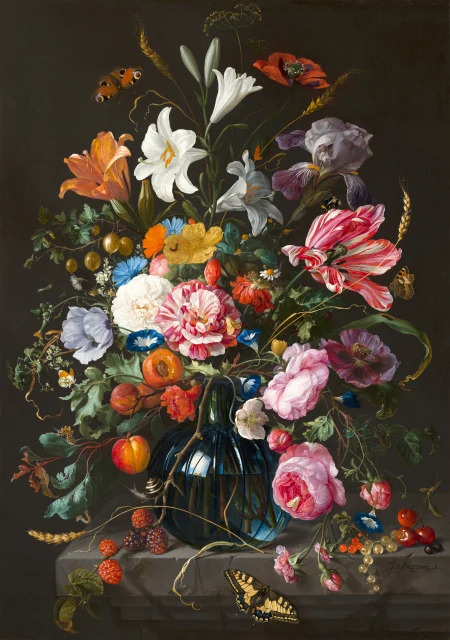 Vase of FlowersJan Davidsz. de Heem, 1670