Jan Willem Pieneman
1779–1853 · Kingdom of the Netherlands · Romanticism
The story
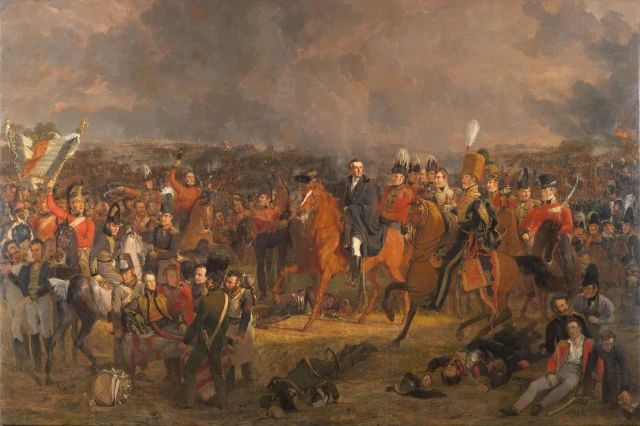
In February 1821 a Dutch painter set up a temporary studio inside Apsley House, the Duke of Wellington's London mansion. Wellington posed for him there and even had his horse Copenhagen brought to town to be drawn, while the painter arranged sittings with other senior officers who had fought at Waterloo. The painter was Jan Willem Pieneman, and those sittings fed a vast canvas, The Battle of Waterloo, 567 by 823 centimetres, finished in 1824.
He came to the subject from the Dutch side. His 1818 painting of the Prince of Orange, the Dutch crown prince, at Quatre Bras, a clash two days before Waterloo, had made his name. In the big picture Wellington sits on Copenhagen at the centre as news arrives that the Prussians under Blücher are reaching the field, and the wounded Prince of Orange is carried on a stretcher in the lower left. The canvas was first intended for Wellington. King William I bought it instead for 40,000 guilders as a gift for his son, that same prince, and Pieneman kept the right to show it in London. In 1825 it drew crowds in a pavilion built for it in Hyde Park, where it hung on the tenth anniversary of the battle.
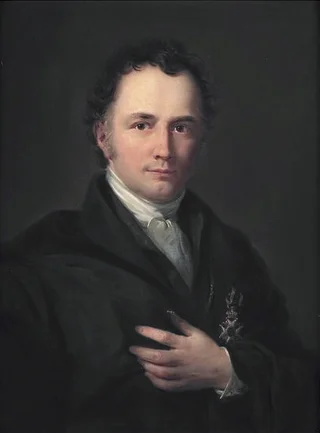
Pieneman had begun as a salesman while taking classes at the city drawing academy in Amsterdam. From 1820 until his death in 1853 he was the first director of the new Royal Academy of Fine Arts in Amsterdam, and from 1844 to 1847 he also ran the Rijksmuseum. One of his pupils was Jozef Israëls, later a leading painter of the Hague School. His Waterloo canvas is now the largest painting in the Rijksmuseum's collection.