Jean-Étienne Liotard
1702–1789 · Republic of Geneva · Rococo, Orientalism, Realism
The story
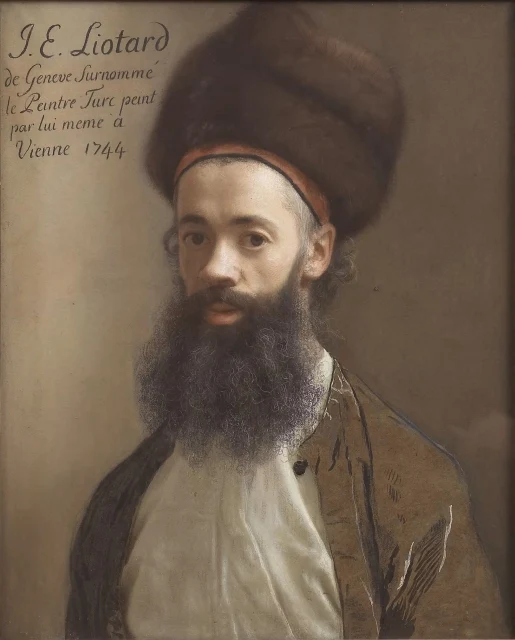
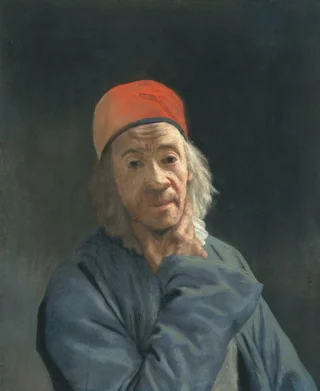
A jeweller's son from Geneva, Jean-Étienne Liotard spent four years in Constantinople in the 1730s and 40s, and he never quite came home. He returned to Europe in Ottoman dress, with a long beard and a fur-lined robe, and kept wearing them at the courts he worked in. Vienna nicknamed him the Turkish painter, and the costume was good business, since it made him unforgettable in rooms full of powdered wigs.
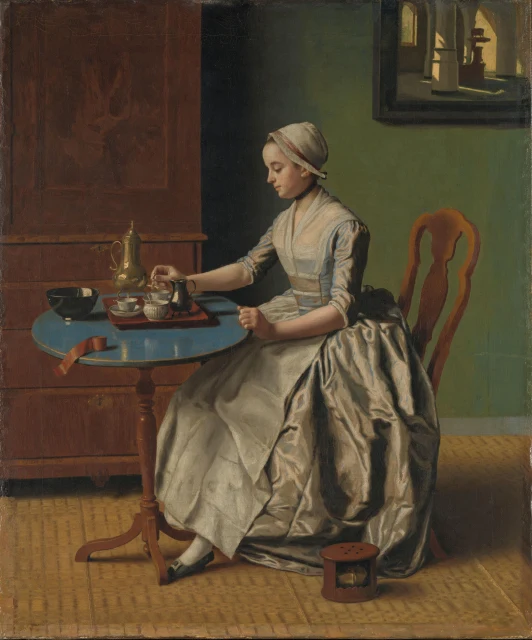
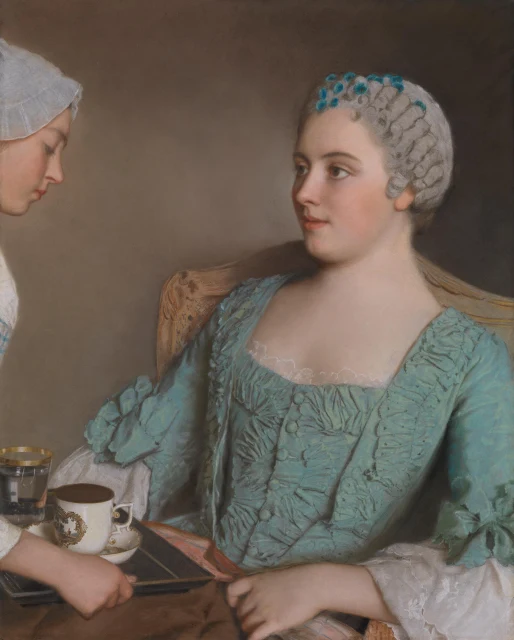
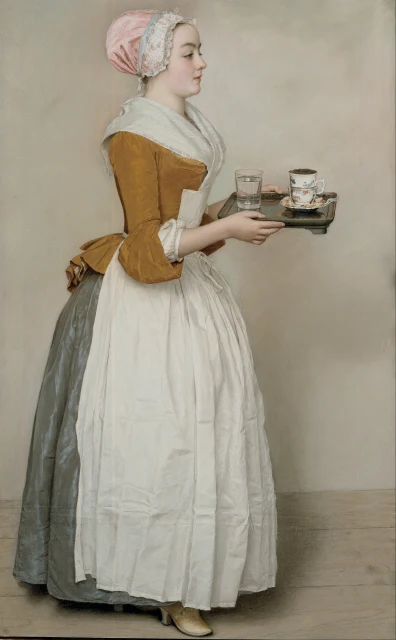
His real gift was pastel, the soft colored chalk most artists used only for quick sketches. Liotard pushed it to an almost unnerving smoothness, every fold of silk and every porcelain cup rendered with what looks like photographic patience. Around 1744, working for the Austrian empress Maria Theresa in Vienna, he made the Chocolate Girl: a maidservant carrying a tray with a cup of hot chocolate and a glass of water, seen in perfect profile against a plain wall.
Rosalba Carriera, the most admired pastellist of the age, called it the most beautiful pastel she had ever seen. It hangs today in Dresden, where a chocolate company later borrowed the serving girl for its trademark.