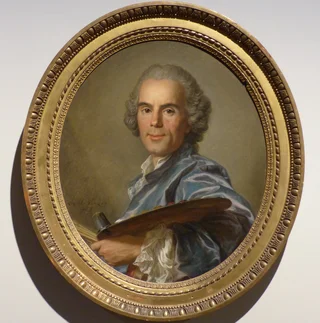
Joseph Vernet
1714–1789 · Kingdom of France · Rococo, Neoclassicism
The story
In 1753 the French crown gave Claude-Joseph Vernet an enormous job, to travel the coast of France and paint its major ports, one big canvas after another, as a record of the kingdom's sea power. He spent over a decade at it and finished 15 of the planned series before the money and patience ran out.
Vernet had learned his trade in Italy, where he became the painter of the sea for wealthy Grand Tourists. He is best known for two moods, the calm golden harbour at dusk and the shipwreck, with tiny figures clawing up a rock while the surf breaks over them. A story, almost certainly invented, has him lashed to a mast in a gale to study the waves firsthand.
His grandson Horace Vernet became a famous battle painter, making three generations of the family in the trade. Most of the Ports of France canvases now hang in the Musée de la Marine in Paris, and two of them, Marseille and Toulon, remain in the Louvre.
Works
12 works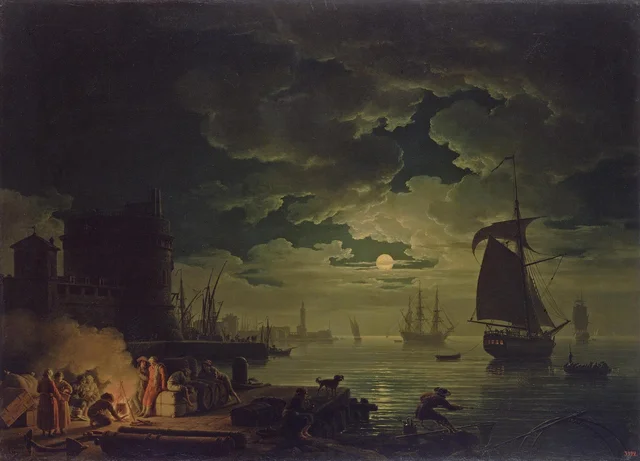 Entrance to the Port of Palermo by MoonlightJoseph Vernet, 1769
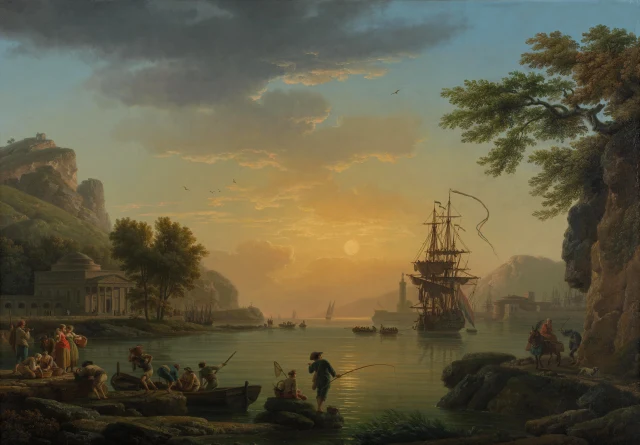 A Landscape at Sunset with Fishermen returning with their Catch ('Calme')Joseph Vernet, 1773
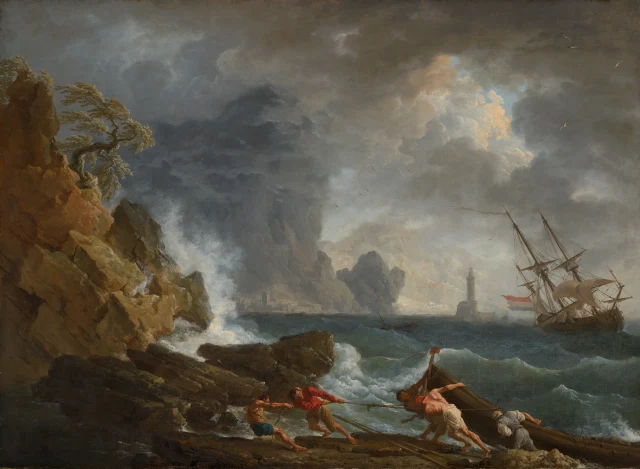 An Italian Harbour in Stormy WeatherJoseph Vernet, 1745
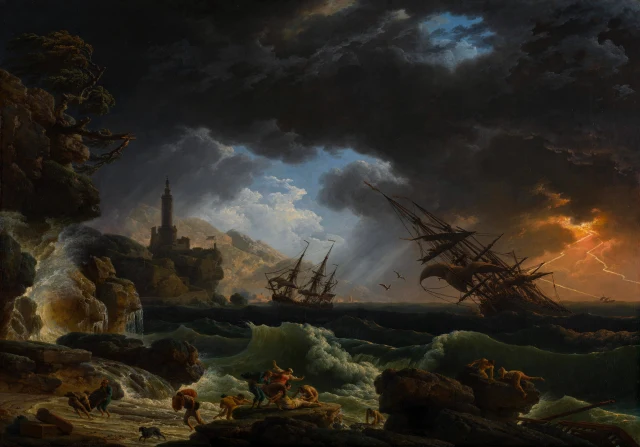 A Shipwreck in Stormy Seas ('Tempête')Joseph Vernet, 1773
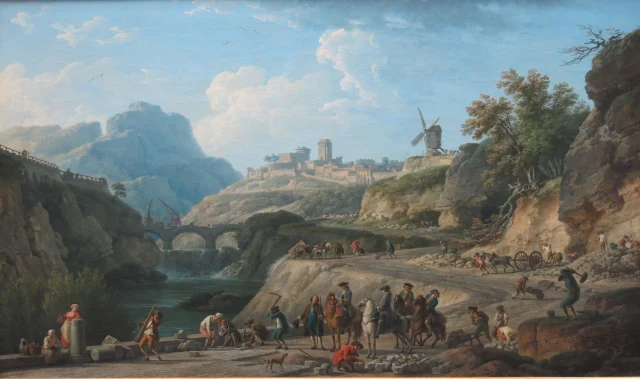 Construction of a Large RoadJoseph Vernet, 1774
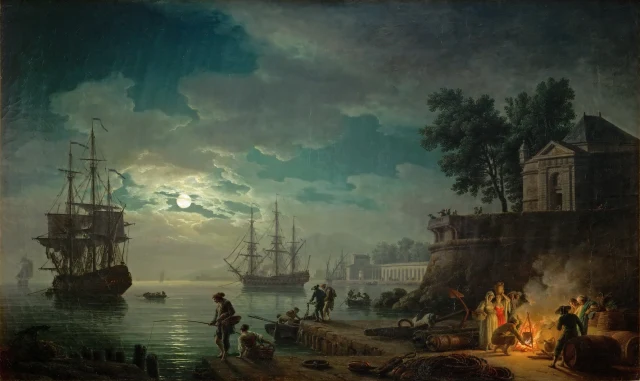 Seaport by MoonlightJoseph Vernet, 1771
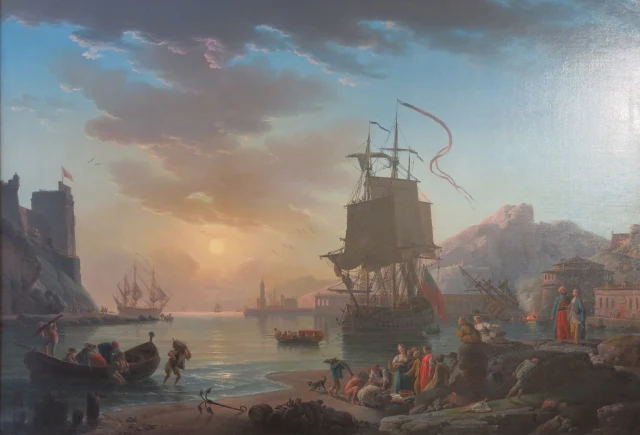 Seascape at SunsetJoseph Vernet, 1774
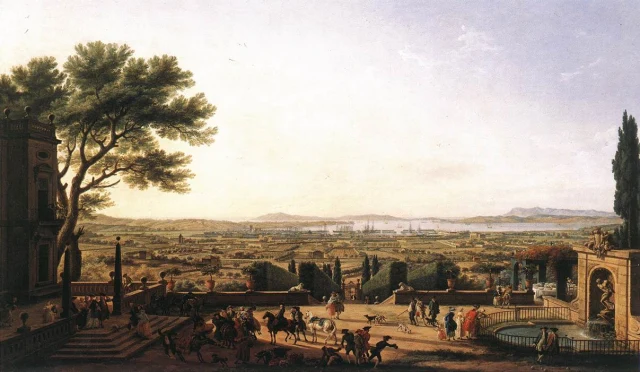 The City and Bay of ToulonJoseph Vernet, 1756
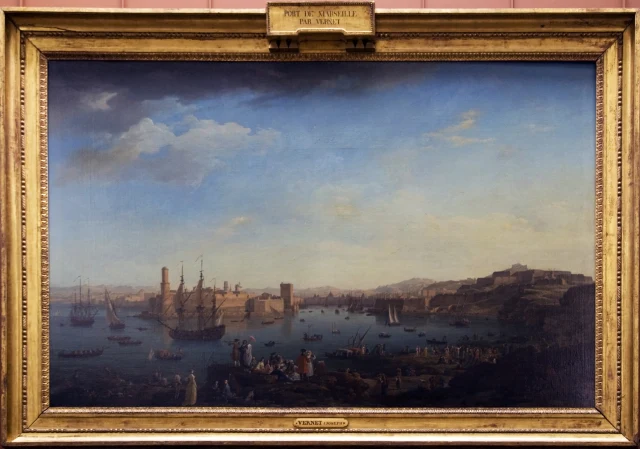 The Entrance to the Port of MarseilleJoseph Vernet, 1754
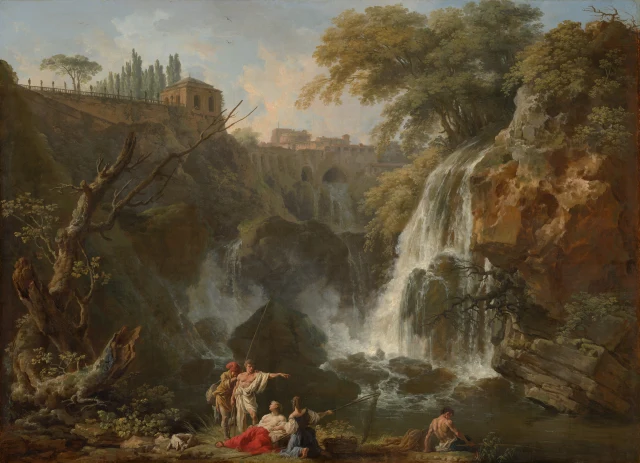 The Waterfalls at Tivoli, with the Villa of MaecenasJoseph Vernet, 1745
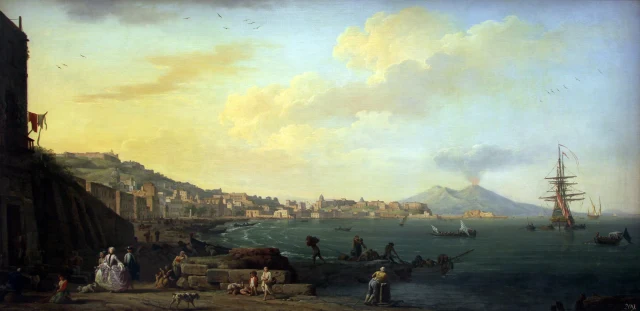 View of Naples with Mount VesuviusJoseph Vernet, 1748
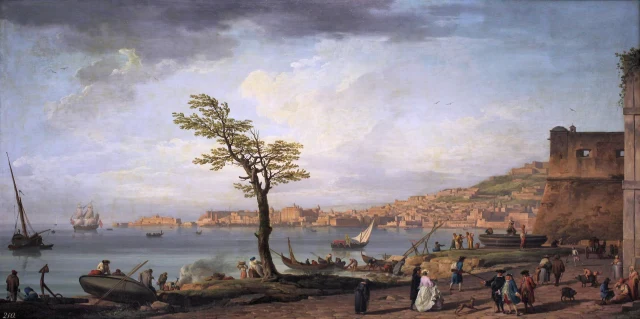 View of the Bay of NaplesJoseph Vernet, 1748