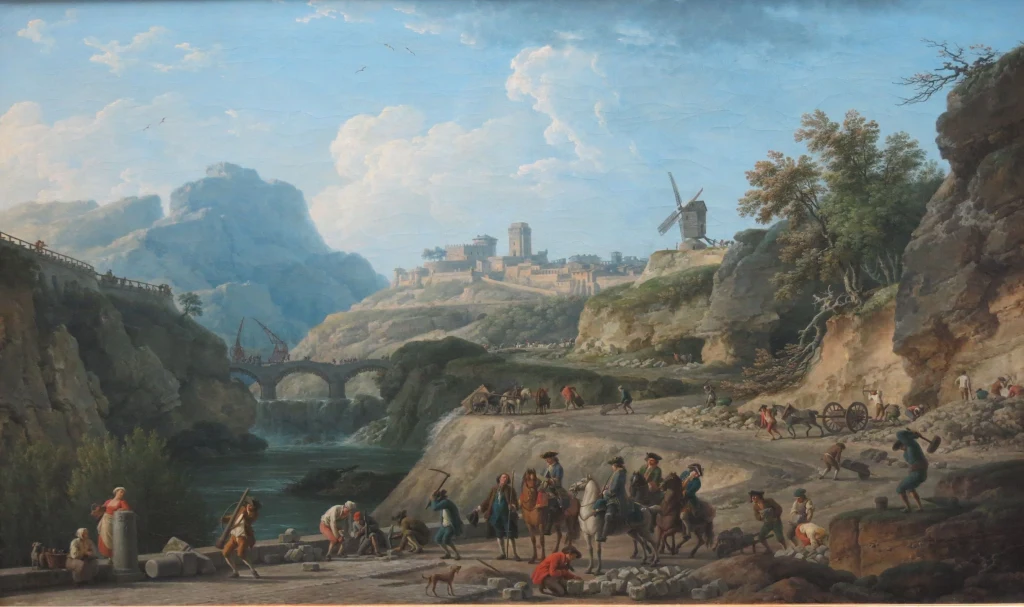
Construction of a Large Road
Details
The story
In the 1770s France was laying royal roads across the kingdom, and much of the labour came from the corvée, unpaid work that villagers owed the crown for several days a year. The man who ordered this canvas, the abbé Terray, was the king's controller-general of finances, the minister whose department ran the roads, and Vernet signed it in 1774. The rider in the middle holding plans is thought to be Jean-Rodolphe Perronet, chief engineer of the royal bridges and roads service, on one of his tours of inspection. Around him men cut back the rock, shape and lay paving stones and beat the surface flat. By the roadside stands a milestone stamped with a fleur-de-lis, giving the distance from Paris in leagues. Terray lost office that same year, soon after Louis XVI came to the throne, and in 1776 his successor Turgot briefly abolished the road corvée. Vernet showed the picture at the Salon of 1775 with its companion, the approach to a country fair, which is now in Montpellier.
More works by Joseph Vernet
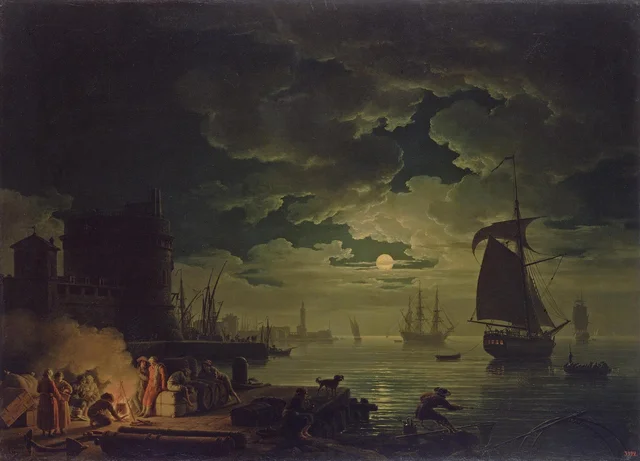 Entrance to the Port of Palermo by MoonlightJoseph Vernet, 1769
 A Landscape at Sunset with Fishermen returning with their Catch ('Calme')Joseph Vernet, 1773
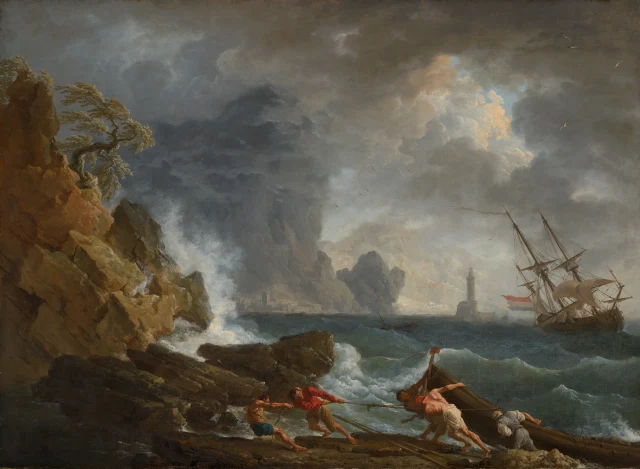 An Italian Harbour in Stormy WeatherJoseph Vernet, 1745
 A Shipwreck in Stormy Seas ('Tempête')Joseph Vernet, 1773
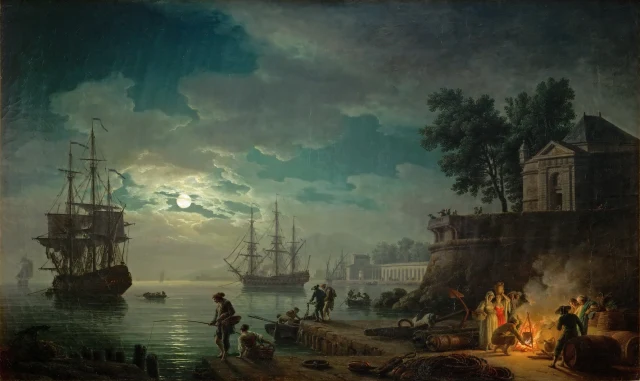 Seaport by MoonlightJoseph Vernet, 1771