Justus van Gent
Burgundian Netherlands · Early Netherlandish painting
The story
Around 1473 a painter from Ghent turned up at the court of Urbino, in central Italy, working for one of the shrewdest soldiers of the age, Federico da Montefeltro, a mercenary commander who had built himself a palace and a famous library. Federico wanted the meticulous oil technique of the Netherlands, and Justus van Gent brought it south.
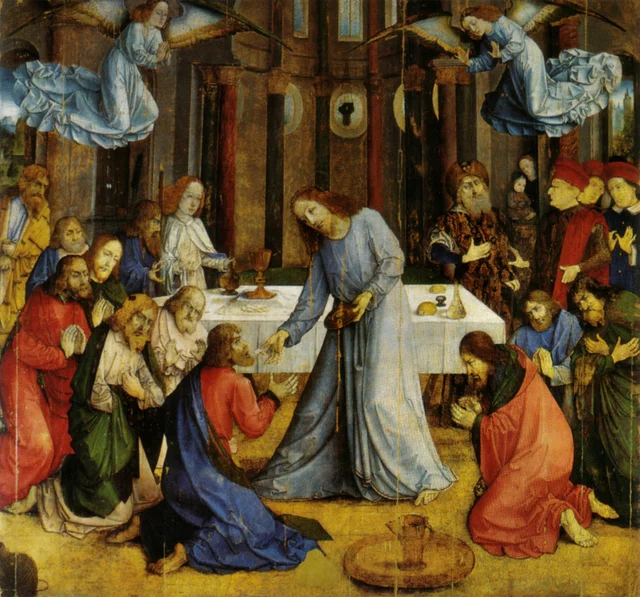
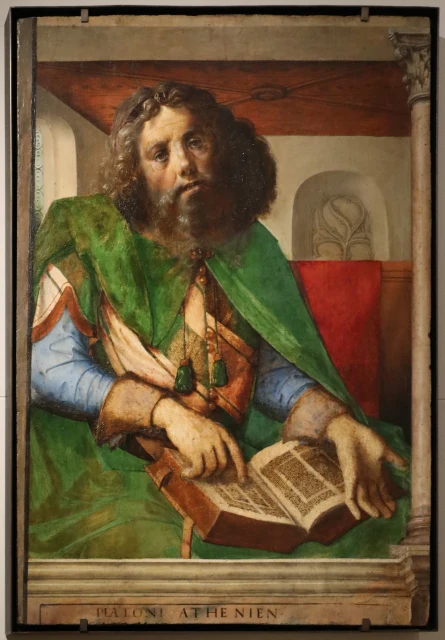
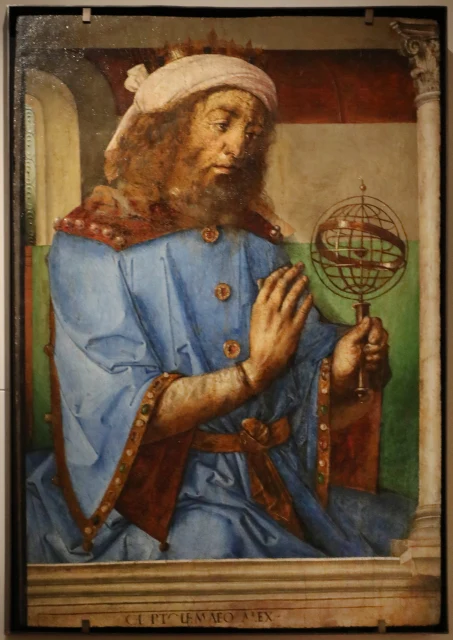
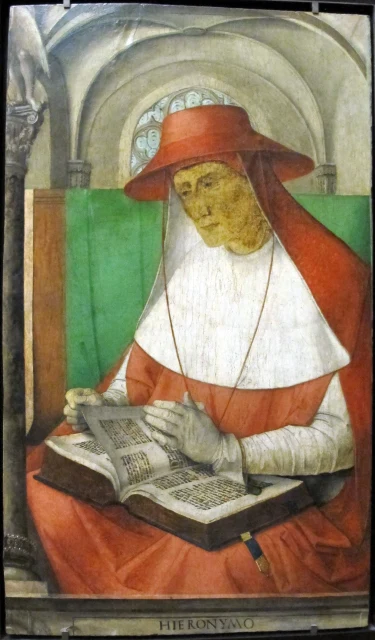
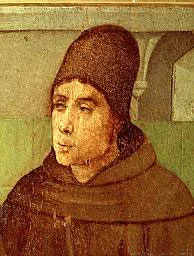
For the brotherhood of Corpus Domini in Urbino he painted, between 1472 and 1474, a Communion of the Apostles, Christ placing the host on an apostle's tongue, with Federico and his court looking on at the edge. He is also tied to the strangest room in the palace, the duke's studiolo, a small study lined with 28 painted portraits of famous men of learning, from ancient philosophers to living scholars, a project he seems to have shared with the Spanish painter Pedro Berruguete.
Before Italy he had been a master in Ghent, where in 1467 he stood as a guarantor for a younger painter joining the guild, Hugo van der Goes, who would become one of the leading Netherlandish painters of his generation. After the mid-1470s Justus disappears from the record, and even his birth and death dates are only approximate.