Louise Moillon
1610–1696 · France · Baroque
The story
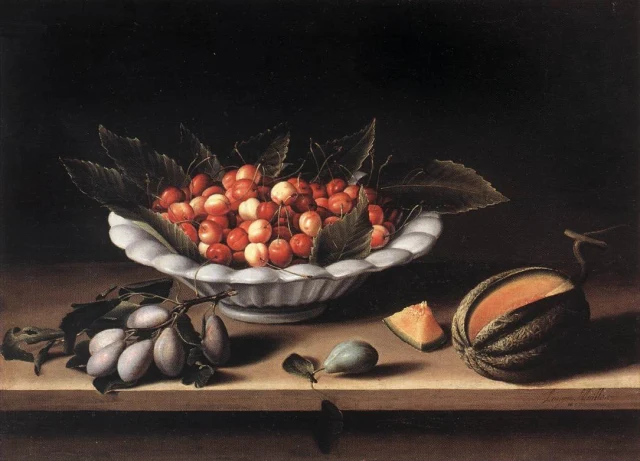
Louise Moillon grew up among painters and picture-dealers in a Protestant corner of Paris, in the 1610s and 1620s, when still-life painting was looked down on as the humblest thing an artist could do. She made it her whole career anyway, and became one of the finest still-life painters in France.
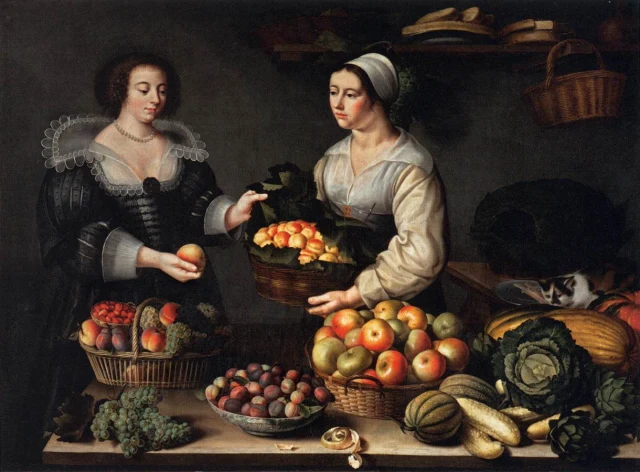
Her father was a painter and art dealer. After he died, her mother married another painter-dealer, and Louise learned the trade at home. Most of her best pictures were done while she was still young, before marriage largely ended her painting. She set glowing peaches, plums and baskets of cherries against dark backgrounds, each fruit rendered with a quiet, almost breath-held precision. Sometimes she added people, turning the still life into a small market scene where a woman weighs fruit or offers a basket across a stall.
Her work travelled far beyond the Paris markets she painted. King Charles I of England, one of the great collectors of the age, is recorded owning several of her pictures. A strict Calvinist all her life, Moillon lived into her eighties, long enough to see France turn on its Protestants when Louis XIV revoked their legal protection in 1685.