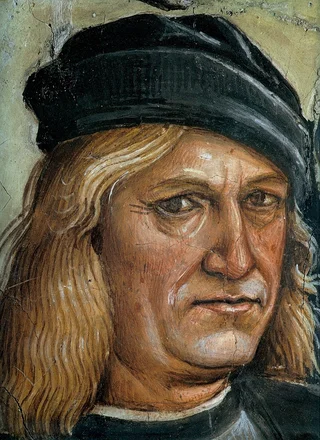
Luca Signorelli
1523 · Republic of Florence · Italian Renaissance
The story
In the cathedral of Orvieto, in central Italy, Luca Signorelli covered the walls of a side chapel with the end of the world. Between about 1499 and 1503 he painted the Last Judgment there: the resurrection of the flesh, the damned dragged down by muscular demons, whole crowds of naked bodies twisting in fear and effort.
Nobody had painted the nude figure in violent motion quite like this before, and a young Michelangelo studied these frescoes closely. The writhing anatomy of the Sistine Ceiling owes something to what Signorelli worked out in Orvieto a decade earlier. He came from Cortona in Tuscany and trained in the workshop of Piero della Francesca, the great master of quiet geometry, then pushed in the opposite direction toward energy and strain.
Vasari, the first biographer of the Italian artists, told a grim story that Signorelli once painted his own dead son, killed young, in order to keep his face. Signorelli outlived the High Renaissance he had helped set in motion and died back in Cortona in 1523, a wealthy and honoured man in his home town.
Works
20 works Crucifixion of ChristLuca Signorelli, 1502
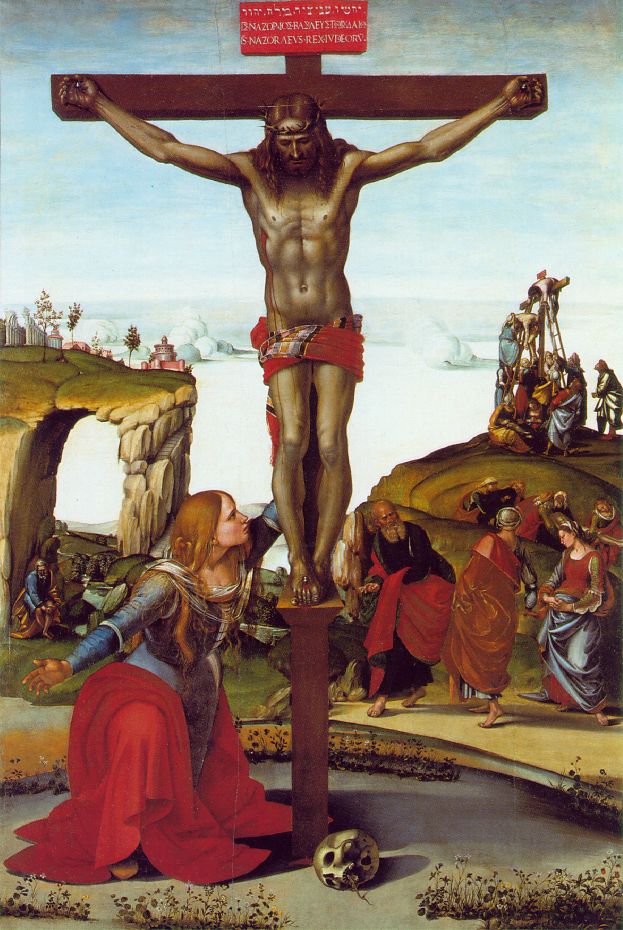 Crucifixion with Saint Mary MagdaleneLuca Signorelli, 1502
 Lamentation over the dead ChristLuca Signorelli, 1502
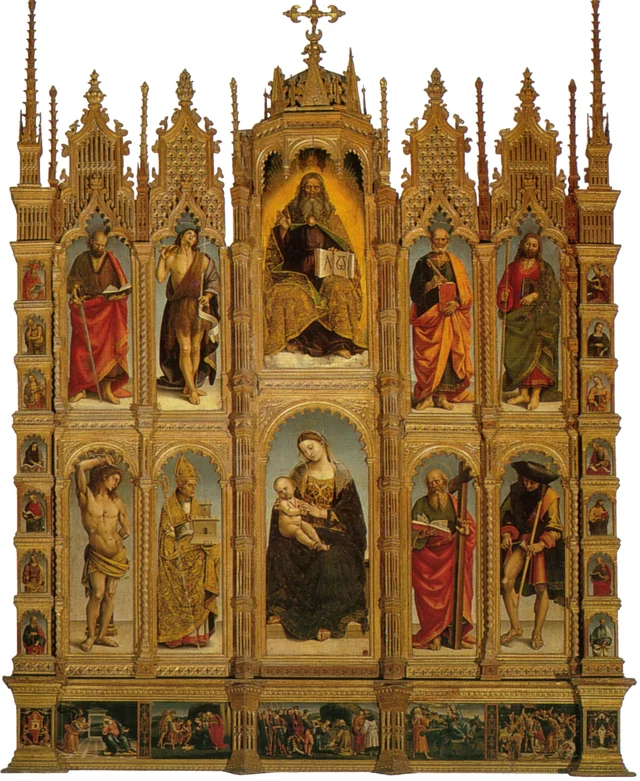 Polyptych of saintsLuca Signorelli, 1507
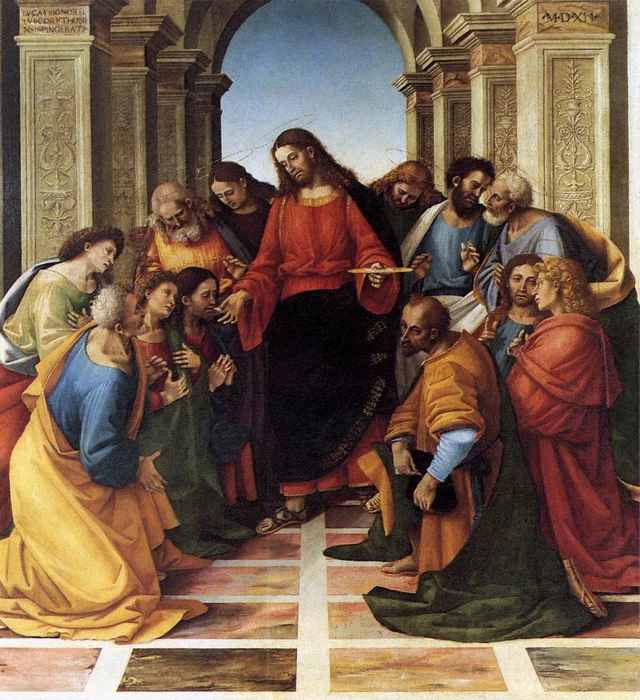 Communion of the Apostles (Signorelli)Luca Signorelli, 1512
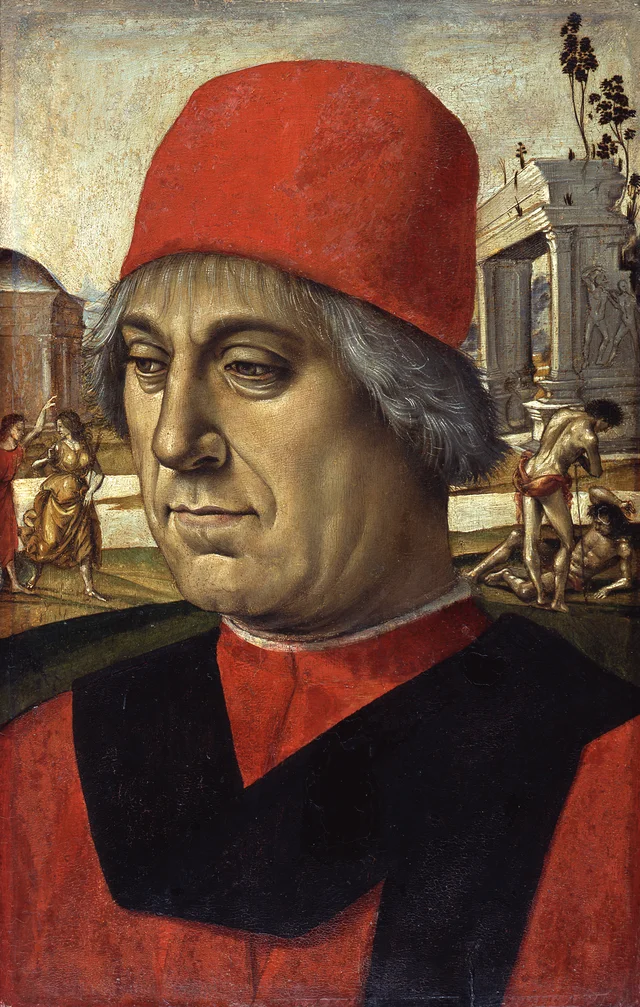 Portrait of a ManLuca Signorelli, 1492
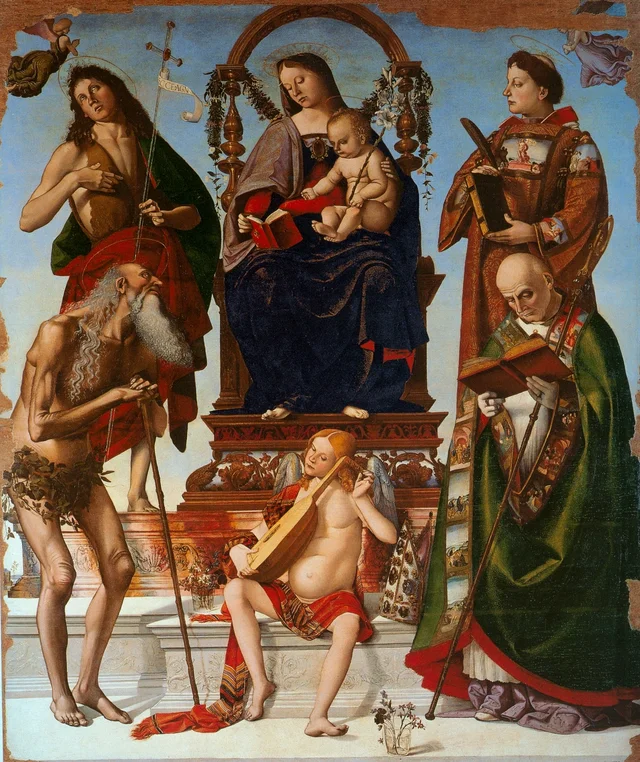 Sant'Onofrio AltarpieceLuca Signorelli, 1484
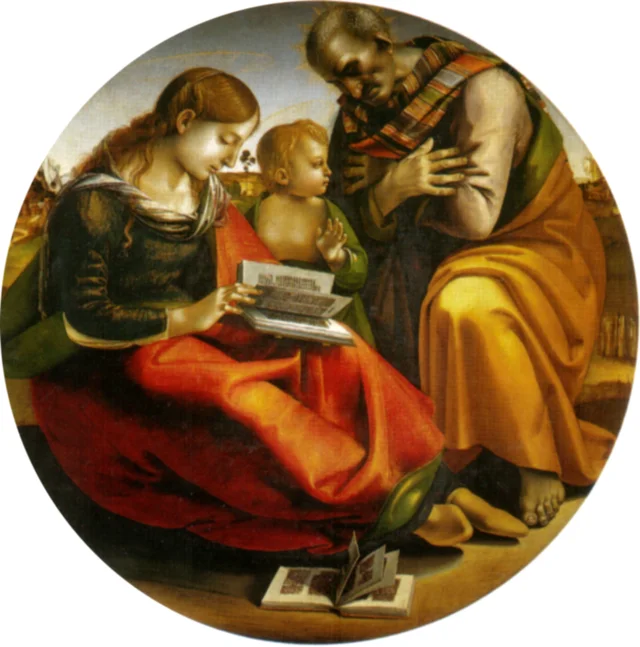 The Holy Family di Parte GuelfaLuca Signorelli, 1490
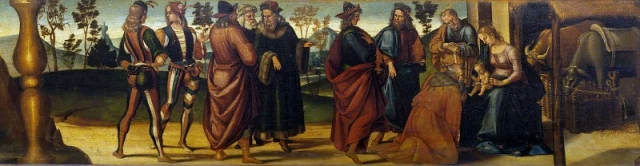 Adoration of the MagiLuca Signorelli
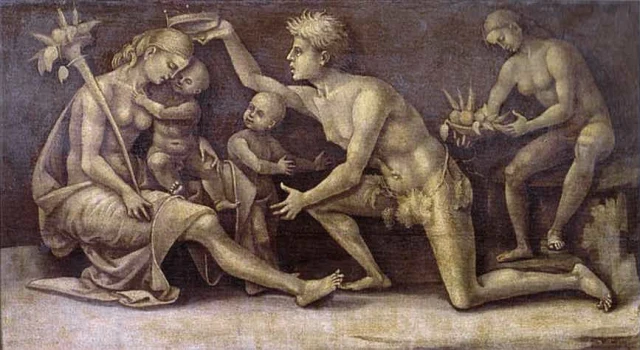 Allegory of Fertility and AbundanceLuca Signorelli, 1500
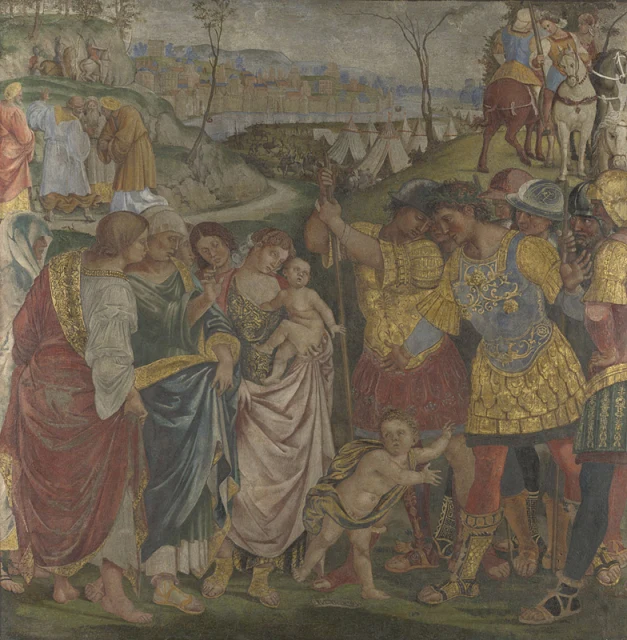 Coriolanus persuaded by his Family to spare RomeLuca Signorelli, 1509
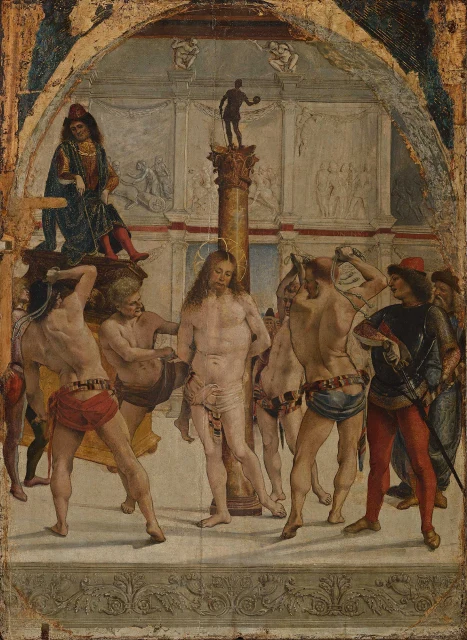 FlagellationLuca Signorelli, 1483
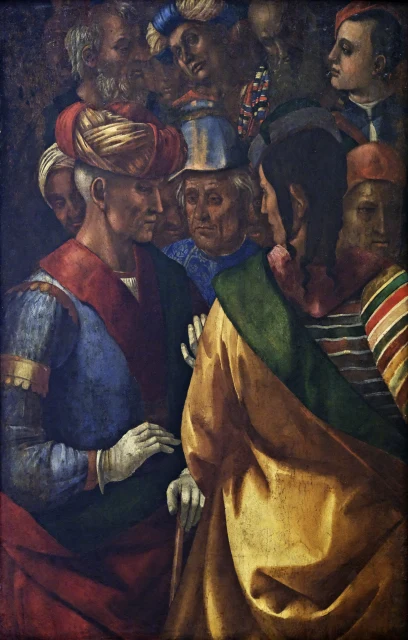 Group of Fifteen Standing FiguresLuca Signorelli, 1488
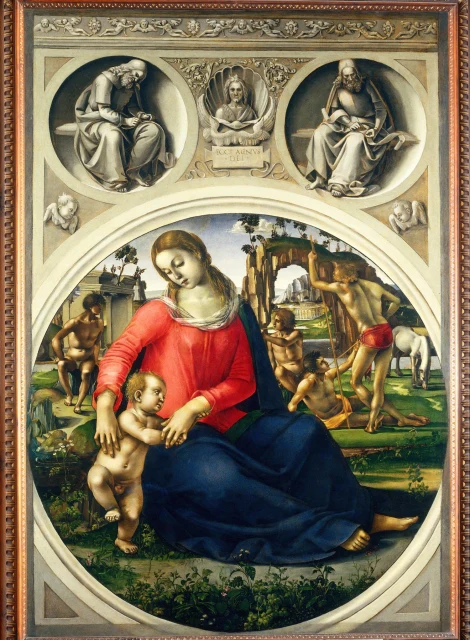 Madonna and ChildLuca Signorelli, 1490
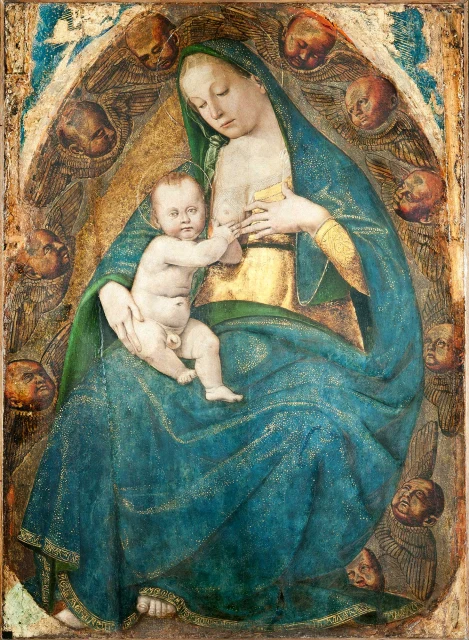 Nursing MadonnaLuca Signorelli, 1483
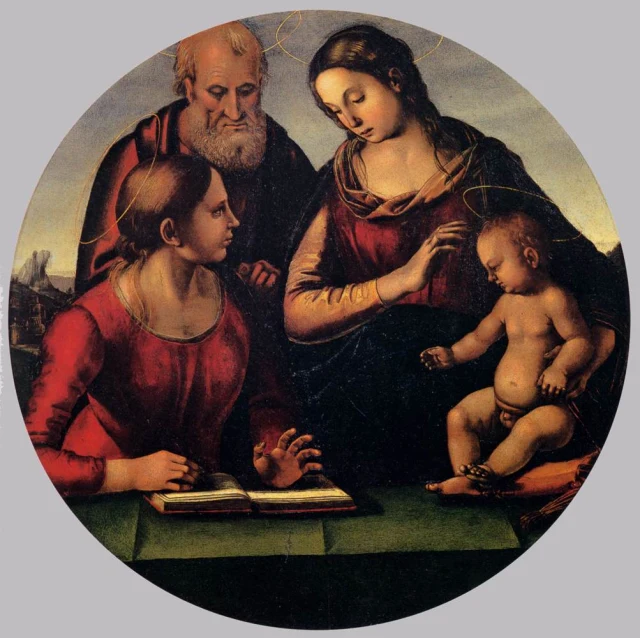 The Holy Family with Saint Catherine of AlexandriaLuca Signorelli, 1491
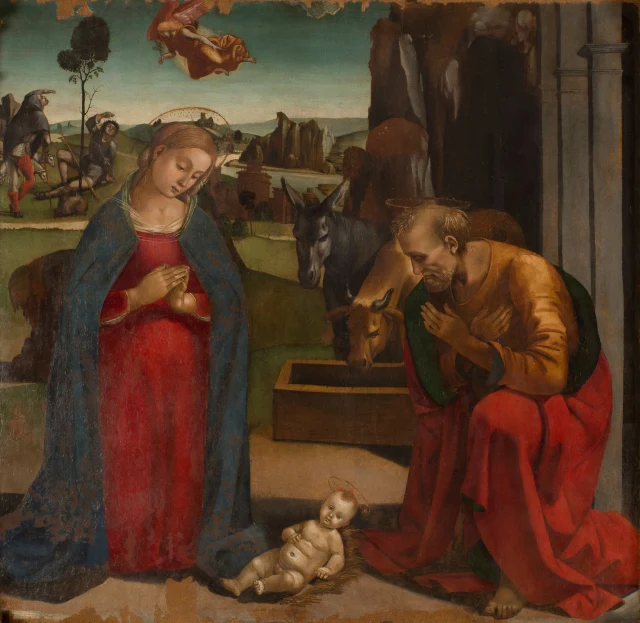 The NativityLuca Signorelli, 1497
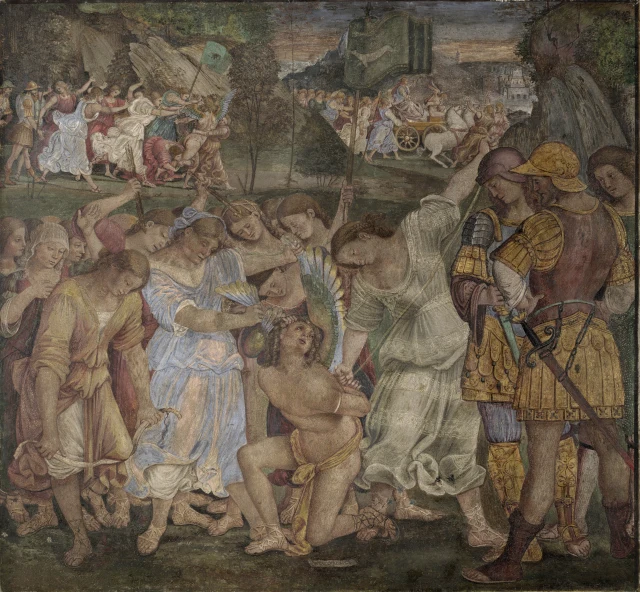 The Triumph of Chastity: Love Disarmed and BoundLuca Signorelli, 1509
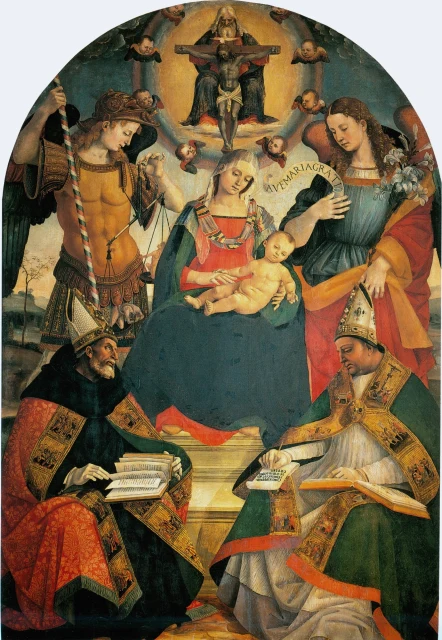 Trinity, the Virgin, and Two SaintsLuca Signorelli, 1510
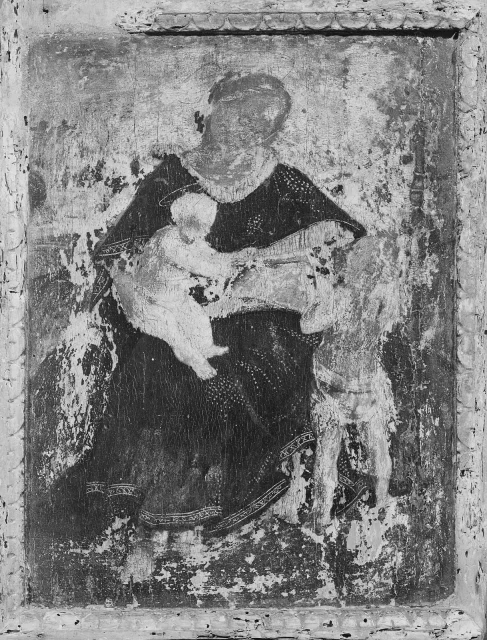 Virgin and Child and the Infant Saint John the BaptistLuca Signorelli, 1515