Manno di Bastiano Sbarri
1576 · Duchy of Florence · Mannerism
The story
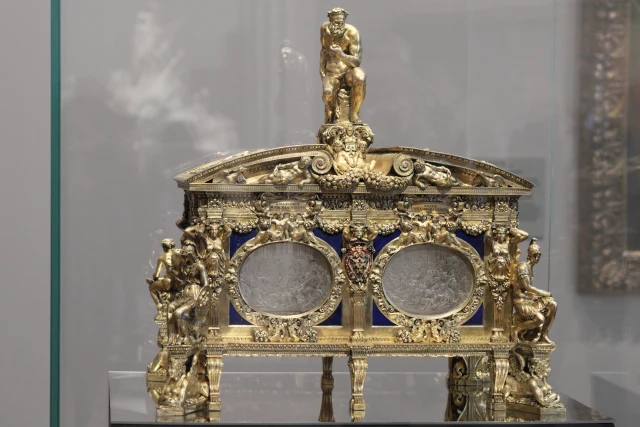
In the cabinet of curiosities at the Capodimonte museum in Naples stands a large box of gilded silver. A small Hercules stands on its lid, four seated gods sit at its corners, and six ovals of carved rock crystal are set into its sides. Almost everything known about the Florentine goldsmith Manno di Bastiano Sbarri comes to us through this one object, the Farnese Casket.
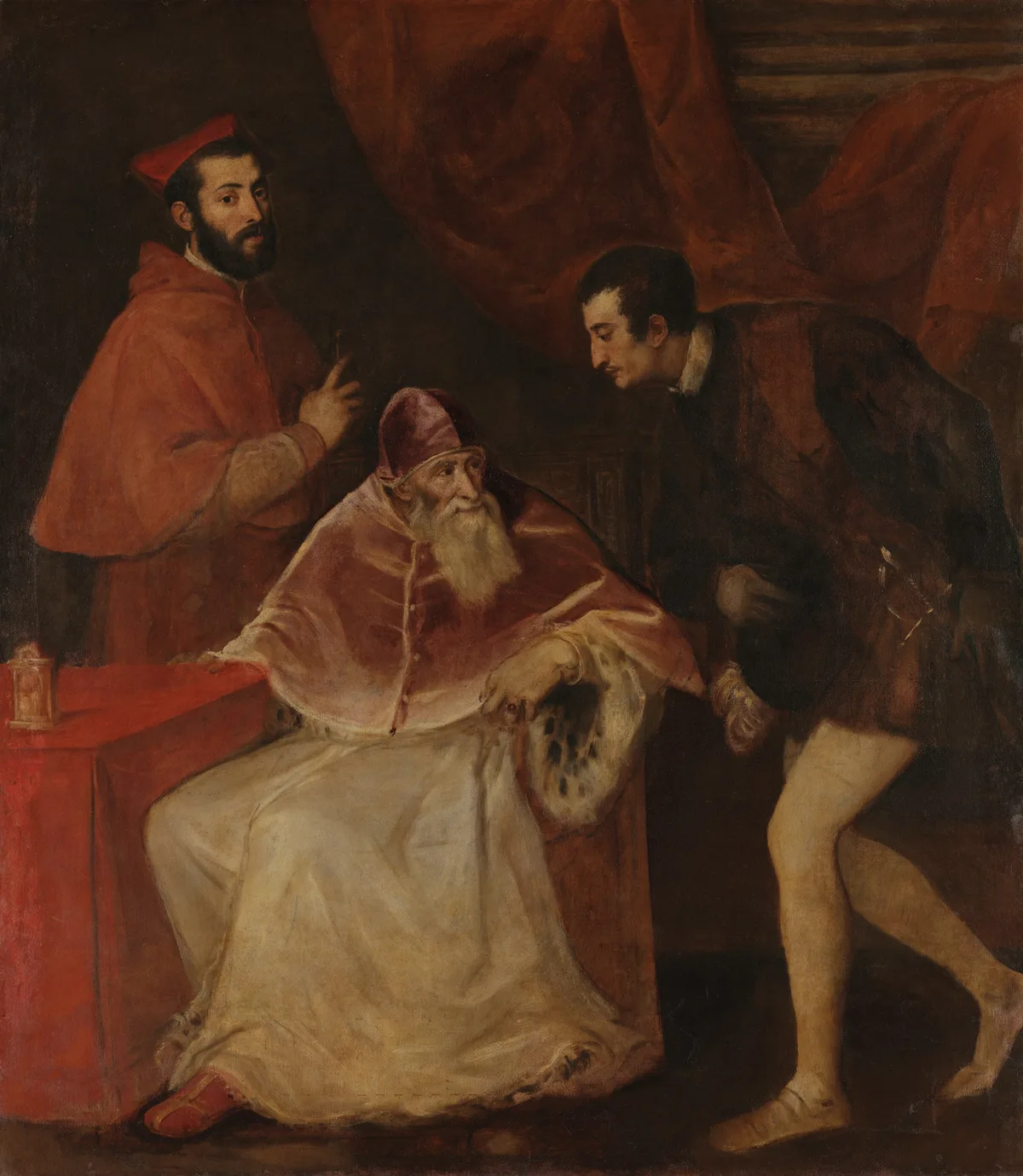
Sbarri is described as a pupil of Benvenuto Cellini, the Florentine goldsmith and sculptor, and he worked in Rome for Cardinal Alessandro Farnese, grandson of Pope Paul III and a great collector. Work on the casket is first recorded in 1548, and it was finished around 1561. The silver body is credited to Sbarri. The crystals were cut by Giovanni Bernardi, a gem engraver from Castel Bolognese, partly after drawings by the painter Perino del Vaga. Who conceived the design as a whole is still debated, and the name most often proposed is the painter Francesco Salviati, who also worked for the cardinal.
Beyond the casket, little of Sbarri's life is documented. His birth year is unknown, and he died in 1576. During the casket's first restoration, completed before an exhibition in Milan in 2018, it was taken apart piece by piece, and its silver turned out to be more than 99 percent pure.