Marianne von Werefkin
1860–1938 · Russian Empire · Expressionism
The story
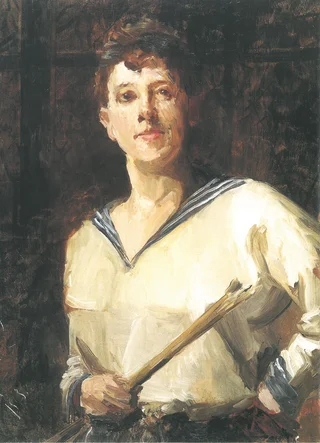
Marianne von Werefkin was a rising star in Russia in the 1880s, a general's daughter some called a Russian Rembrandt, studying under Ilya Repin, the country's leading realist. Then she met the painter Alexei von Jawlensky, moved with him to Munich, and set her own art aside for about a decade to promote his career instead. When she picked up her brushes again, the realism was gone.
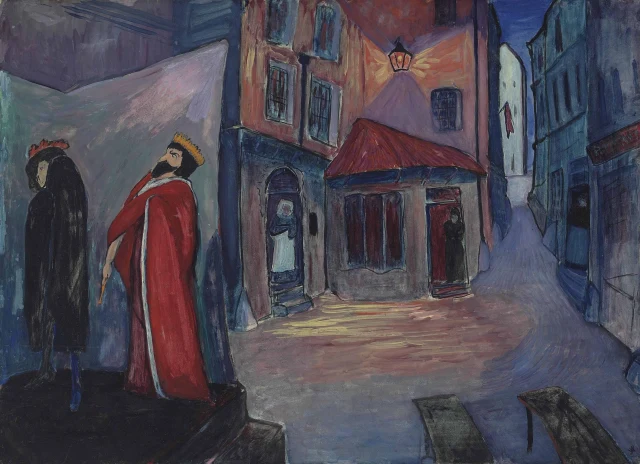
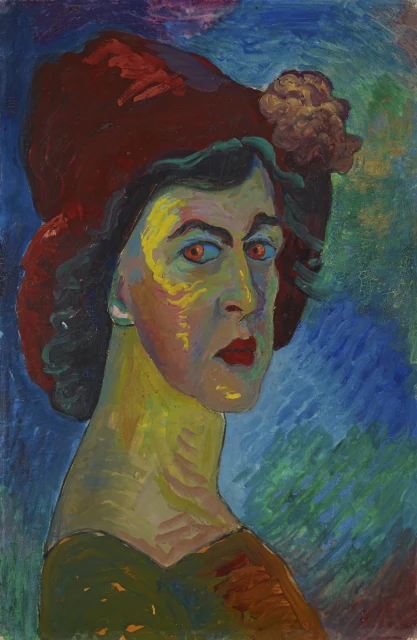
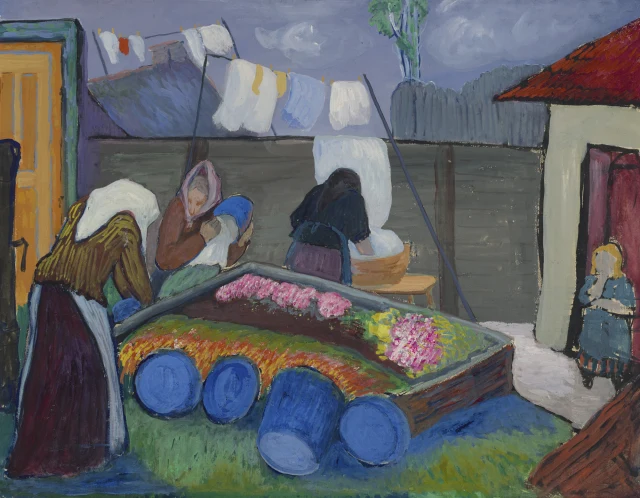
She came back as an Expressionist, working in flat, glowing color and heavy outline, and became a central figure in the Munich circle that fed into Der Blaue Reiter, the Blue Rider group around Kandinsky. Her scenes of workers, funerals and mountain roads carry a brooding, symbolic charge.
After she and Jawlensky separated near the end of the First World War, Werefkin settled alone in Ascona, a small town on a lake in the Italian-speaking part of Switzerland. She lived there, poor but working steadily, until her death in 1938, and the town keeps a museum of her paintings to this day.