Marinus van Reymerswaele
Habsburg Netherlands · Renaissance
The story
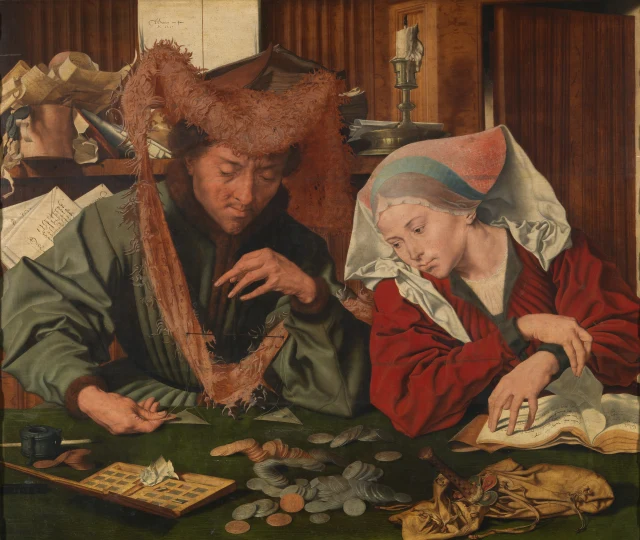
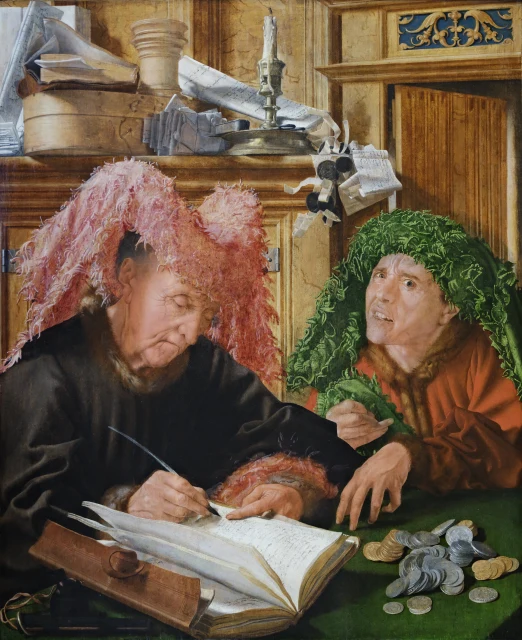
Marinus van Reymerswaele painted money being counted. Again and again his workshop turned out the same few scenes: a moneychanger and his wife bent over coins and a ledger, two tax collectors in outlandish headgear, a lawyer buried in his papers. The faces are sharp, wrinkled and slightly grotesque, and viewers have argued for centuries over whether he meant them as a warning against greed or simply as a lively picture of business.
He took the core idea from an older Antwerp master, Quentin Massys, whose calmer Moneychanger and His Wife of 1514 hangs in the Louvre. Marinus pushed it toward caricature, with exaggerated hands and hoarding stares.
Born around 1490 in Reimerswaal, a town in Zeeland on the Scheldt estuary, later swallowed by the sea, he studied at Leuven and trained as a painter in Antwerp before working back in his home region. He signed and dated several of the money pictures in the late 1530s, and later hands copied them so freely that separating his own work from his imitators' is still a problem for museums.