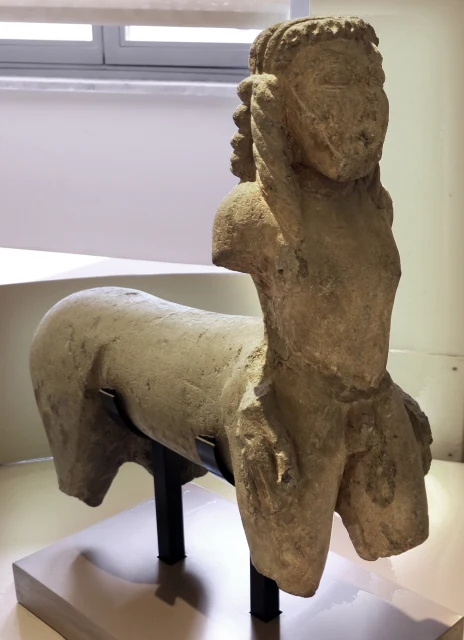
Master of the Centaur of Vulci
Etruria
The story
The sculptor of the Centaur of Vulci left no name, so scholars call him after that one statue, the Master of the Centaur. He worked around 590 to 580 BC at Vulci, an Etruscan city near the coast north of Rome, and he carved in nenfro, a grey volcanic tuff from the local hills.
Carving in this soft stone was something Vulci was known for. Most of the pieces that survive were made for tombs, where wild beasts and fantastic creatures were set in the entrance corridors or beside the doors of the burial chambers, guardians at the threshold of the underworld. The Master of the Centaur worked inside this tradition. The Villa Giulia museum in Rome, which keeps his centaur, describes him as skilled with the local stone and well informed about the Greek art of his time. The paint that once covered his work has been lost completely.