Master of the Schotten Altarpiece
Holy Roman Empire · Late Gothic
The story
Around 1470 a painter in Vienna set the Holy Family's flight into Egypt on a road just south of the city, with the Gothic towers of Vienna rising behind them. That panel is counted among the oldest surviving views of the city, and its painter is still known only by a borrowed name.
He is called the Master of the Schotten Altarpiece, after the huge winged altar he made for the high altar of the Schottenkirche. This is the church of the Benedictine abbey that Irish monks settled in the 12th century, and since Latin called the Irish Scoti, Vienna still calls it the Scots' abbey. One panel carries the date 1469. The altar told the life of the Virgin and the Passion of Christ in 24 scenes, and 21 survive. In the Visitation, Mary meets Elizabeth in a Viennese street, with the spire of St Stephen's Cathedral behind them.
His workshop was in Vienna, and his painting shows he had studied Netherlandish masters such as Rogier van der Weyden and Dirk Bouts, as well as painters working in Nuremberg.
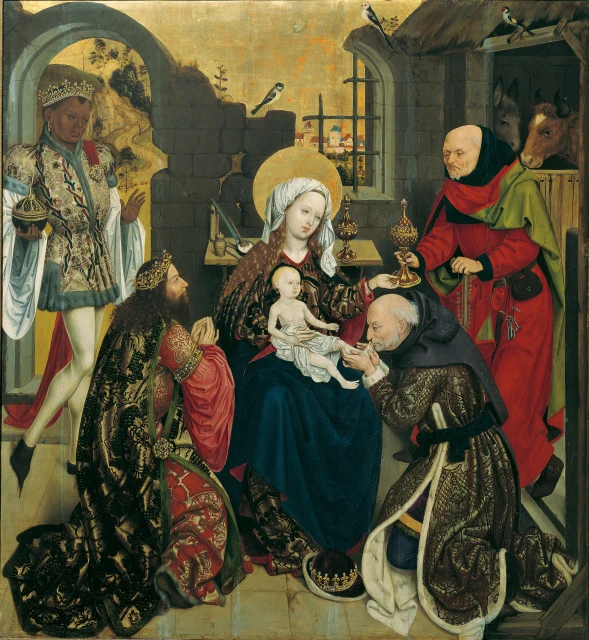
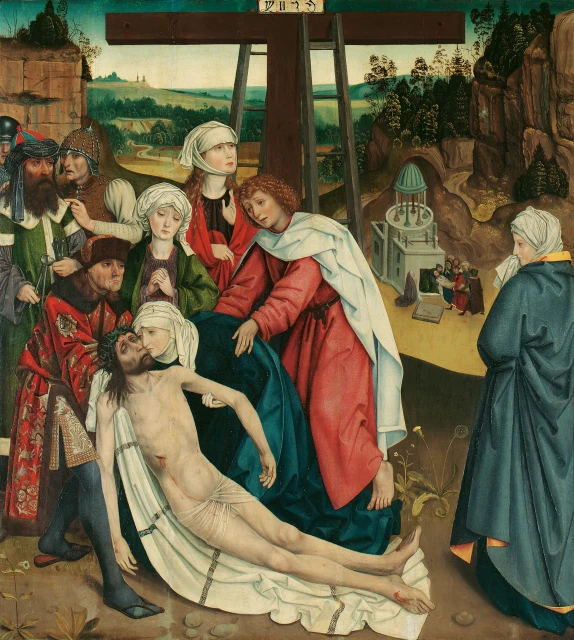
Most of the panels are still in the abbey's own museum. Two came to the Belvedere, a Lamentation and an Adoration of the Magi, both painted on oak. The Lamentation stood on the outer right wing as the eighth scene of the Passion, and before 1938 it hung in a private chapel in Vienna's Palais Coburg.