Micali Painter
Etruria
The story
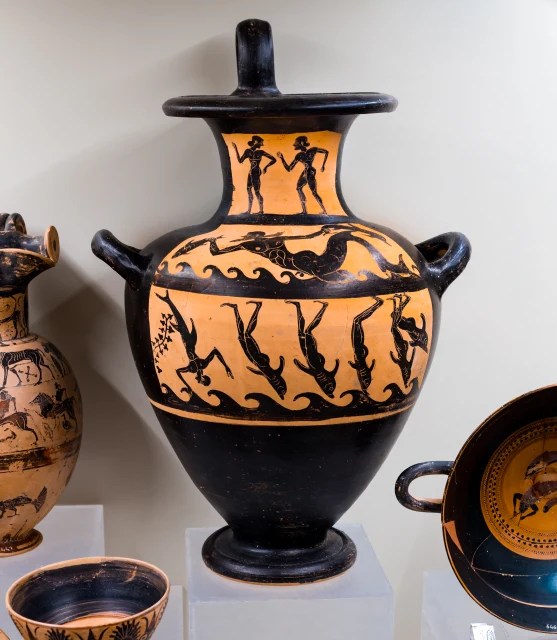
In the late 6th century BC, the tombs of Vulci, an Etruscan city north of Rome, were filling with painted vases shipped from Athens. In the same city and in the same decades, a local painter answered that trade with black-figure vases of his own, and he became the most prolific Etruscan painter in the technique known today.
His name is a modern one. He is called after Giuseppe Micali, an Italian historian of the early 19th century who wrote about Italy before the Romans and was the first to publish some of these vases. The British scholar John Beazley sorted them into groups, and in 1987 Nigel Spivey devoted a book to the painter and his followers. Well over 200 vases are now attributed to him and his workshop.
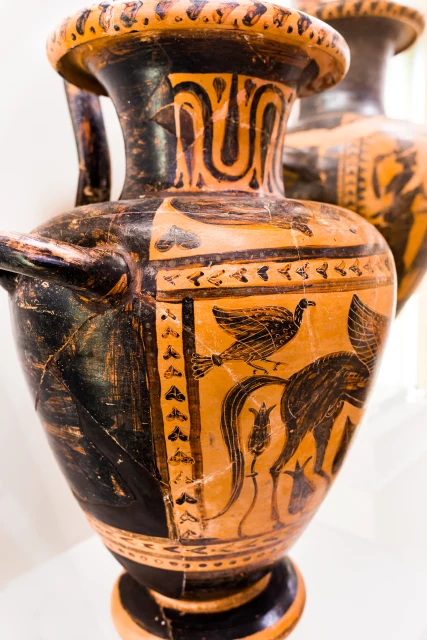
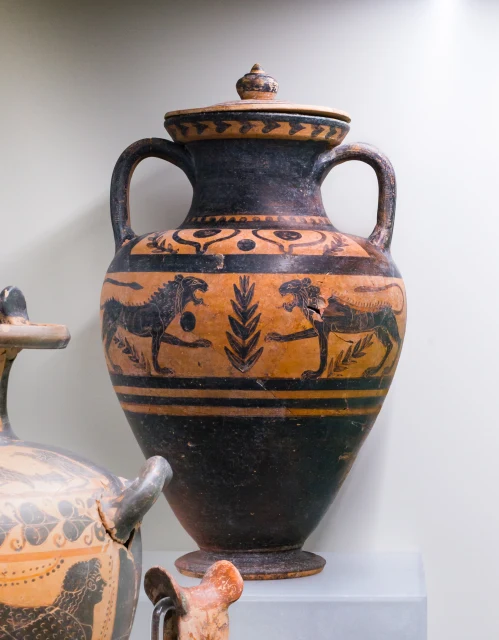
He rarely told a myth. His world is one of creatures, real and imagined, sirens, sphinxes, birds and running animals, drawn quickly and loosely, with approximate anatomy and broad gestures, far from the careful line of the Athenian vases around him. Scholars still disagree about what his vases were for. Spivey thought they were made for burial, while others argue they were first used at banquets and only later placed in the grave.