Hydria with the Pirates Turned into Dolphins
Details
The story
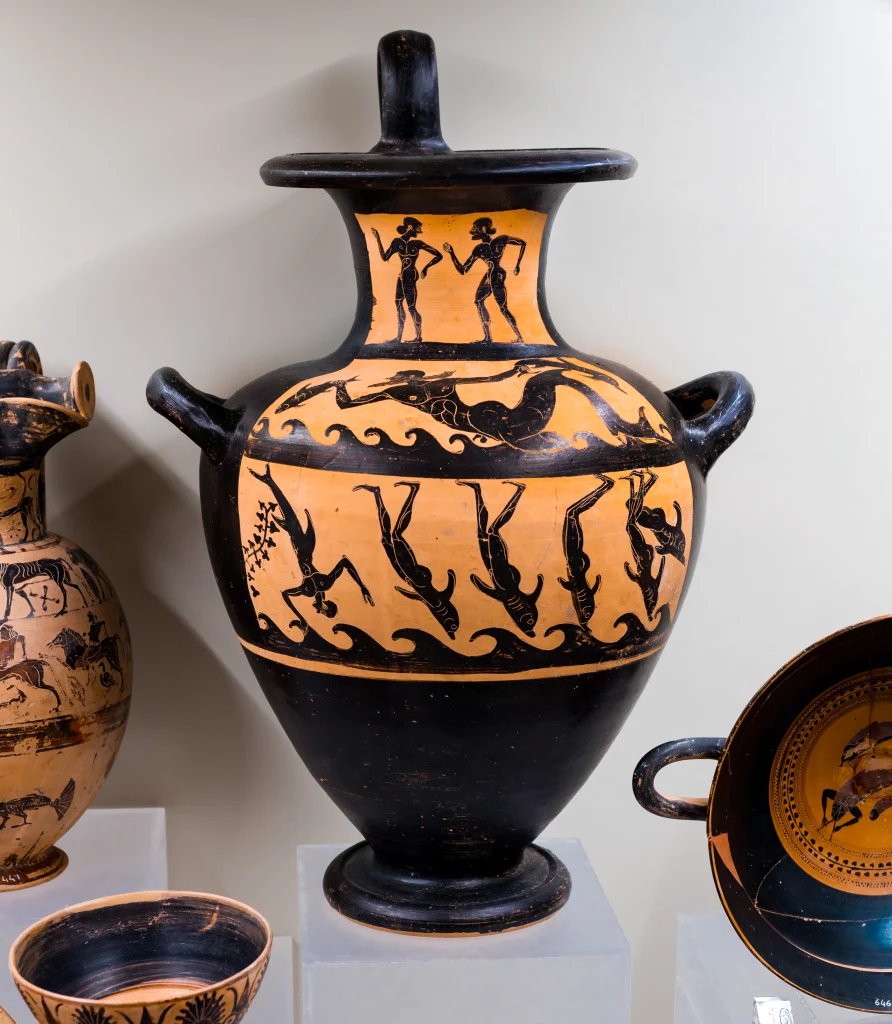
In 1982 the Toledo Museum of Art in Ohio bought this water jar for 90,000 dollars. The dealers who sold it, Gianfranco and Ursula Becchina, supplied a history in which an earlier owner had inherited it from his father, who had bought it in 1935. US federal investigators, acting on a tip from Rome, found that history to be false. The jar had come from an illegal excavation in southern Etruria and had passed through the hands of Giacomo Medici, a dealer later convicted of trafficking antiquities. In January 2013 the museum handed it over to Italy at a ceremony in Toledo, and in 2019 it was assigned for good to the Villa Giulia. Because it was dug up in secret, the tomb it came from is unknown.
The scene comes from a Greek hymn to Dionysos. Pirates seize the god at sea, and he punishes them by turning them into dolphins. Here they are caught in the middle of the change, part man and part dolphin, while a triton holding a fish and a dolphin swims on the shoulder and two youths stand on the neck. The hymn calls the pirates Tyrrhenians, the Greek name for the Etruscans, and here the story is painted by an Etruscan hand. The museum attributes the jar to the Micali Painter, around 510 to 500 BC, an unusual subject for him, since he rarely painted myths. Some specialists assign it instead to a painter of his circle known as the Painter of Vatican 238.