Nicolae Tonitza
1886–1940 · Romania · Post-Impressionism, Expressionism
The story
In August 1916 Romania entered the First World War and was beaten within days at Turtucaia, on the Danube. Nicolae Tonitza, 30 years old and already a trained painter, fought there, was wounded and taken prisoner by the Bulgarians. He spent close to two years in an internment camp at Kardzhali, where he caught malaria and the rheumatism that stayed with him for good. He got home in April 1918.
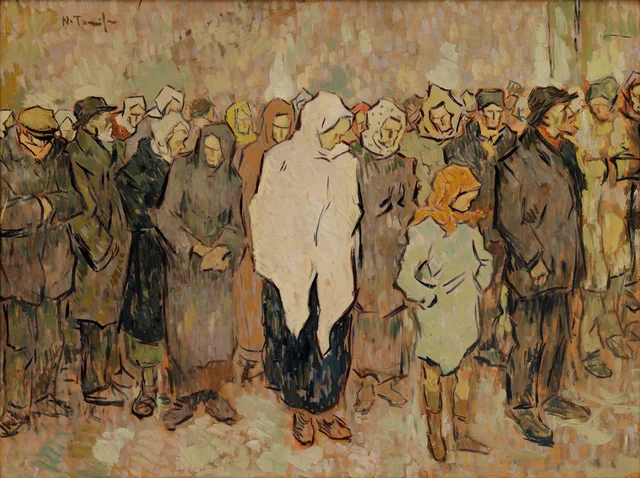
The Bread Line dates from the year after that, 1919, and it is a queue of people waiting for food in a country that had been fought over, occupied and stripped. Back in Bucharest, Tonitza began drawing and writing for the left-wing press, in Socialismul and Adevărul, as a political cartoonist and an art critic, and he kept both jobs running for the rest of his life. A good part of what he made was published rather than exhibited.
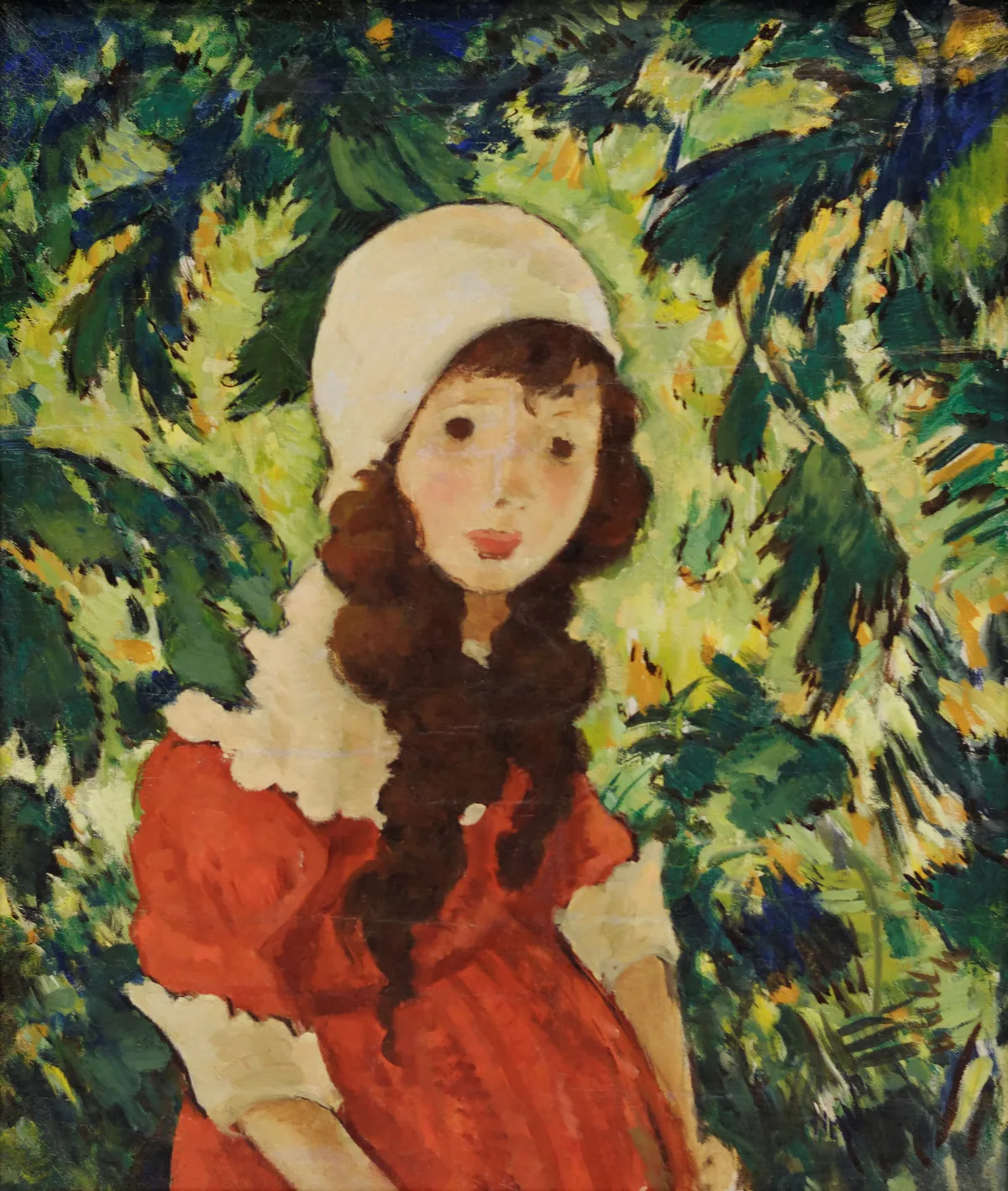
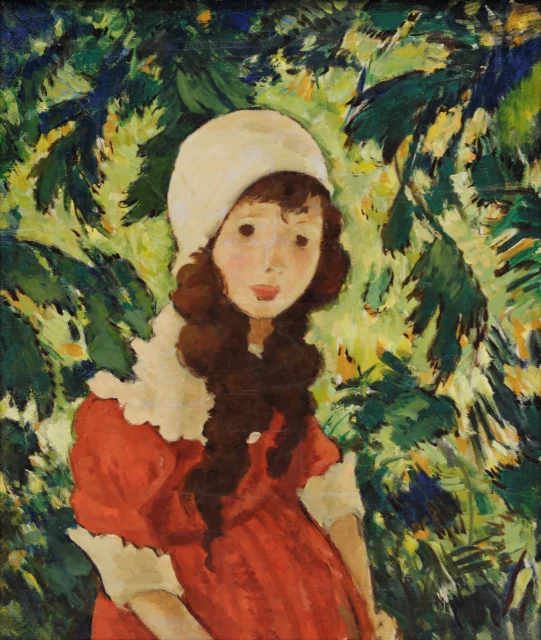
His training had been the standard European route of his generation. The art school in Iași from 1902, then the Munich academy in 1908, then three years in Paris, which is where the Post-Impressionist handling in his painting comes from. What he did with it was local. Fishing villages and the light at Balchik on the Black Sea coast, circus clowns with the melancholy showing through the paint, and above all children, given the dark, pupil-less eyes that became his signature.
In 1933 he took over the teaching post at the art academy in Iași left vacant by Ștefan Dimitrescu, a painter of his own generation who had just died, and he taught there while the illnesses he had brought back from Kardzhali got worse. He died in Bucharest on 27 February 1940.