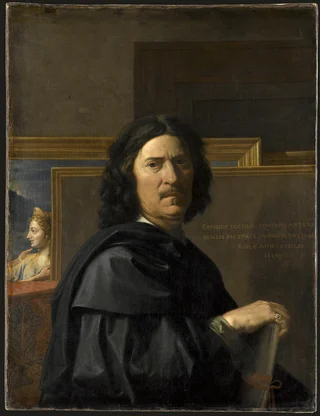
Nicolas Poussin
1594–1665 · Kingdom of France · Classicism
The story
Poussin was the most admired French painter of the 17th century, and he spent almost none of his life in France. He went to Rome in his mid-thirties and stayed, working slowly for a small circle of learned collectors on calm, tightly built scenes from the Bible and antiquity. He reasoned a picture out like an argument, and would arrange little wax figures in a boxed miniature stage to settle the poses and the light before he touched the canvas.
His Et in Arcadia Ego shows shepherds in an idyllic countryside frowning over words carved on a tomb, a reminder that death is present even in a perfect pastoral world. The picture holds his whole cast of mind, beauty and cool reflection at once.
In 1640 King Louis XIII called him home to Paris to run the crown's art projects. Poussin found the court commissions and the rivalries around them unbearable. After two years he left for Rome, saying he was going to collect his wife, and he simply never came back, dying in the city in 1665.
Works
112 works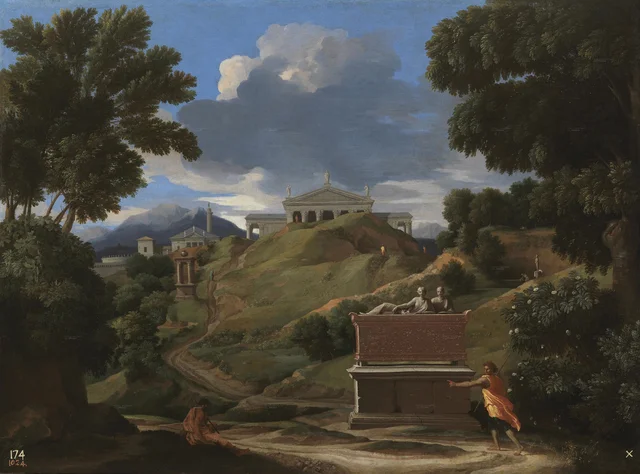 Landscape with RuinsNicolas Poussin, 1634
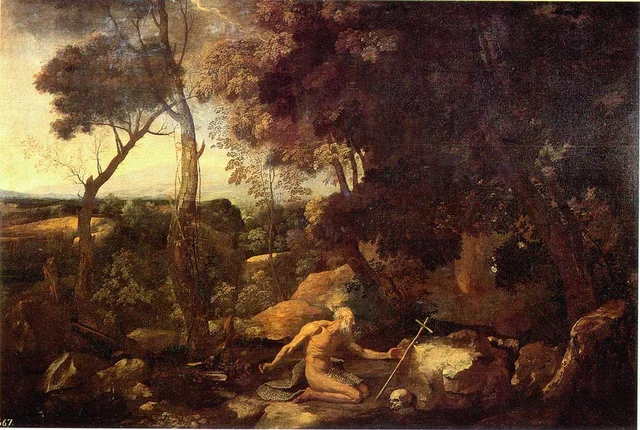 Landscape with Saint Paul the HermitNicolas Poussin, 1637
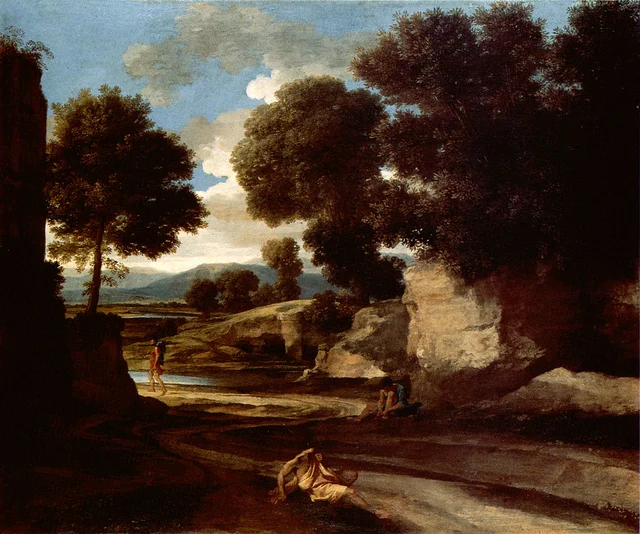 Landscape with Travellers RestingNicolas Poussin, 1637
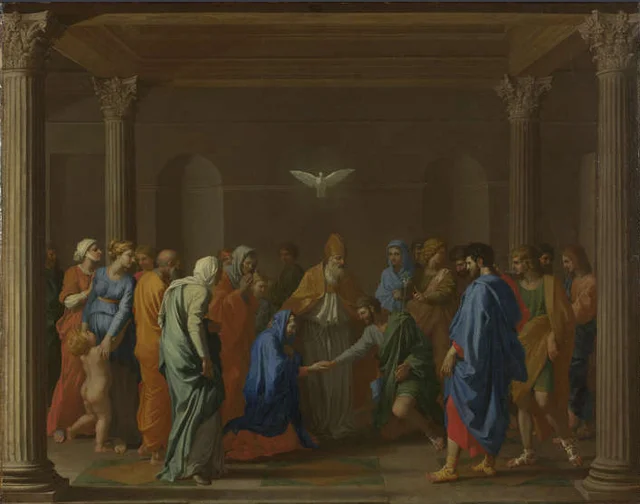 MarriageNicolas Poussin, 1638
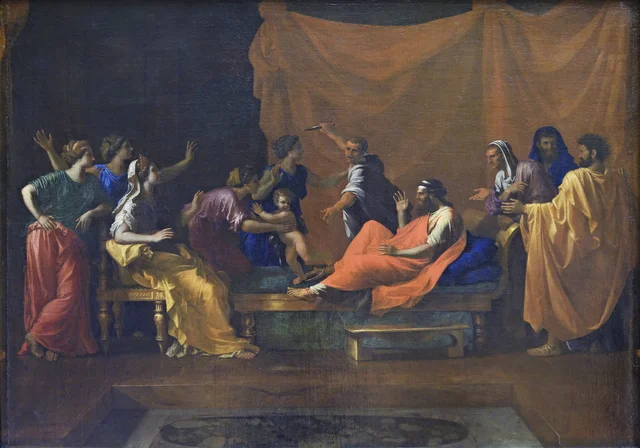 Moïse enfant foulant aux pieds la couronne de PharaonNicolas Poussin, 1637
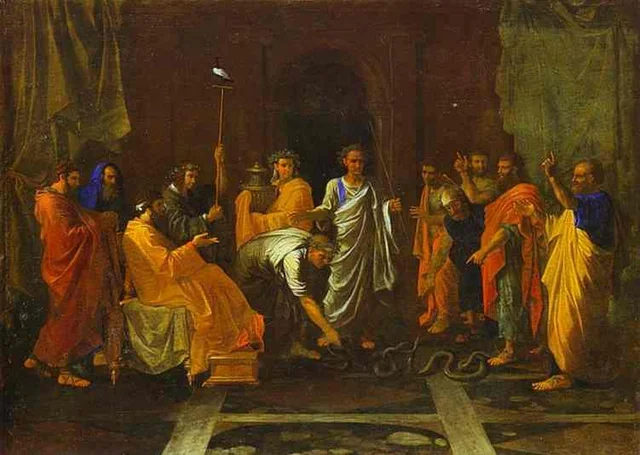 Moses Turning Aaron's Staff into a SerpentNicolas Poussin, 1645
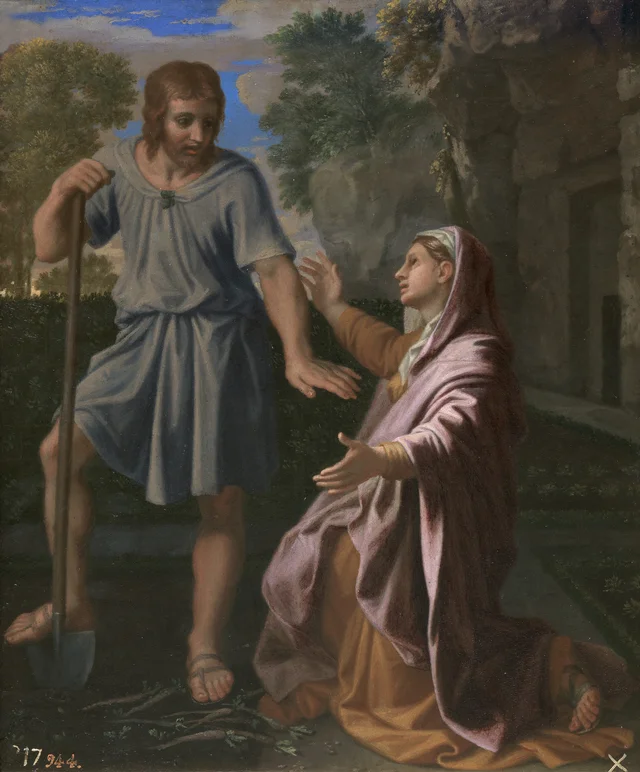 Noli me tangereNicolas Poussin, 1653
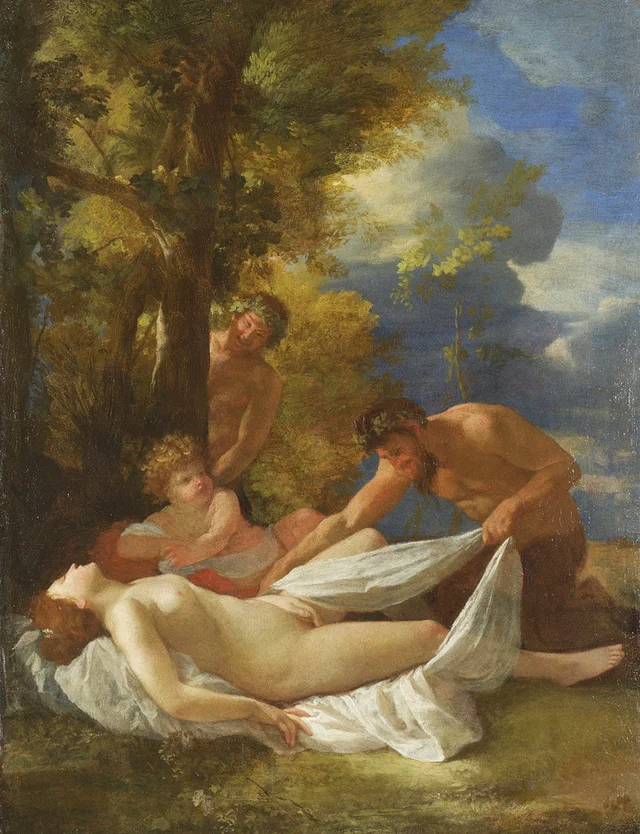 Nymph with SatyrsNicolas Poussin, 1627
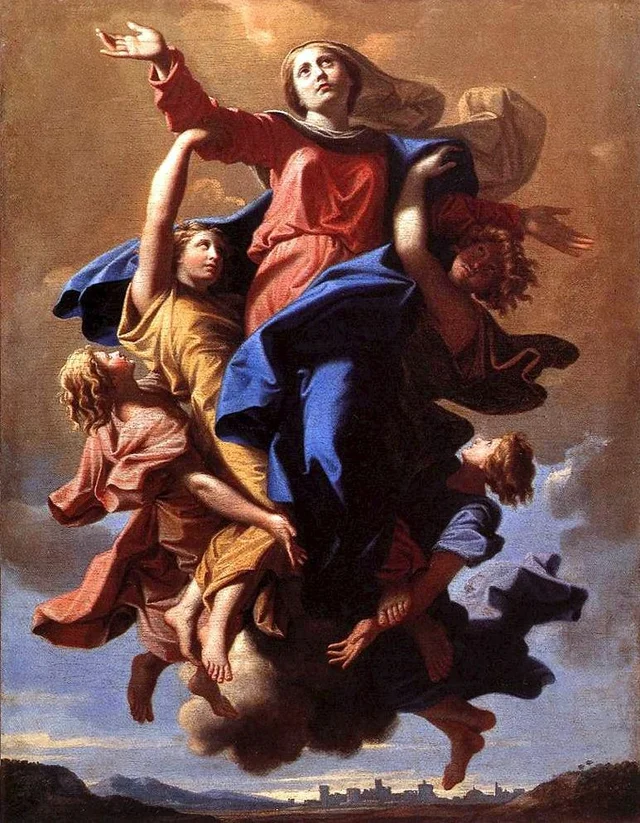 The Assumption of the VirginNicolas Poussin, 1649
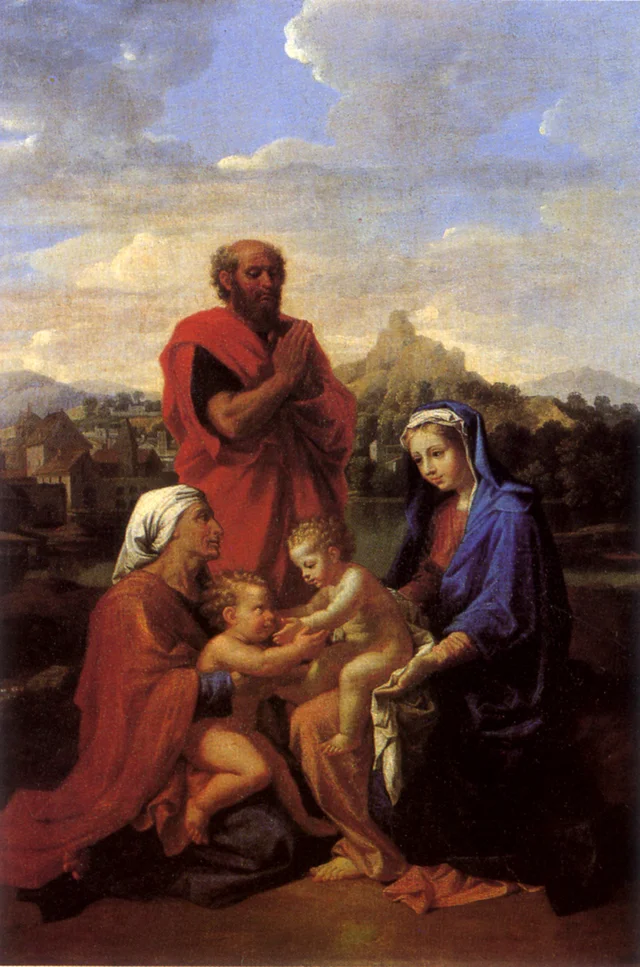 The Holy Family with Saint John Saint Elizabeth and Saint Joseph PrayingNicolas Poussin, 1656
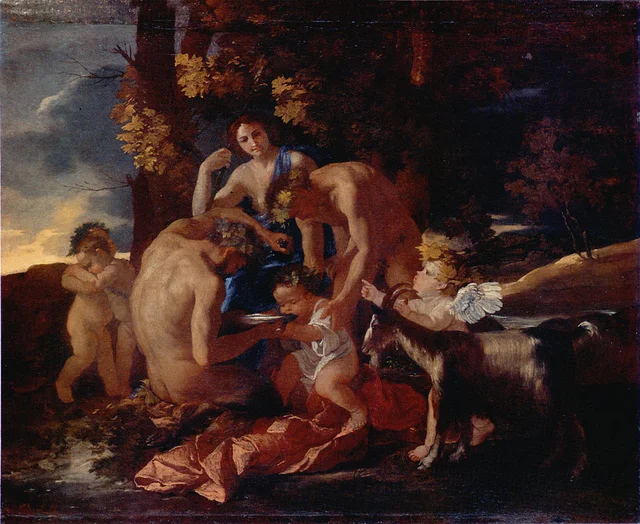 The Nurture of BacchusNicolas Poussin, 1626
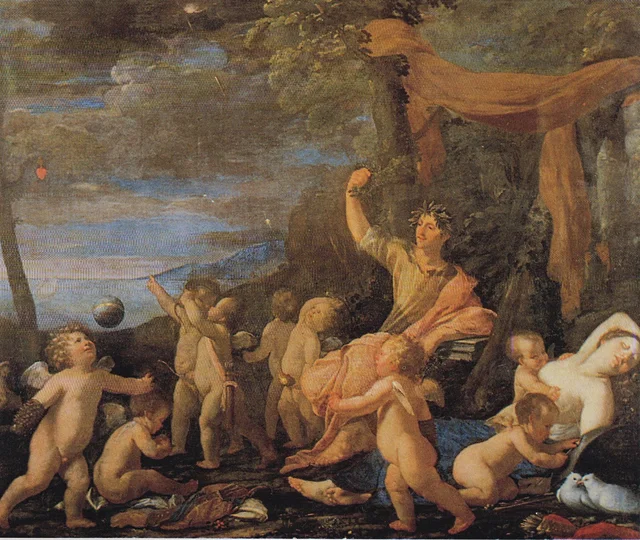 The Triumph of OvidNicolas Poussin, 1624