Nicolas Régnier
1667 · Spanish Netherlands · Baroque painting
The story
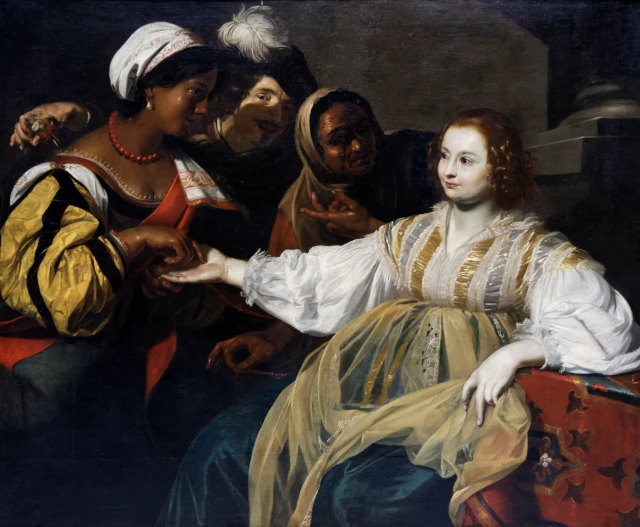
In the 1610s a young painter from Maubeuge, in what was then the Spanish Netherlands, made his way to Rome and walked into the storm Caravaggio had left behind. Caravaggio himself was already dead, but his habit of pushing figures into a hard raking light, and of painting card sharps and fortune-tellers as if they were saints, had taken over the city. Nicolas Régnier, known in Italy as Niccolò Renieri, joined the circle of northern followers and entered the household of Vincenzo Giustiniani, a banker who owned one of Rome's greatest collections and had been Caravaggio's own patron.
By 1626 Régnier had moved to Venice, where he did something unusual for a painter of his standing. He kept working, half-length gamblers, concerts, saints and glossy allegorical women, and at the same time went into business, dealing in old pictures and antiquities and building a real fortune. His daughters grew up in the studio and several of them painted, and one, Lucrezia, worked so closely with him that some of his late canvases are hard to tell from hers.
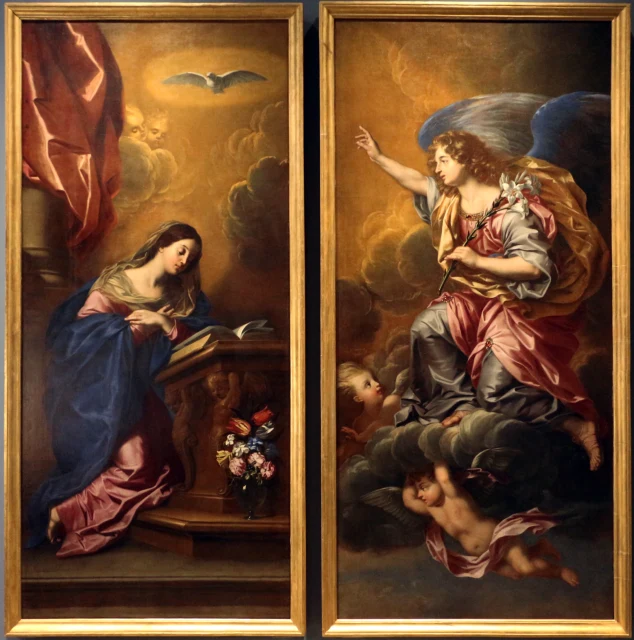
The Annunciation here comes from 1666, near the end of his life. By then the raw Roman shadows of his youth had eased into the warmer, silkier light Venice preferred, the surfaces cooler and more polished. He died in the city the following year, some forty years after he had first enrolled in its painters' guild.