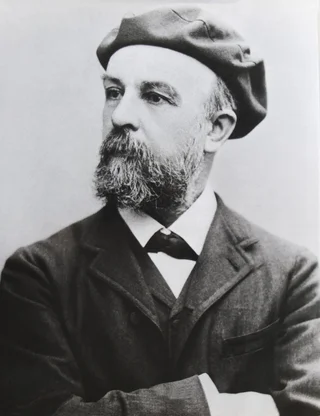
Odilon Redon
1840–1916 · France · Symbolism
The story
For twenty years, from about 1870 to 1890, Odilon Redon worked almost entirely in black, in charcoal drawings and lithographs he called his noirs, drifting eyes, giant spiders, floating heads, an imagined world he said let him put 'the logic of the visible at the service of the invisible.' He had trained briefly as an architect and then a painter in Paris before returning to his native Bordeaux, where the engraver Rodolphe Bresdin taught him the etching and lithography techniques that gave the noirs their strange soft grain.
Redon spent part of the Franco-Prussian War of 1870-71 serving in the French army, and the print-based, interior work that followed kept him almost unknown outside a small circle until 1884, when the novelist Joris-Karl Huysmans made a fictional collector obsess over Redon's drawings in the novel 'Against Nature.' The book turned Redon into a minor celebrity of the Symbolist generation almost overnight.
Around 1890, not long after the birth of his son Arï, Redon put the charcoal aside and began working in pastel and oil, and the same imagery, closed eyes, single flowers, mythic profiles, reappeared in bright, saturated color he had never used before, a shift he kept for the rest of his career.
More articles
Works
14 works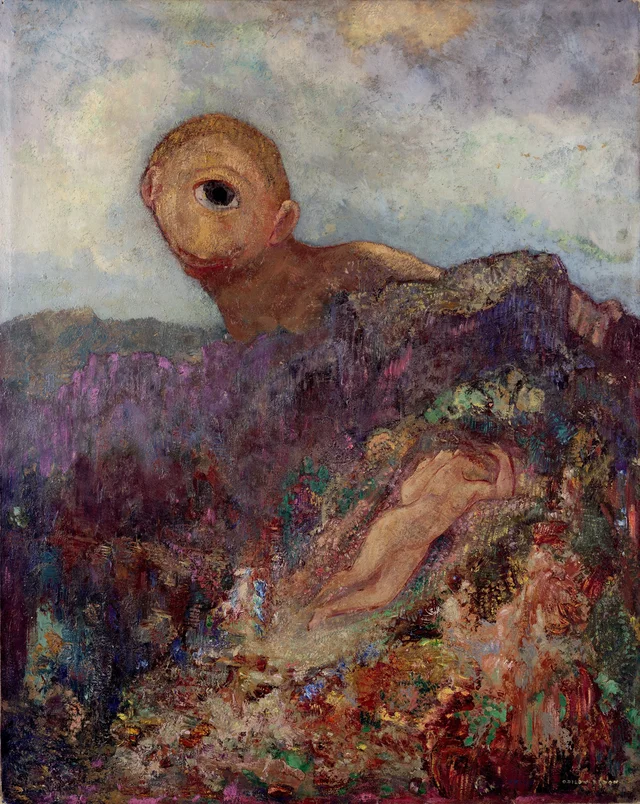 The CyclopsOdilon Redon, 1914
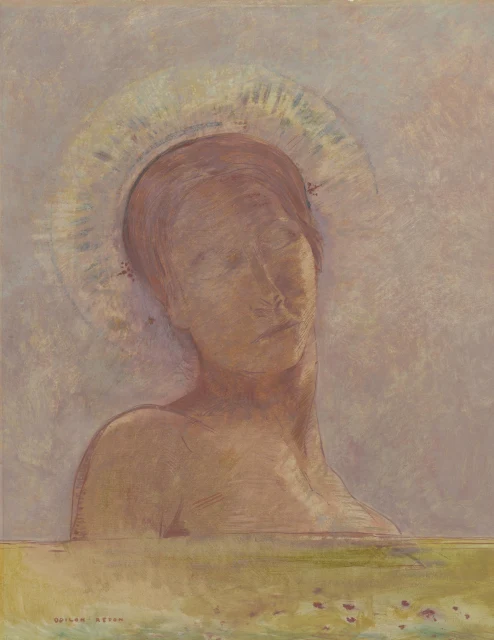 Closed EyesOdilon Redon, 1889
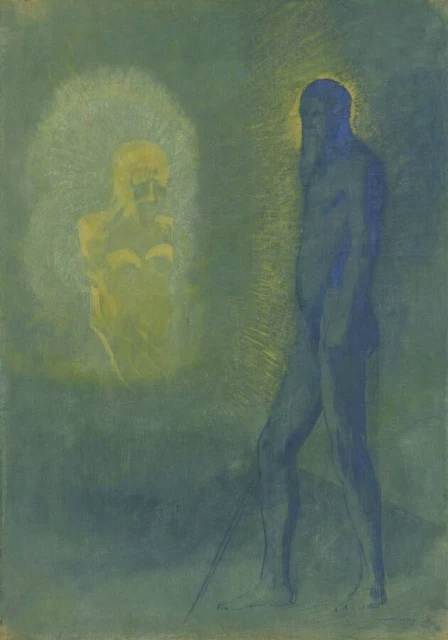 L'apparitionOdilon Redon
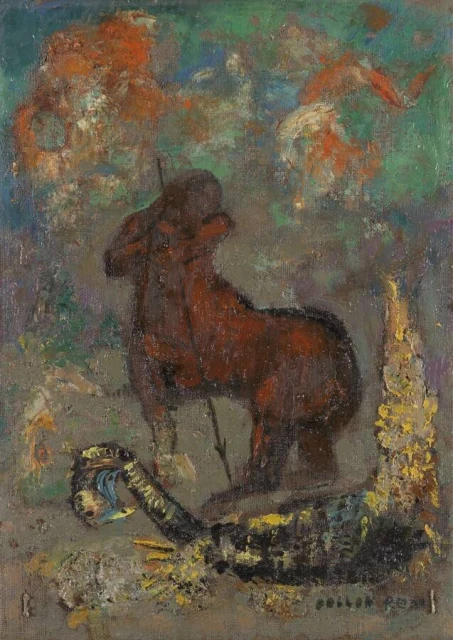 Le centaure et le dragonOdilon Redon, 1908
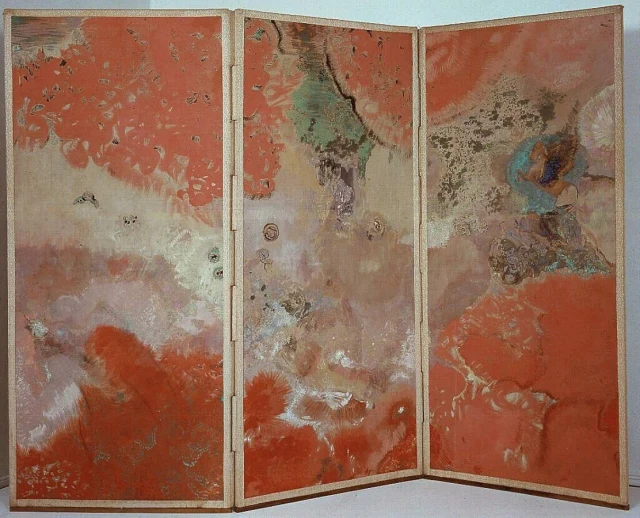 Le paravent rouge (avec Pégase)Odilon Redon, 1907
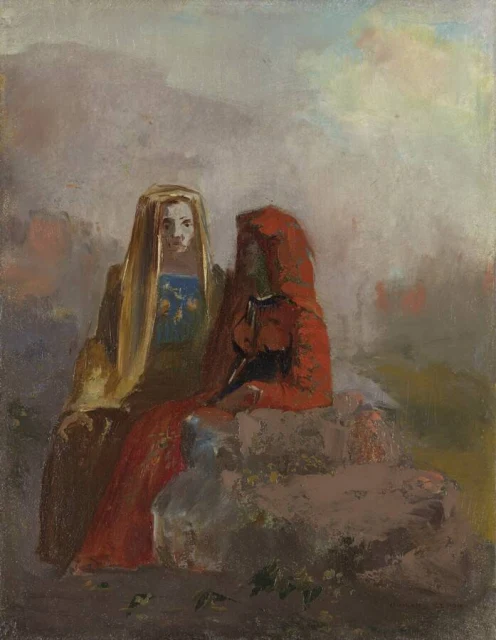 Les ParquesOdilon Redon, 1900
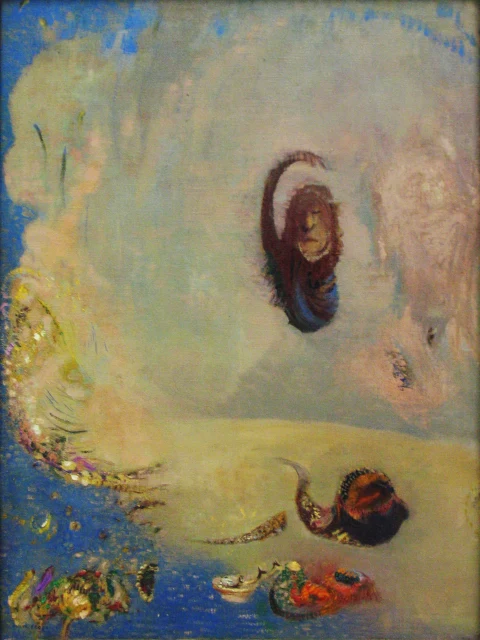 OannèsOdilon Redon, 1908
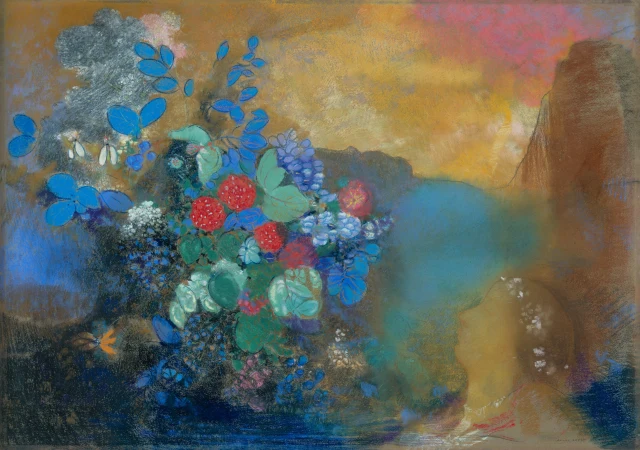 Ophelia among the FlowersOdilon Redon, 1906
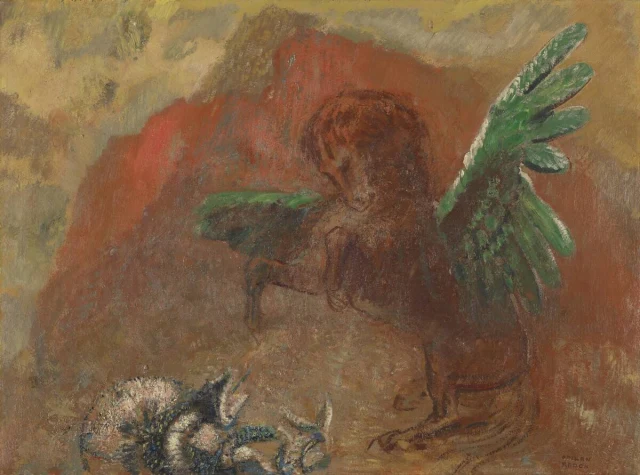 Pegasus and the HydraOdilon Redon, 1907
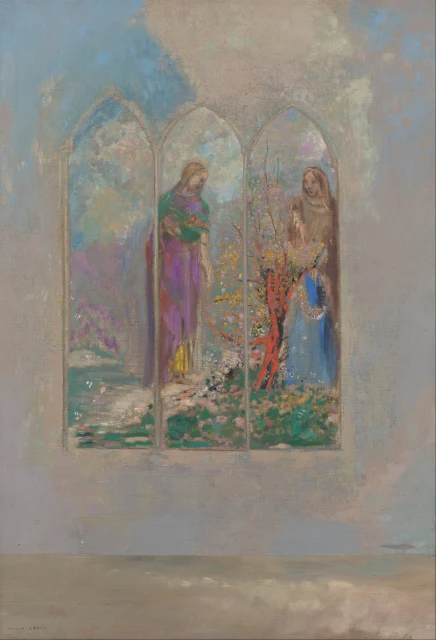 Piety Beside a Red TreeOdilon Redon, 1905
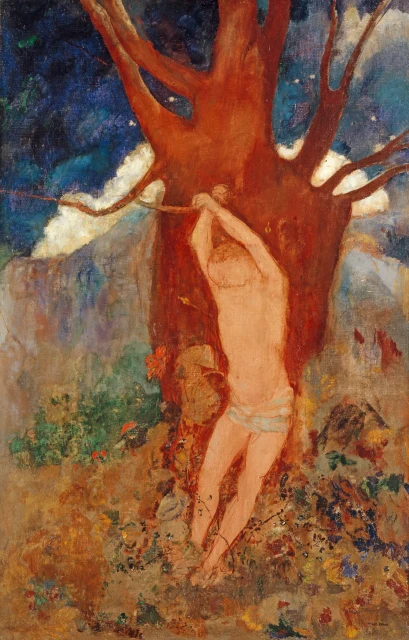 Saint SebastianOdilon Redon, 1910
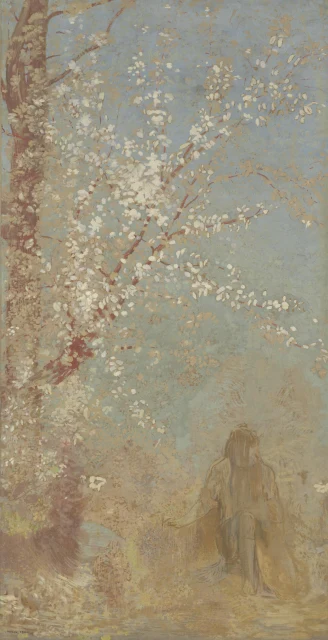 The Red TreeOdilon Redon, 1905
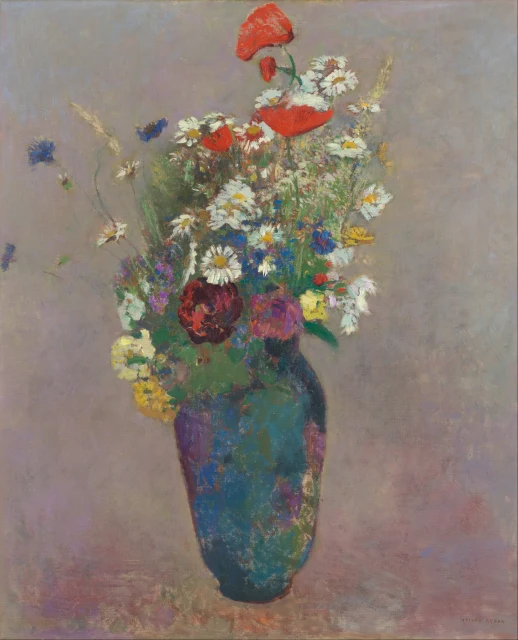 Vision: Vase of FlowersOdilon Redon, 1900
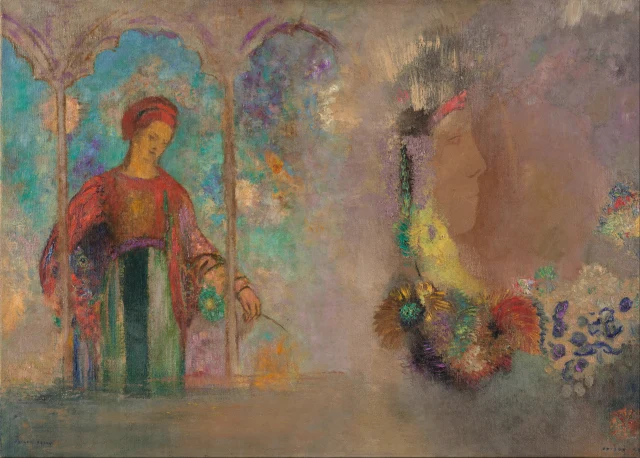 Woman in a Gothic Arcade: Woman with FlowersOdilon Redon, 1905