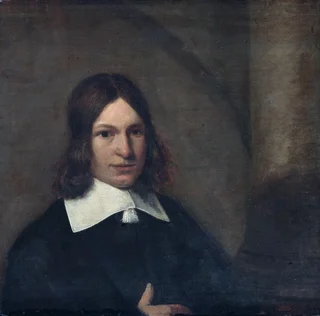
Pieter de Hooch
1629–1684 · Dutch Republic · Baroque
The story
Pieter de Hooch spent his best years in Delft in the 1650s, the same small Dutch city and the same decade as Johannes Vermeer, and for a while the two men were working out the same problem side by side. How do you paint ordinary rooms and courtyards so that light itself becomes the subject.
De Hooch's answer was the doorkijkje, the see-through doorway. A woman pauses in a brick courtyard, a maid crosses a sunlit room, and behind them an open door leads the eye to a second bright space beyond. These are unhurried scenes of middle-class life, sewing, sweeping, minding a child, held together by clean geometry and warm afternoon light.
Around 1660 he moved to Amsterdam and began painting richer, showier interiors for wealthier clients, and most people agree the work lost its quiet magic. He died there in 1684. For a long time it was said he ended his days in the city madhouse, until records showed that the inmate was his son of the same name.
Works
54 works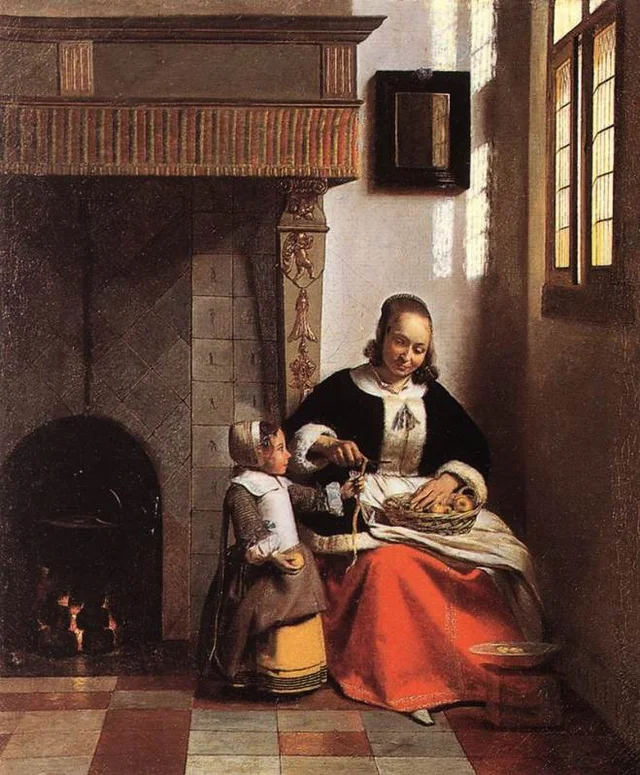 A Woman Peeling ApplesPieter de Hooch, 1663
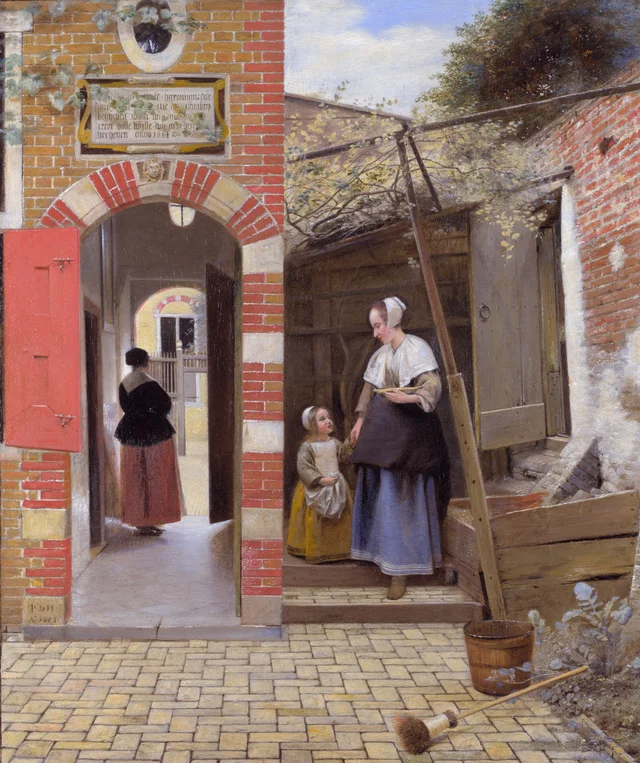 The Courtyard of a House in DelftPieter de Hooch, 1658
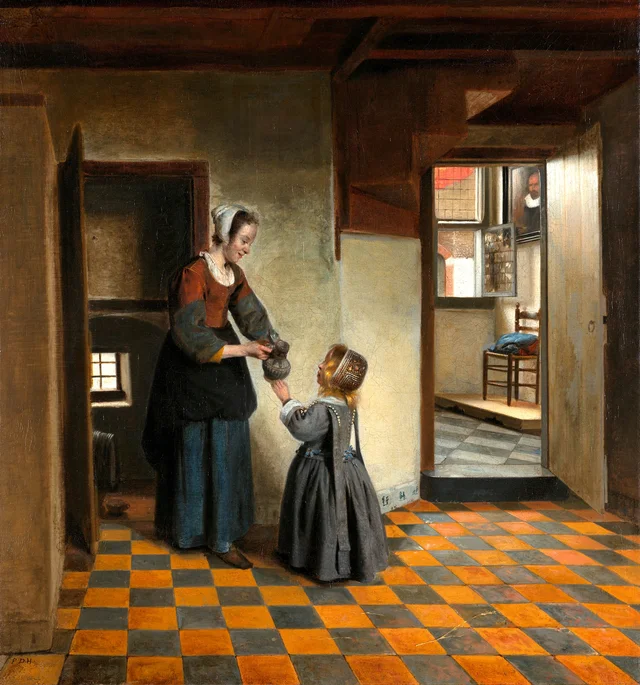 Woman with a Child in a PantryPieter de Hooch, 1656
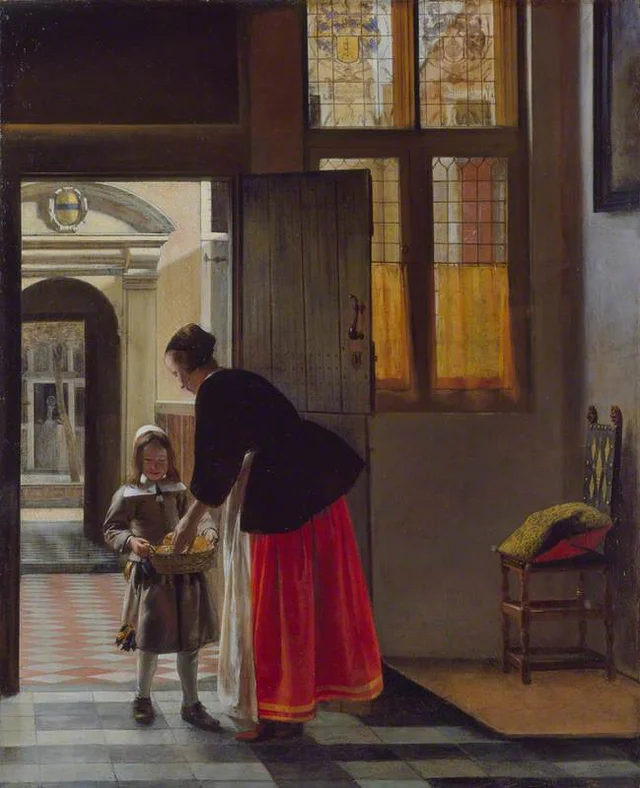 A Boy Bringing BreadPieter de Hooch, 1663
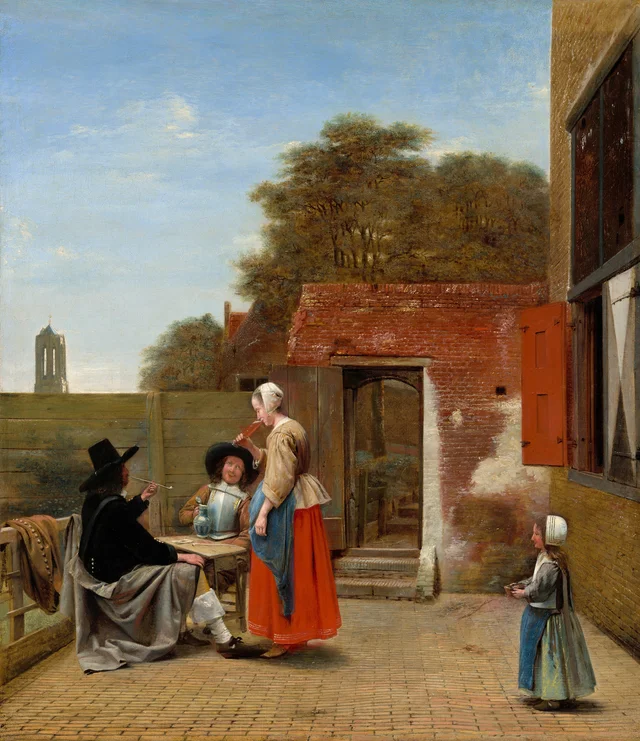 A Dutch CourtyardPieter de Hooch, 1658
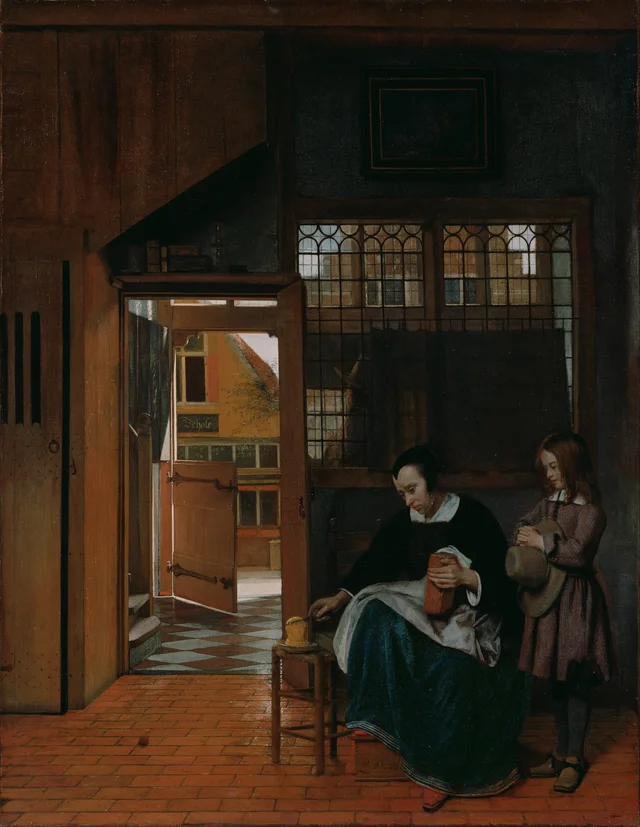 A Woman Preparing Bread and Butter for a BoyPieter de Hooch, 1661
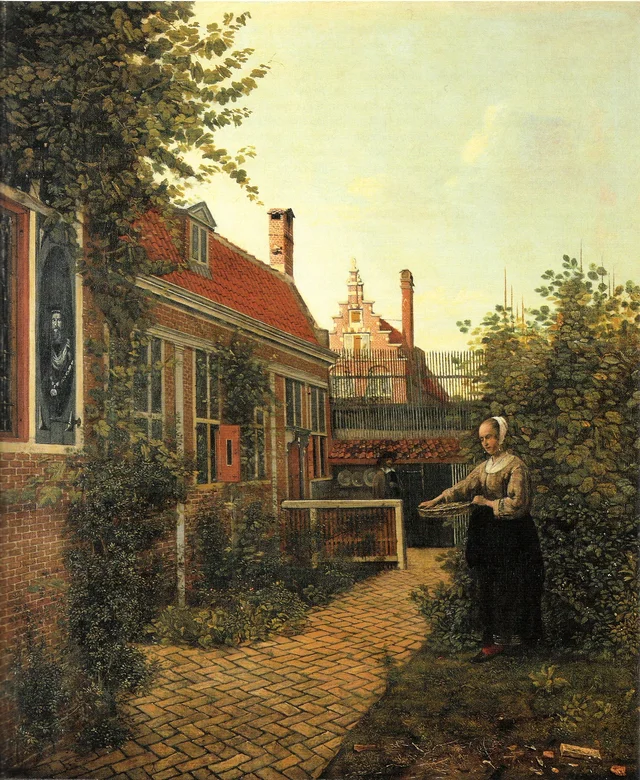 A Woman with a Basket of Beans in a GardenPieter de Hooch, 1651
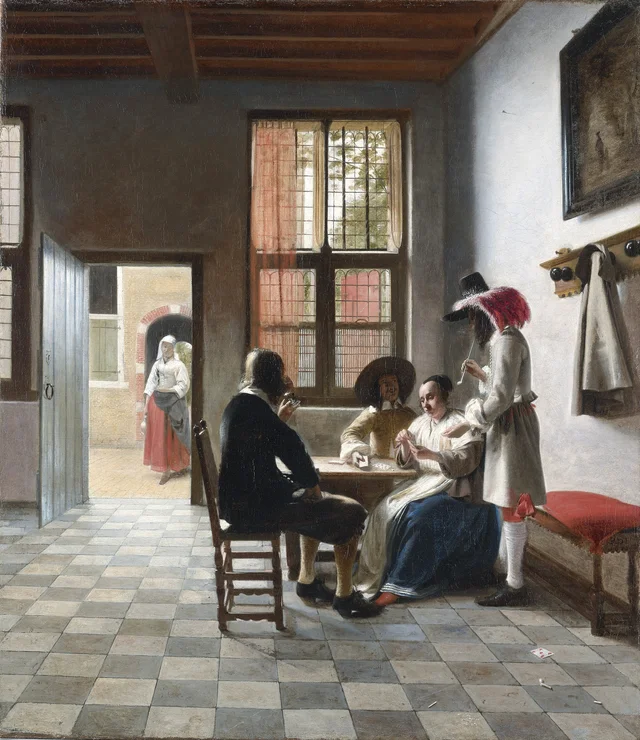 Cardplayers in a Sunlit RoomPieter de Hooch, 1658
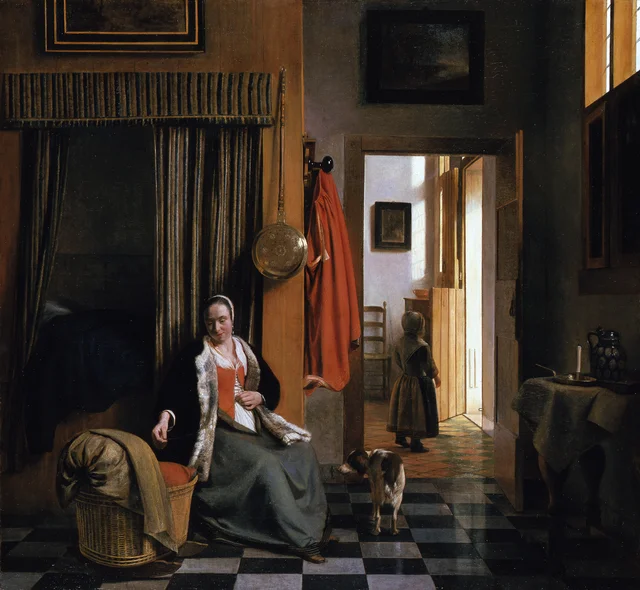 Mother Lacing Her Bodice beside a CradlePieter de Hooch, 1661
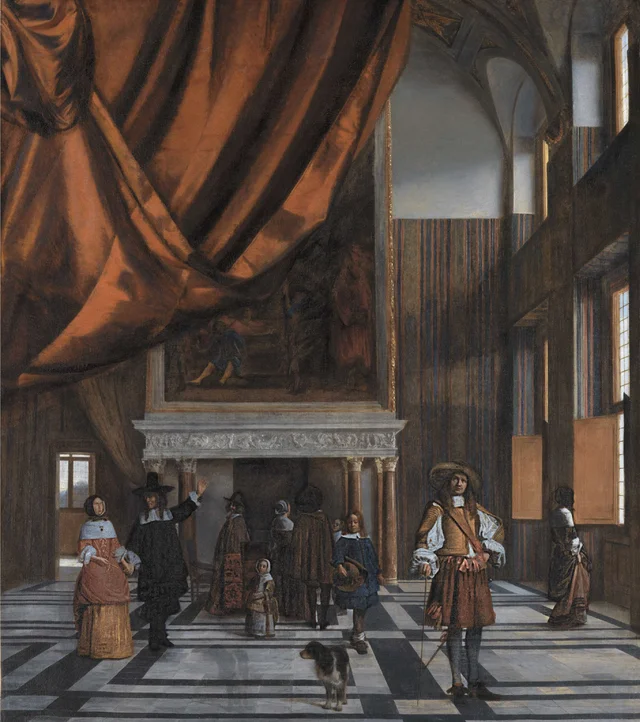 The Council Chamber in Amsterdam Town HallPieter de Hooch, 1664
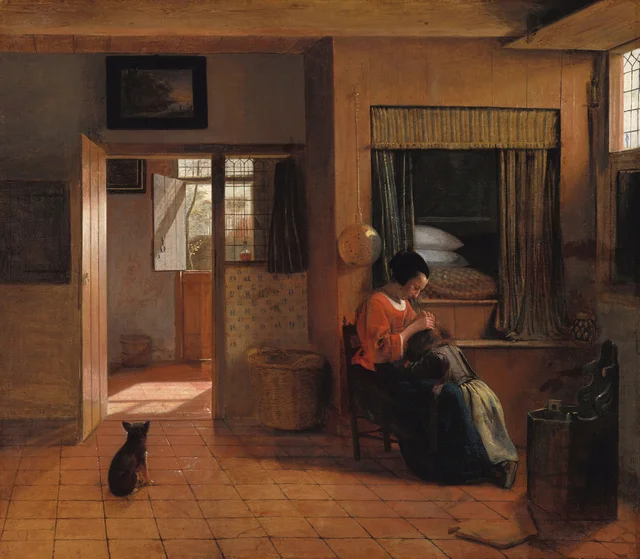 A Mother's DutyPieter de Hooch, 1660
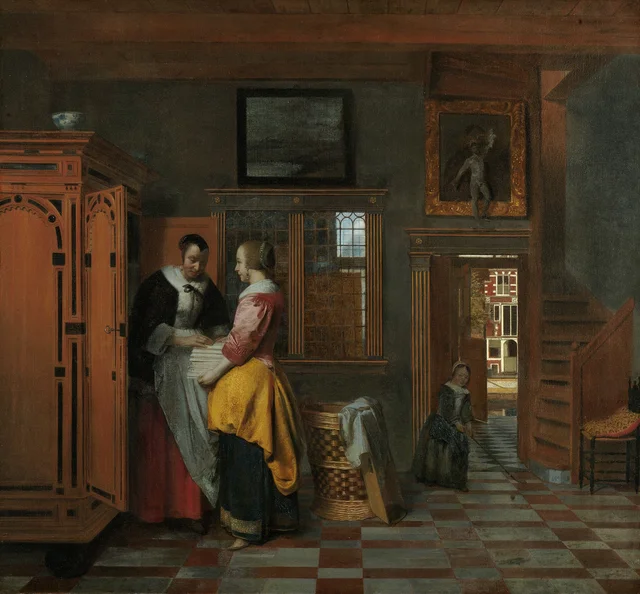 Interior with Women beside a Linen CupboardPieter de Hooch, 1663
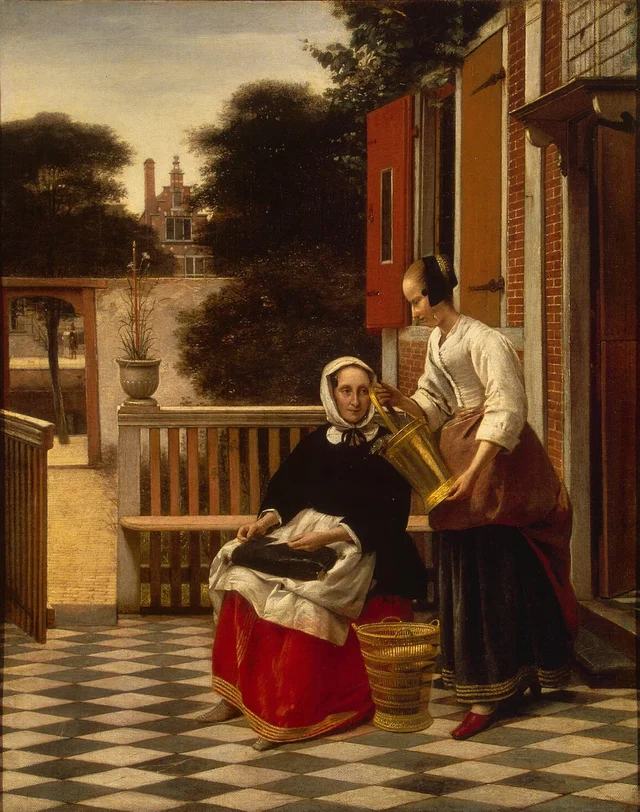 Woman and a maid with a pail of fish in a courtyardPieter de Hooch, 1660
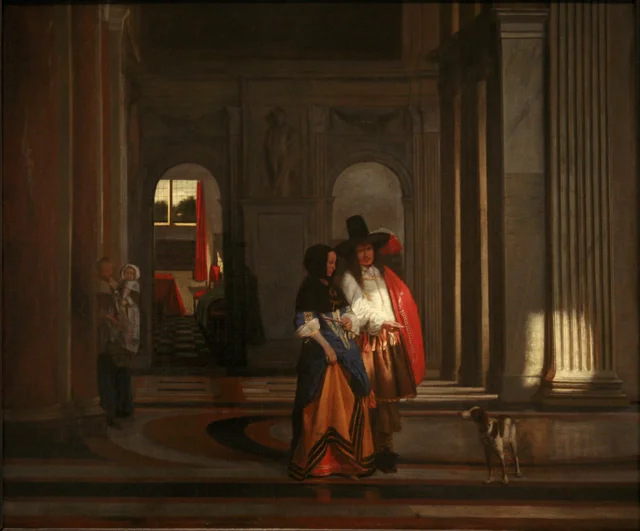 A Couple Walking in the Amsterdam Town HallPieter de Hooch, 1663
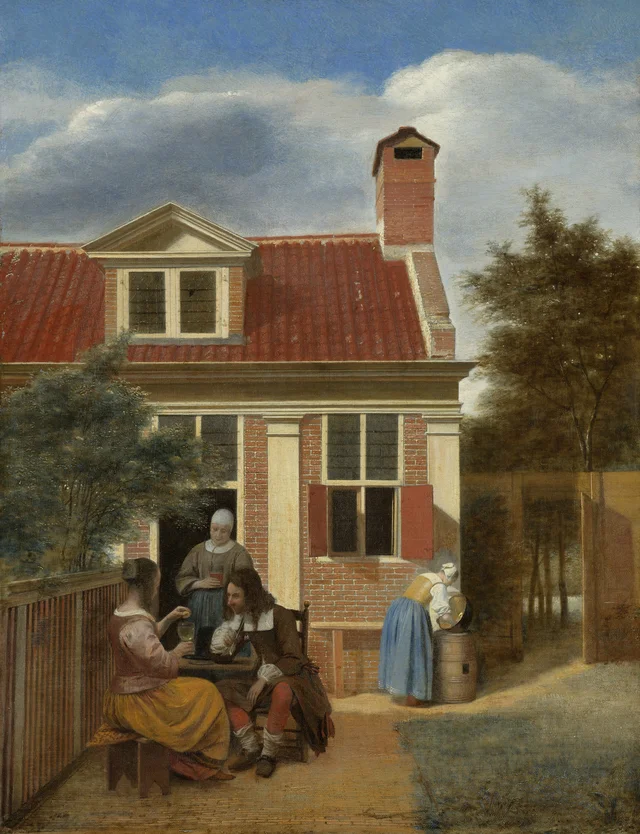 Figures in a Courtyard behind a HousePieter de Hooch, 1663
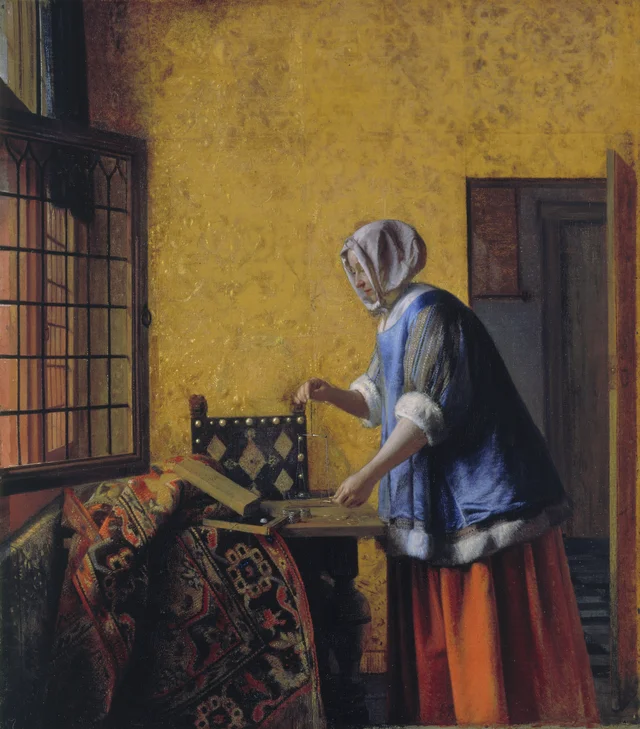 Interior with a Woman weighing Gold CoinPieter de Hooch, 1659
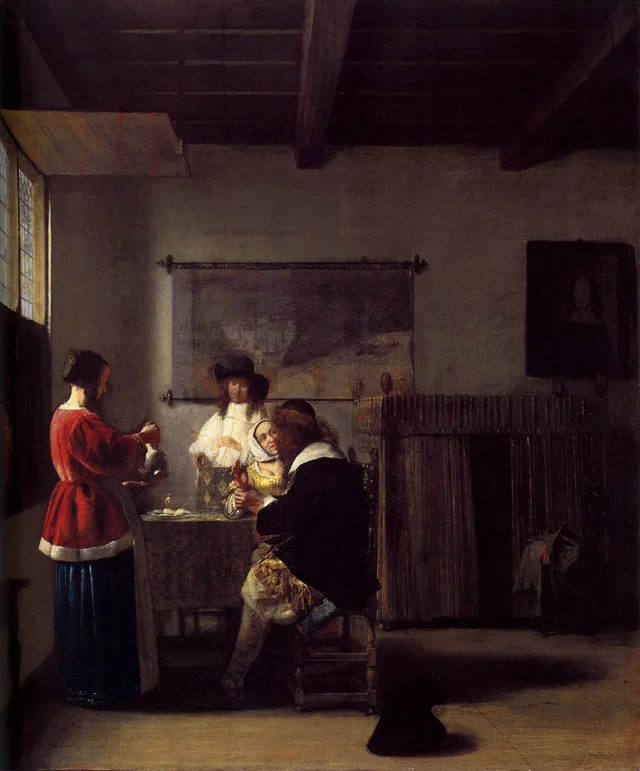 The VisitPieter de Hooch, 1657
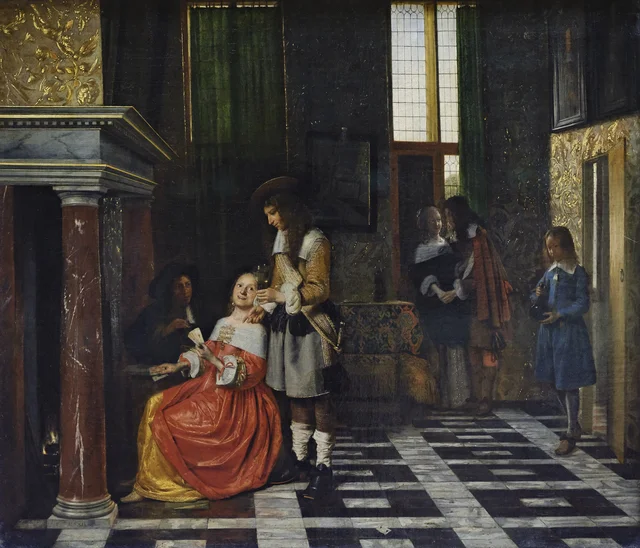 Card Players in an Opulent InteriorPieter de Hooch, 1663
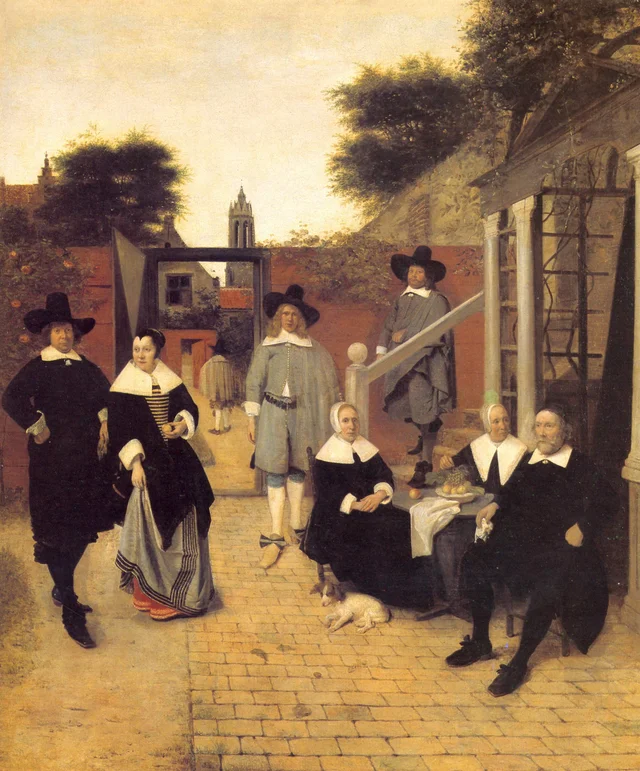 Group portrait of an unknown family or companyPieter de Hooch, 1658
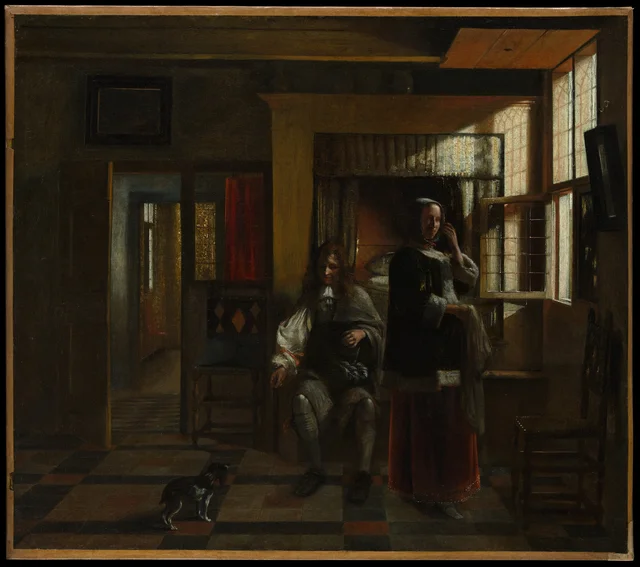 Interior with a Young CouplePieter de Hooch, 1662
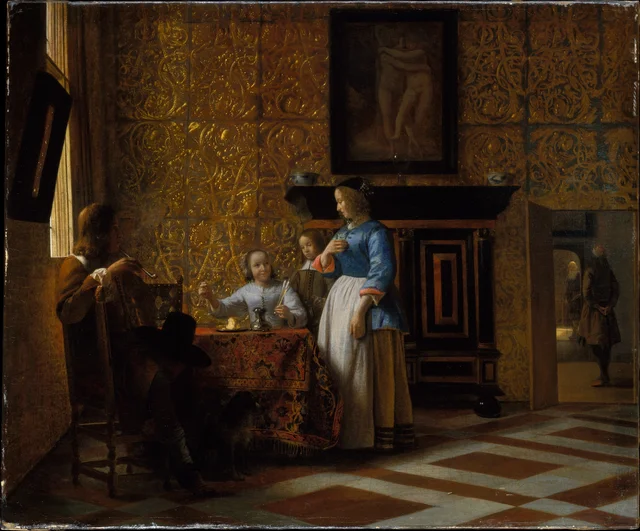 Leisure Time in an Elegant SettingPieter de Hooch, 1664
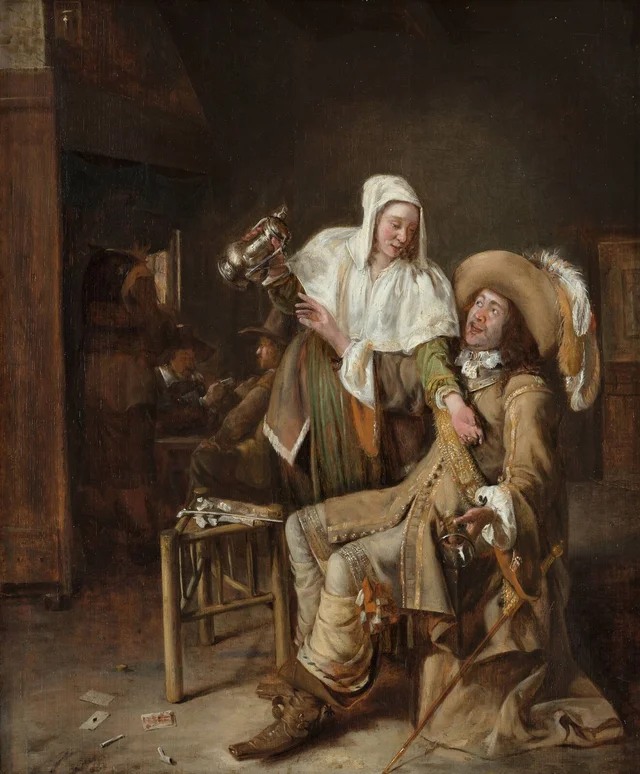 The empty glassPieter de Hooch, 1652
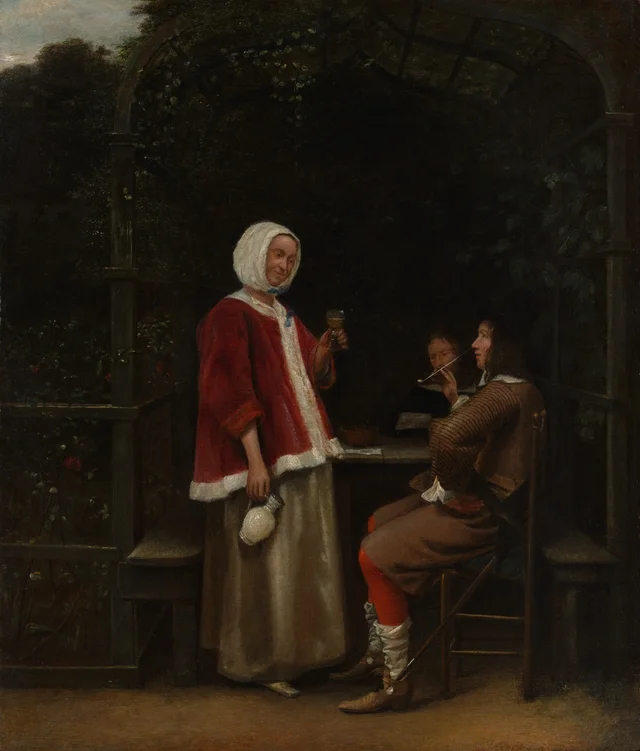 A Woman and Two Men in an ArborPieter de Hooch, 1657
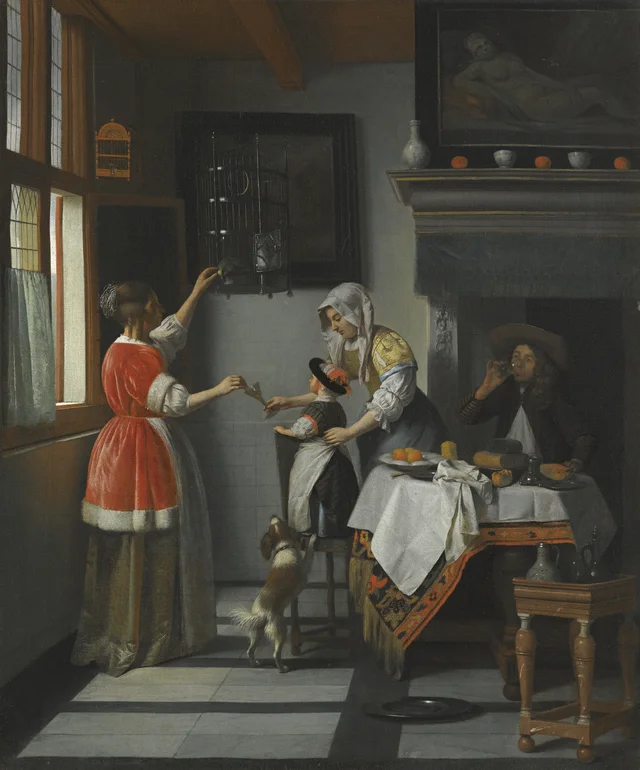 Interior with man drinking and two woman with a child feeding a parrotPieter de Hooch, 1670
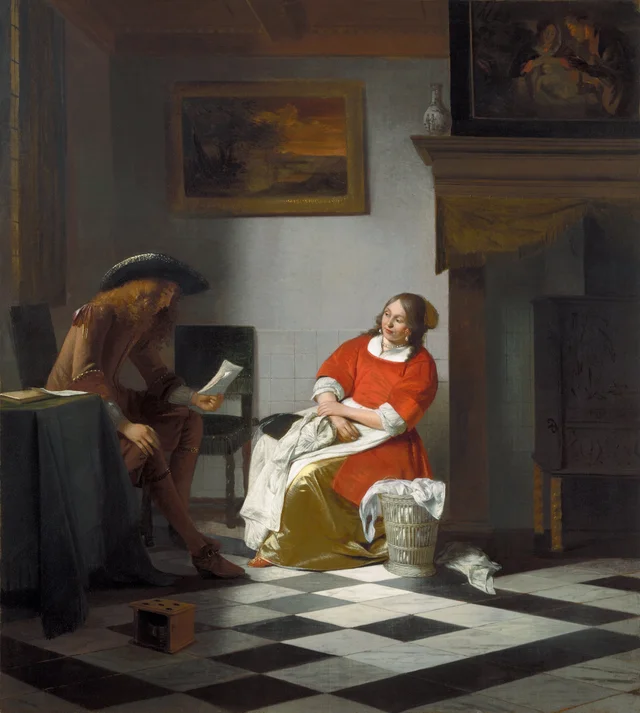 Man reading letter to a womanPieter de Hooch, 1675