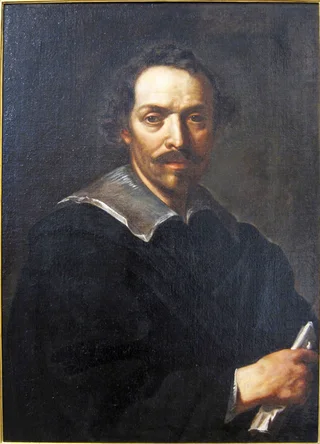
Pietro da Cortona
1596–1669 · Grand Duchy of Tuscany · Baroque
The story
Rome in the 1630s was a Barberini city. The Barberini family had one of their own on the papal throne as Urban VIII, and they were building a vast palace to match. To crown its great hall they turned to Pietro da Cortona, and he gave them a ceiling that seems to have no ceiling at all.
His 'Allegory of Divine Providence' opens the roof into a swirling sky where painted figures tumble past a fictive stone frame, the whole thing a soaring advertisement for Barberini glory, complete with the family's heraldic bees. It took most of a decade and helped set the template for High Baroque ceilings across Europe.
Cortona was also a serious architect, designing the jewel-like church of Santi Luca e Martina near the Roman Forum. He moved easily between paint and stone, and when he died in 1669 he left money for that church, where he was buried under a floor he had helped to build.
More articles
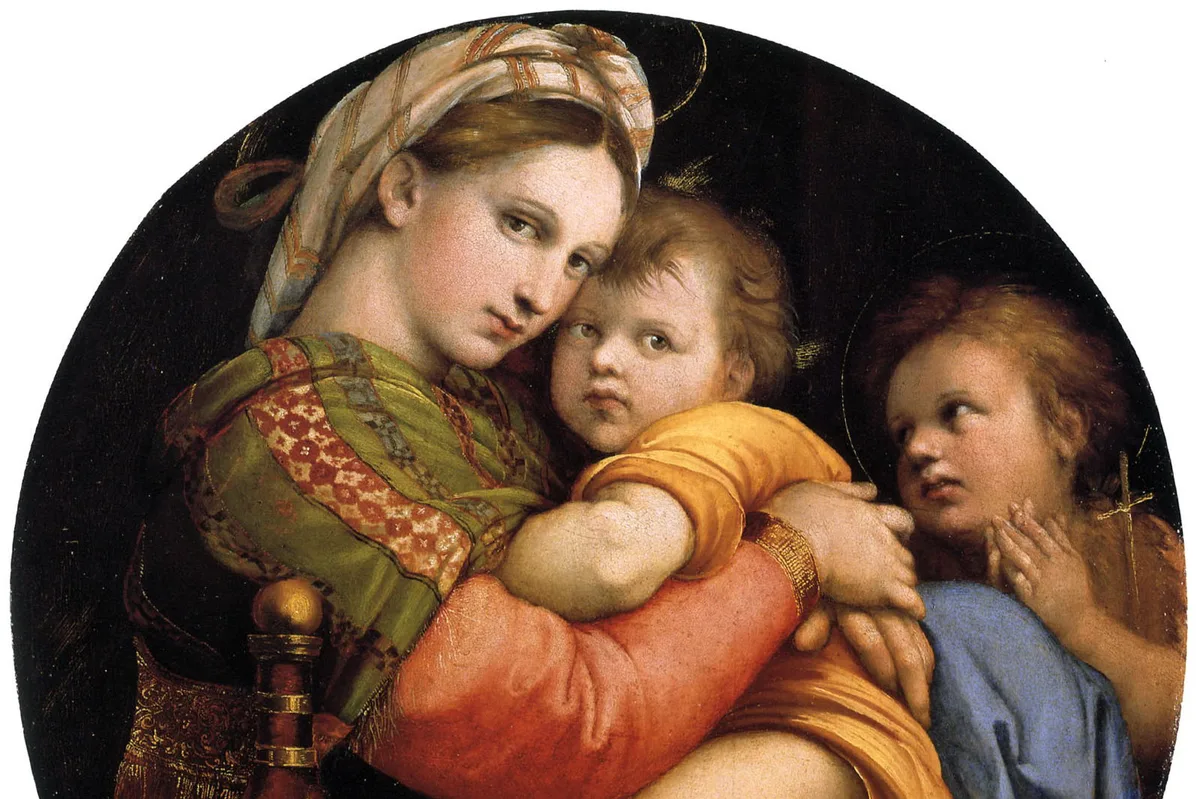
Works
14 works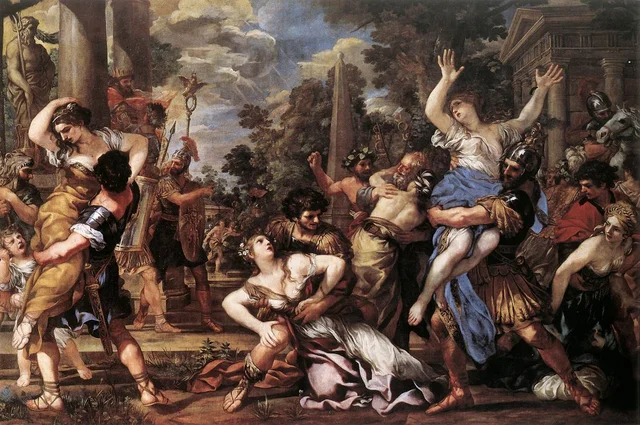 Rape of the Sabine WomenPietro da Cortona, 1630
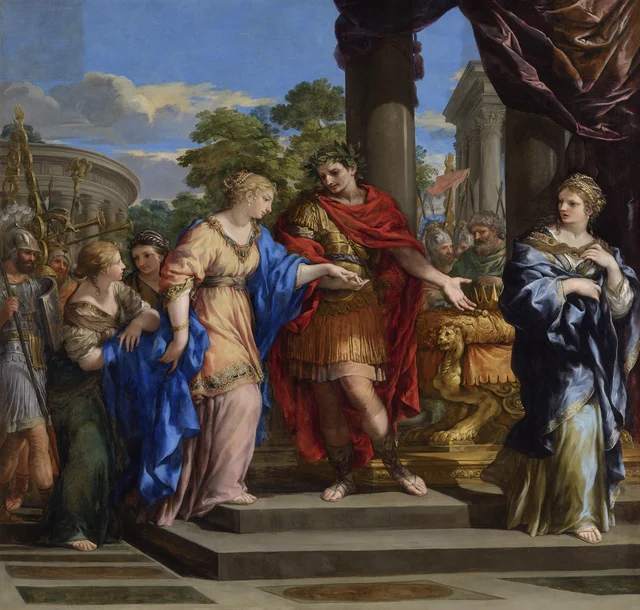 Caesar Giving Cleopatra the Throne of EgyptPietro da Cortona, 1637
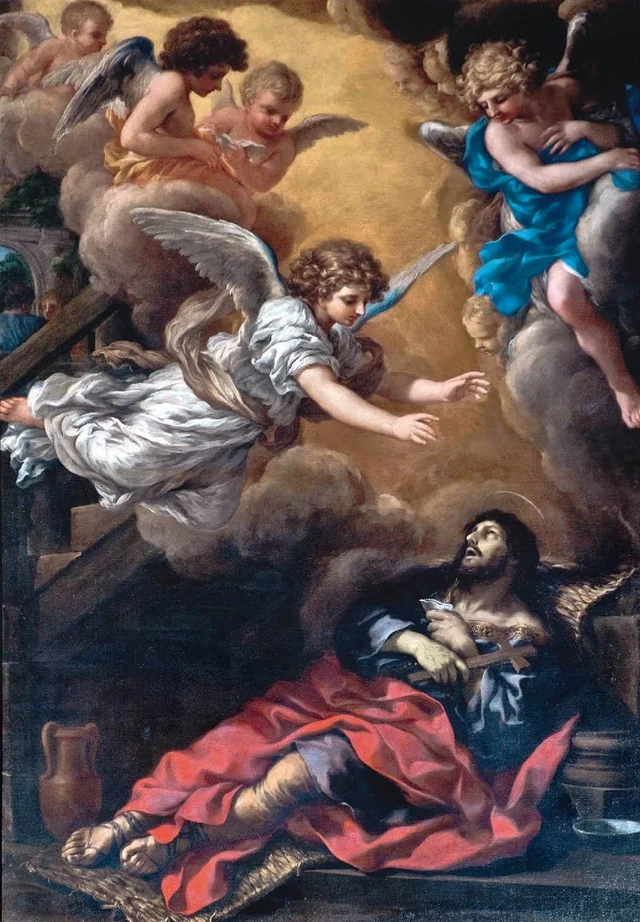 Saint Alexius dyingPietro da Cortona, 1638
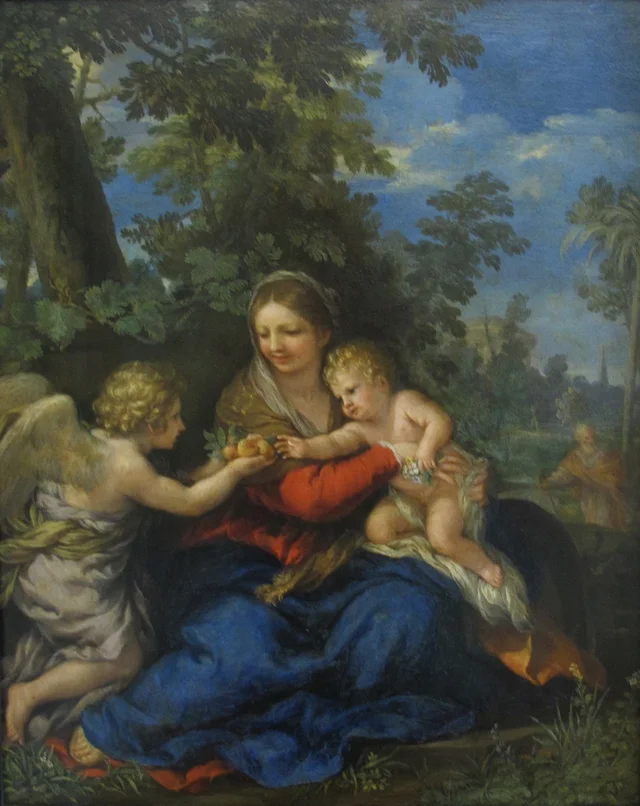 Holy Family Resting on the Flight to EgyptPietro da Cortona, 1643
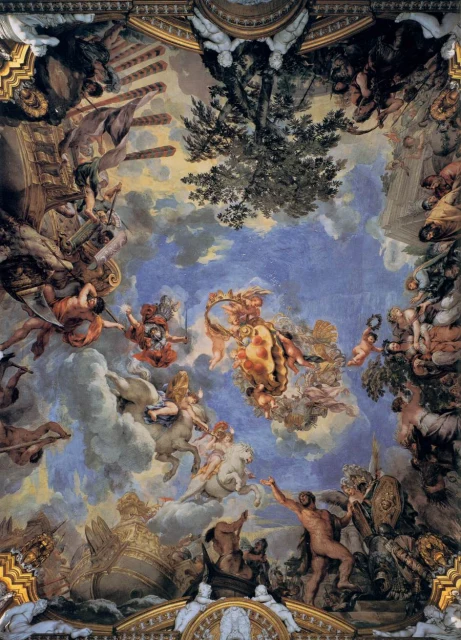 Ceiling fresco with the Medici coat of armsPietro da Cortona, 1644
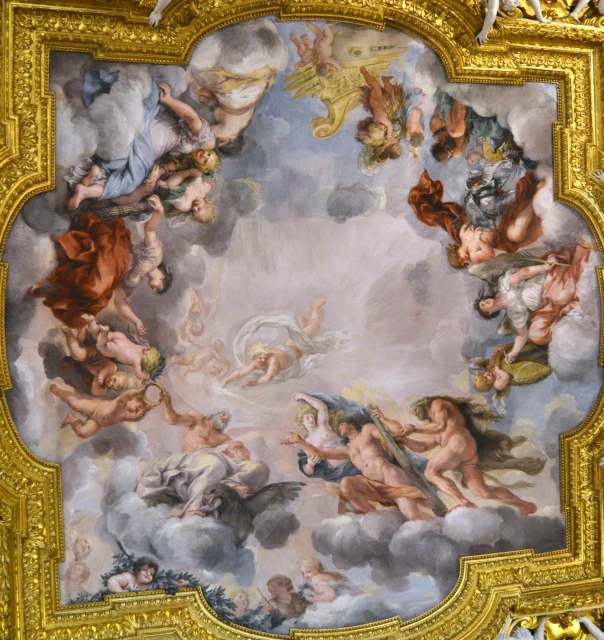 Ceiling of the Hall of JupiterPietro da Cortona, 1643
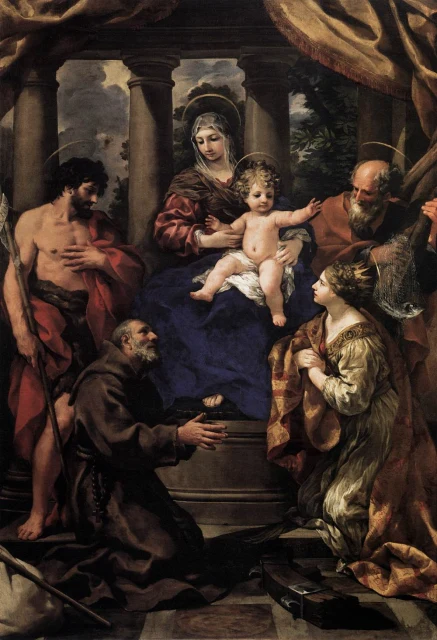 Madonna and Child with St. John the Baptist, St. Felix of Cantalice, St. Andrew and St. Catherine of AlexandriaPietro da Cortona, 1629
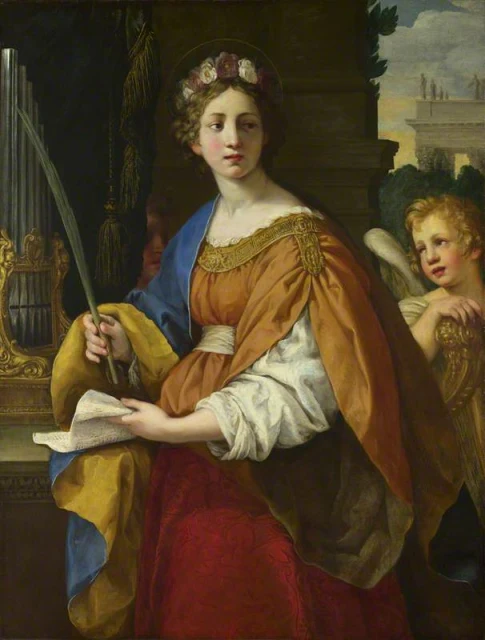 Saint CeciliaPietro da Cortona, 1622
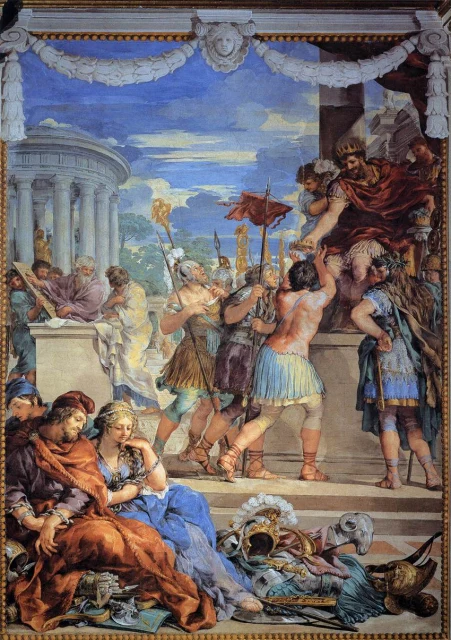 The Age of BronzePietro da Cortona, 1641
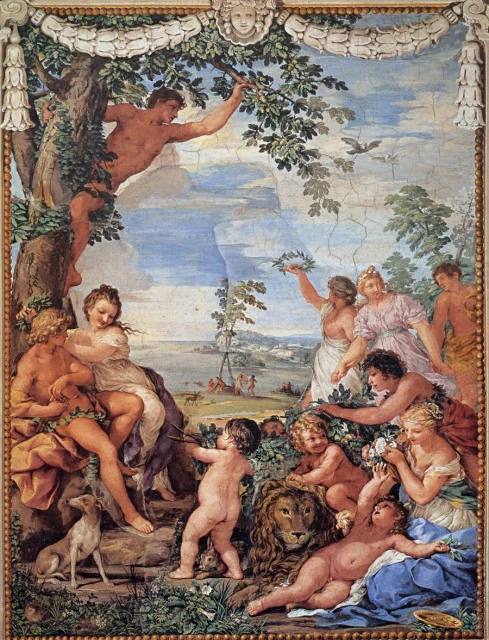 The Age of GoldPietro da Cortona, 1637
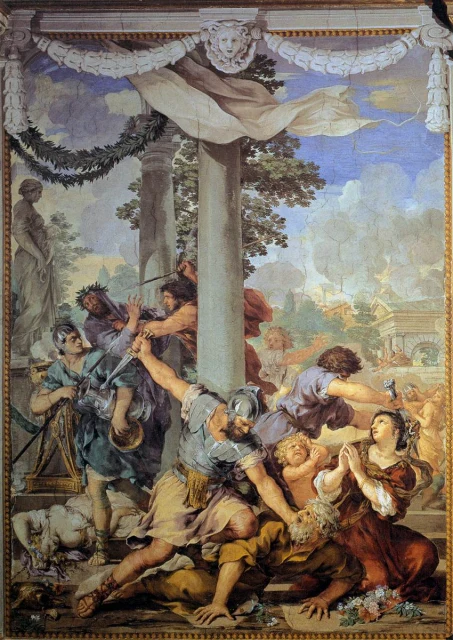 The Age of IronPietro da Cortona, 1641
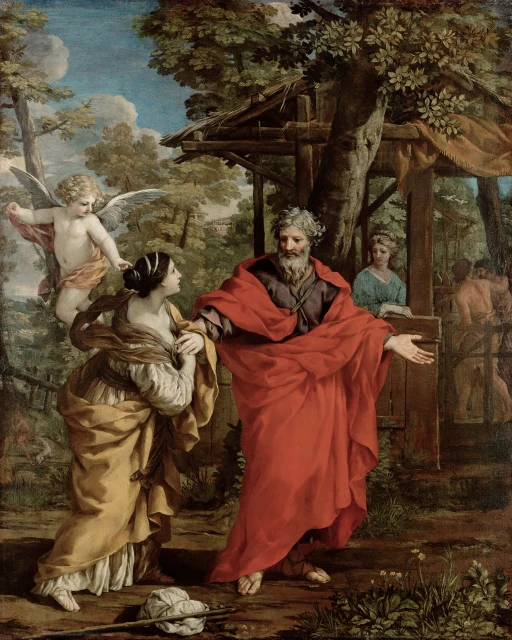 The Return of HagarPietro da Cortona, 1637
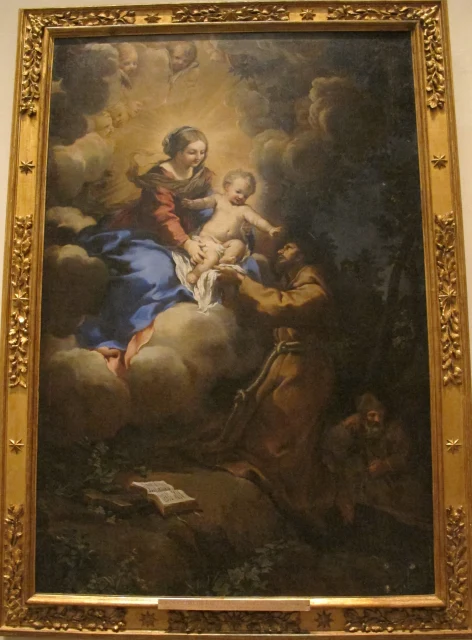 The Vision of Saint FrancisPietro da Cortona, 1641
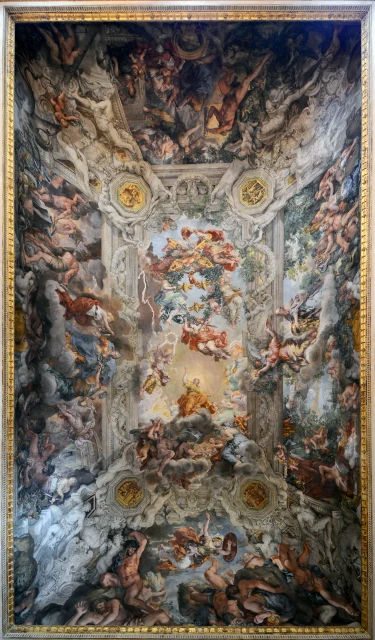 Triumph of Divine ProvidencePietro da Cortona, 1635