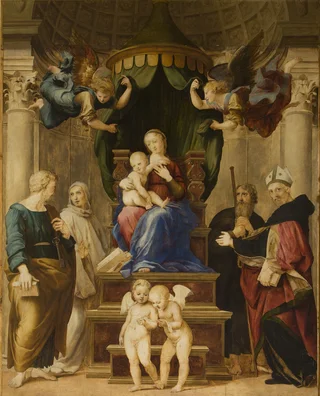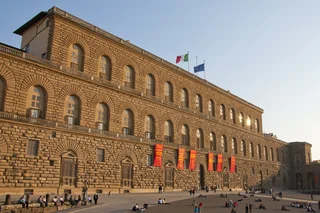
In 1697 Grand Prince Ferdinando de' Medici, heir to the Tuscan throne, removed an unfinished altarpiece by Raphael from the cathedral in Pescia and carried it off to his own rooms in Palazzo Pitti. A copy by the Florentine painter Pier Dandini was put on the altar in its place, and the copy has stayed in Pescia ever since.
The palace was built in the 15th century by the Florentine banker Luca Pitti for himself, and in 1549–1550 it was bought by Eleonora di Toledo, wife of Duke Cosimo I de' Medici. The Medici lived here until 1737, after them the grand dukes of the House of Habsburg-Lorraine, and when Florence was the capital of Italy, in 1865–1871, the king of the House of Savoy moved in. Between the end of the 18th century and 1834 the Lorraine hung the pictures densely, frame to frame, with schools and centuries mixed together, and around 1830 Grand Duke Leopoldo II opened the gallery to the public.
We begin with the portrait that the writer Pietro Aretino sent to Cosimo I as a gift in 1545, and end with the throne room of the Savoy kings, the last to live in the palace.
Gifts and the First Medici Collections
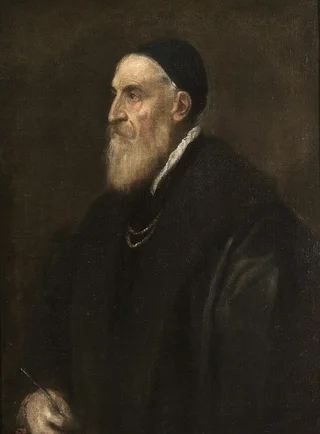
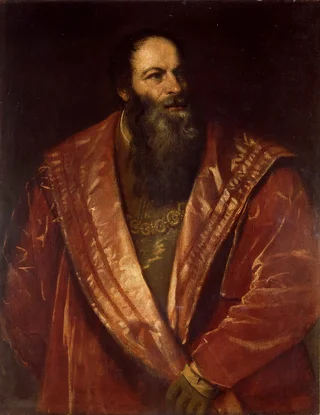
1. Portrait of Pietro Aretino — Titian
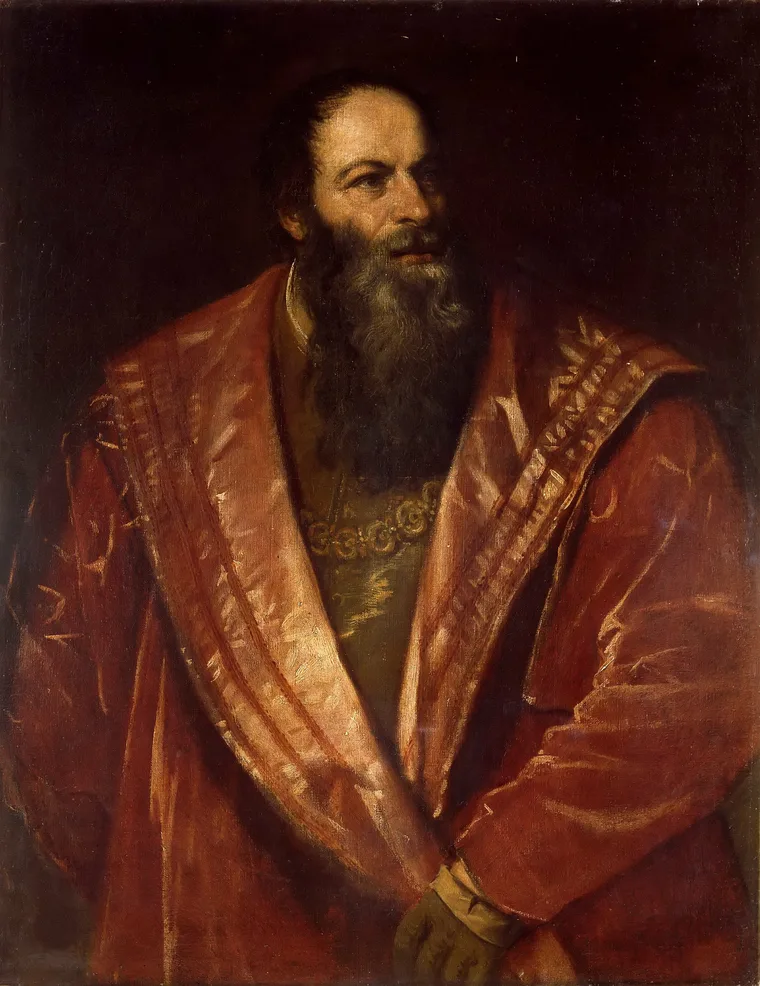
Early in 1545 the Venetian man of letters Pietro Aretino paid Titian for a portrait of himself, meaning to give it to the Florentine duke Cosimo I de' Medici and win his protection. Aretino lived on letters, satires and the generosity of powerful men, and in his youth he had been a friend of the duke's father, the condottiere Giovanni delle Bande Nere. In October the portrait was sent to Florence. That same autumn Aretino sent Cosimo a second gift, a portrait of Giovanni himself, painted from the death mask that Aretino kept in his house. He had asked Titian to paint it first, Titian never took it on, and in the end the portrait was painted by Gian Paolo Pace, although the Medici inventories called it a Titian until 1905. From 1553 the portrait of Aretino is listed in the ducal wardrobe, and scholars have found no document recording when it was moved to Palazzo Pitti.
Once the gift had gone, Aretino wrote two letters about it. To Titian he said that the portrait was “sketched rather than finished”. To Cosimo he wrote on 17 October that the portrait breathed and its pulse beat, and that had he given the painter more money, the cloth would have come out more lustrous, softer and thicker.
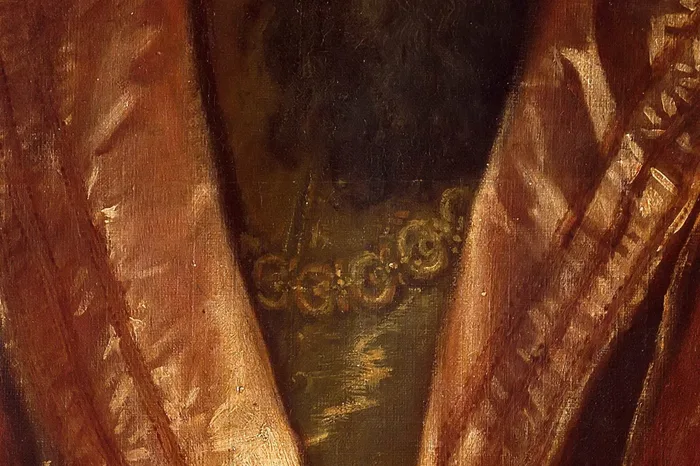
You can see what he meant in the lapels of his crimson velvet robe. They are of pale pink silk, and Titian laid them in long loose strips of light paint straight over the red, and along the right lapel he suggested something like fur or fringe with quick touches of the brush. The gold chain on his chest is painted in thick yellow, and after the face it is the most finished passage on the canvas. Aretino himself looks past the viewer, off to one side, and light from the upper left falls on his high forehead, his nose and the beard greying at his chin. At the Uffizi the loose strokes on the clothes are taken as Titian's deliberate manner.
2. Portrait of the Dwarf Morgante — Bronzino
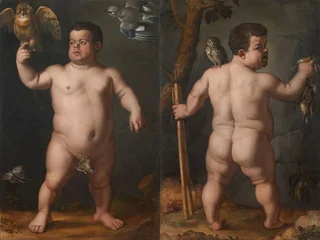
At the court of Cosimo I the dwarf Braccio di Bartolo was nicknamed Morgante, after the giant in Luigi Pulci's poem. He was the best known of the duke's five jesters, and a document of 1555 calls him the dwarf “of our ducal palace and our dearly loved servant”. The court portraitist Agnolo Bronzino painted him for Cosimo naked, full length, on both sides of a single canvas. By 1553 the picture was already listed in the inventory of the ducal wardrobe in Palazzo Vecchio.
On the front Morgante stands upright with his legs apart, holding up an owl on his raised hand, and a cord runs from the owl to his lowered left hand. The owl is a decoy, and at the upper right a jay with blue bars on its wing is already flying towards it. On the back the same man has turned away from us and looks round over his right shoulder with a frown, holding up a string of dead songbirds. So the two sides give two moments of one hunt, before and after. The Uffizi explains that Bronzino made him a bird-catcher because hunting large game was for men of higher birth. In 1956 the art historian James Holderbaum linked the picture to the debate over which was nobler, painting or sculpture, that the humanist Benedetto Varchi had started among Florentine artists in 1546–1547. The sculptors argued that a statue could be walked around, and Bronzino showed a man from both sides.
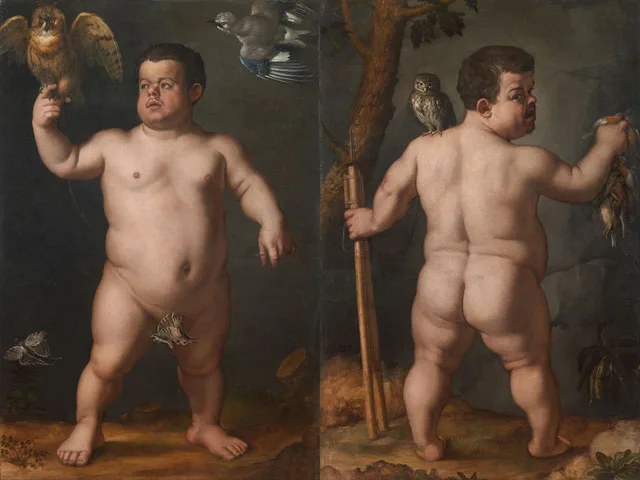
Later the picture was painted over to turn Morgante into Bacchus. He was given a wreath of vine leaves, the owl became a cup, a jug was set under his left arm, and his groin was covered with a garland of leaves and grapes. The Italian national catalogue dates this repainting to the 17th century, while the museum and the Opificio delle Pietre Dure, the Florentine restoration workshop, take it for work of the 19th. In 2010 the Opificio's restorers removed all the additions, and beneath them two swallowtail butterflies came to light. One flies low at the left beside a small plant, and the other rests on his groin, and that one was painted by Bronzino himself.
The picture was moved to Palazzo Pitti only in September 2019. From 2013 to 2016 it had stood in a corridor of the Uffizi, but the floor there shook under the visitors' feet, and the paint layer was at risk of flaking. In the Palatine Gallery the double portrait was given a case of its own on shock absorbers, and both sides can be seen by walking around it.

The Urbino and Botti Legacies
3. La velata — Raphael
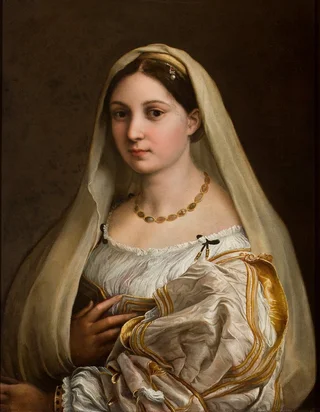
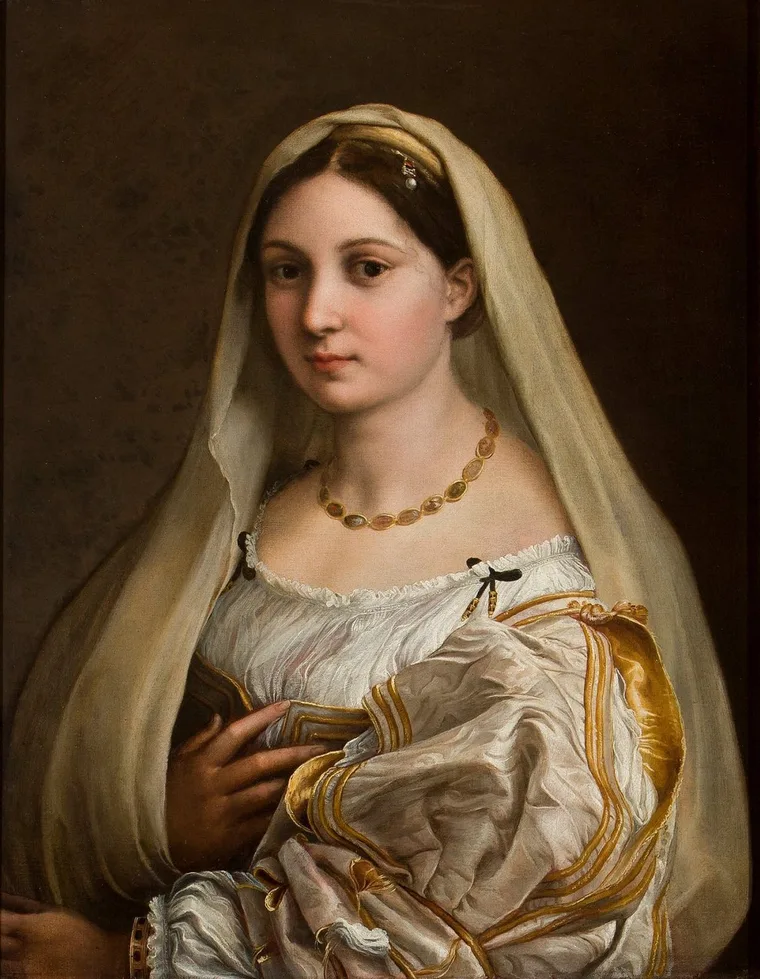
In 1615 the Florentine nobleman and diplomat Matteo Botti signed a life-annuity agreement with Grand Duke Cosimo II, under which his collection of pictures would pass to the grand duke and Botti would be paid by him for the rest of his life. Botti's will of 1619 confirmed the agreement, and when he died in 1621 his pictures went to the Medici. Among them was a portrait of a young woman in a veil.
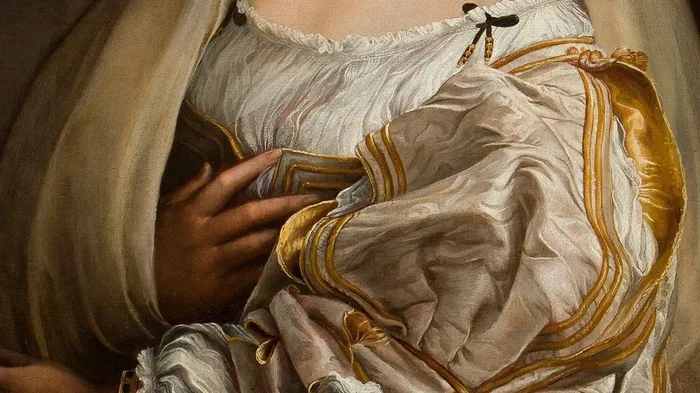
Most of the picture is taken up by a single sleeve. It is of pale silk, white shading to pink and grey in the folds, with gold-yellow stripes and a lining of the same colour turned back at the shoulder, and every fold of it is painted separately. The woman has laid her right hand on her breast with the fingers spread. Her left hand has almost slipped past the edge of the picture, and in the lower left corner only the fingertips and a wrist with a gold bracelet can be seen. A transparent cream veil rests on the top of her head and falls on both sides to the bottom edge, so that the whole figure stands inside a tall, narrow triangle.
Raphael painted this portrait in Rome around 1512–1516. In Florence his name became separated from it, and at the end of the 18th century the Lorraine hung it as a work by Justus Sustermans, the Medici court portraitist. In 1839 the German art historian Johann David Passavant gave it back to Raphael and suggested that the sitter was the Fornarina, the painter's mistress. The Fornarina story rests on Vasari, who in 1568 described a portrait, kept by the Florentine merchant Matteo Botti, of a woman Raphael loved until his death. The Matteo Botti who made the agreement with Cosimo II was born around 1570, so Vasari was writing about another Matteo. Vasari did not name the woman. The name “Margherita” was written in later by an unknown reader in the margin of a copy of the Lives, the nickname Fornarina, the baker's daughter, appeared later still, and in 1897 a record of 1520 was published that mentions “Margherita, widow, daughter of the late Francesco Luti of Siena”. In the Uffizi's view, the dress and jewellery are more likely those of a young noblewoman sitting for a commissioned portrait, and the veil marks her as a married woman.
4. La Bella — Titian
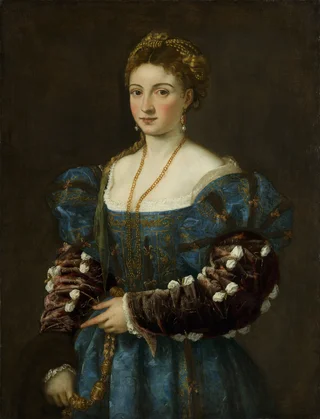
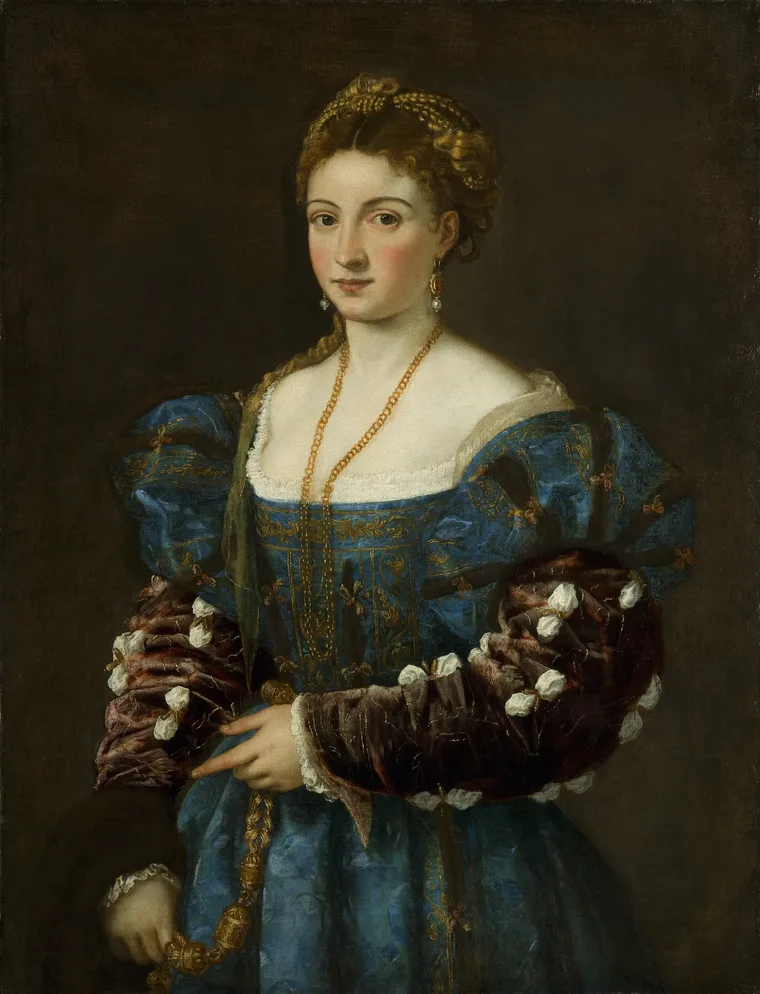
On 2 May 1536 the Duke of Urbino, Francesco Maria della Rovere, then in command of the armies of the Venetian Republic, told his ambassador in Venice to hurry Titian along with “that portrait of that woman in the blue dress”. Almost everything known about the sitter comes down to those words. In the 19th century the German historian Moritz Thausing suggested that she was the duke's wife, Eleonora Gonzaga, but the duke would hardly have called his wife “that woman”. The Italian scholar Leandro Ozzola saw in her a younger Isabella d'Este, and others have proposed a courtesan. The museum sees the picture as the embodiment of an ideal of beauty, and many recognise the same face in the Venus of Urbino. The picture was given its nickname, La Bella, “the beautiful woman”, in Florence in the 18th century.
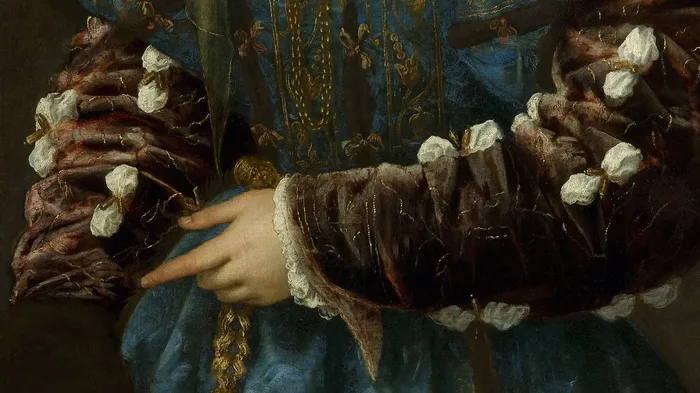
The dress of blue damask is embroidered with gold stripes across the stiff bodice, and small bows are scattered over the blue. The lower sleeves, of dark wine-coloured velvet, are slashed, and white linen puffs are pulled through the slashes and tied with gold cords. Her left hand rests at her waist with the index finger pointing down. Her right hand, at the lower left, holds a gold chain with a heavy gold end-piece, and a dark fur is thrown over her forearm, almost lost against the dark background.
The portrait came to Florence in 1631. That year the last Della Rovere duke of Urbino died, and his collection was inherited by his granddaughter, the nine-year-old Vittoria della Rovere. She had been brought to Florence at the age of one, in 1623, was betrothed at two to the future Grand Duke Ferdinando II, and grew up among the Medici. Vittoria kept the portrait in her own apartments in Palazzo Pitti until her death in 1694. After her it passed to her son, Cardinal Francesco Maria de' Medici, and in 1711 to Grand Duke Cosimo III.
Under Napoleon the picture was taken to Paris, where, according to the restorers, it was lined, repainted and covered with a thick layer of varnish in 1804. It came back after 1815. In 2008–2011 Patrizia Riitano, a restorer at the Opificio delle Pietre Dure, removed the French repaints and the darkened varnish, and the blue dress turned out to be painted in azurite and lapis lazuli.
5. Penitent Magdalene — Titian
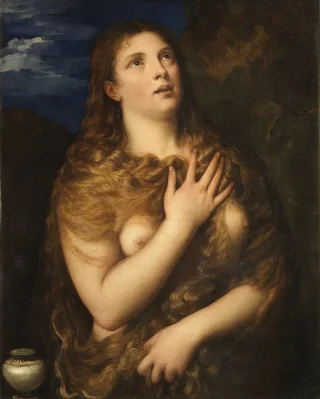
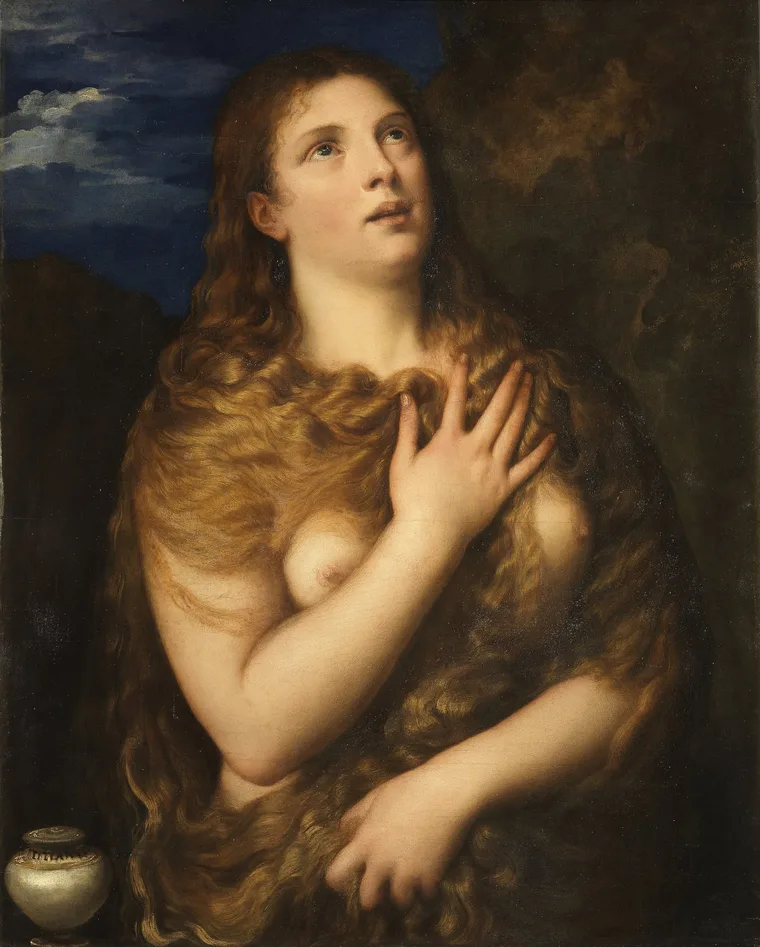
The Magdalene is covered only by her own hair. It is long and copper-gold, falling from both shoulders to the very bottom of the picture and gathering in front into heavy locks, and Titian painted it in separate quick strokes, so that every lock catches a highlight of its own. With her right palm, fingers spread, she presses the hair to one breast, and the other breast is bare. Her head is thrown back, and her eyes, raised towards the right edge, glisten with tears. At the upper left, above a dark line of hills, there is a scrap of blue sky with a cloud, the only cool patch in the picture, and in the lower left corner stands the pale lidded jar in which the Magdalene brought the ointment. According to the museum, Titian put his signature on its rim.
The Uffizi believes the picture was probably painted in Venice in 1533–1535 for the same Duke of Urbino, Francesco Maria della Rovere, who commissioned La Bella. Some scholars still take it to be the Magdalene that Duke Federico Gonzaga of Mantua ordered in 1531 as a gift for the poet Vittoria Colonna. In 1548 Vasari saw a half-length Saint Mary Magdalene “with her hair loose” in the wardrobe of Francesco Maria's son, Duke Guidobaldo II, and called it a rarity, and this record is usually taken to refer to the Pitti picture. The Magdalene came to Florence in 1631 together with La Bella, in the same inheritance of Vittoria della Rovere.
Titian went on repeating this composition until the 1560s, and versions of it are in the Hermitage, in Naples, in Stuttgart and in the Getty Museum. The Pitti Magdalene is considered the earliest to survive. In the later versions, painted after the Council of Trent had demanded decorum from religious images, the Magdalene is clothed.
The Court of Ferdinando II
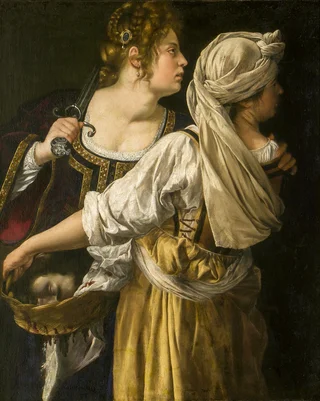
6. Judith and Her Maidservant — Artemisia Gentileschi
Artemisia Gentileschi came to Florence at the end of 1612 or the beginning of 1613, soon after the trial of Agostino Tassi in Rome. Here she worked for the Medici court, and in 1616 she became the first woman admitted to the Florentine Accademia del Disegno.
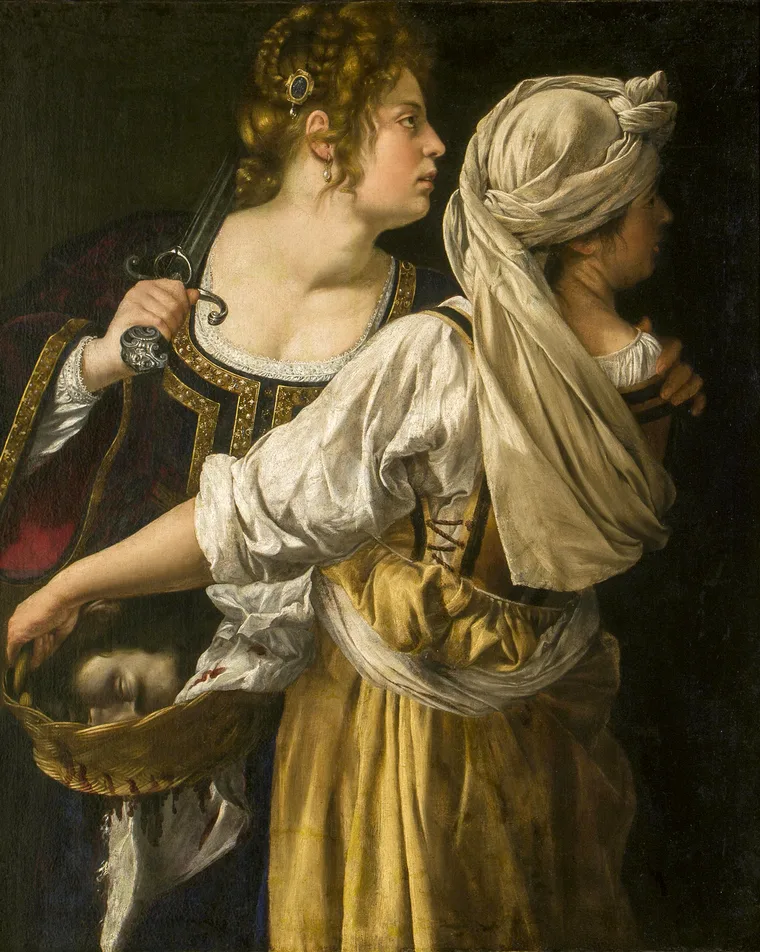
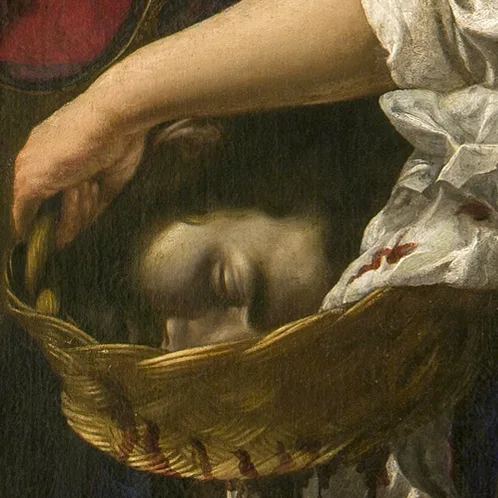
In those Florentine years she painted two women leaving the camp of Holofernes with his head. Both have turned their heads sharply to the right and are looking at something beyond the edge of the picture. Judith stands behind, holding the sword on her shoulder, blade up, right beside her neck, with her left hand on the shoulder of her maidservant Abra. Abra has her back to us, in a yellow dress and a pale turban, and her face can barely be seen at the right edge. On her hip she carries a basket with the head in it, its eyes closed, and blood from the basket runs down onto a white cloth and stains the cuff of her sleeve. Artemisia took the composition from her father, Orazio Gentileschi, whose picture of the same subject is in Oslo. Cristofano Allori painted the same subject for the same court, and his Judith also hangs in this palace.
The picture first appears in the Medici papers in 1637, in the inventory of the Pitti wardrobe, as “Judith with her companion with the head of Holofernes in a basket, by Artemisia”. No known document records a commission or a purchase before that inventory. By then Artemisia herself had been gone from Florence for 17 years. The family left because of her husband's debts, and by March 1620 Artemisia was already writing letters from Rome, having left unfinished work behind in her Florentine studio.
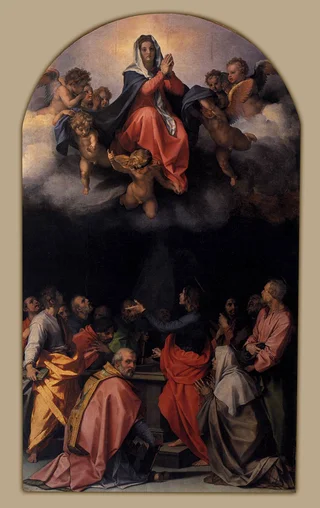
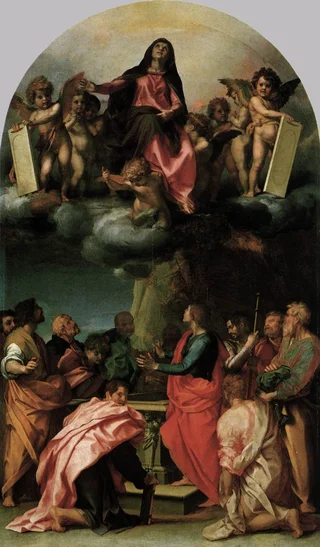
7. Passerini Assumption — Andrea del Sarto
In 1526 Margherita Passerini of Cortona contracted with Andrea del Sarto for an Assumption of the Virgin, at 155 florins, for an altar in the Servite church outside Cortona. The saints in it were chosen for the patron's family. On the left kneels the grey-bearded Saint Nicholas of Myra, patron of the Passerini, in a heavy pink cope embroidered with gold, and three gold balls lie on the ground in front of him. On the right an elderly woman in a white veil and a grey-brown dress, holding a rosary, is praying. She is Margaret of Cortona, the local saint and the patron's namesake.
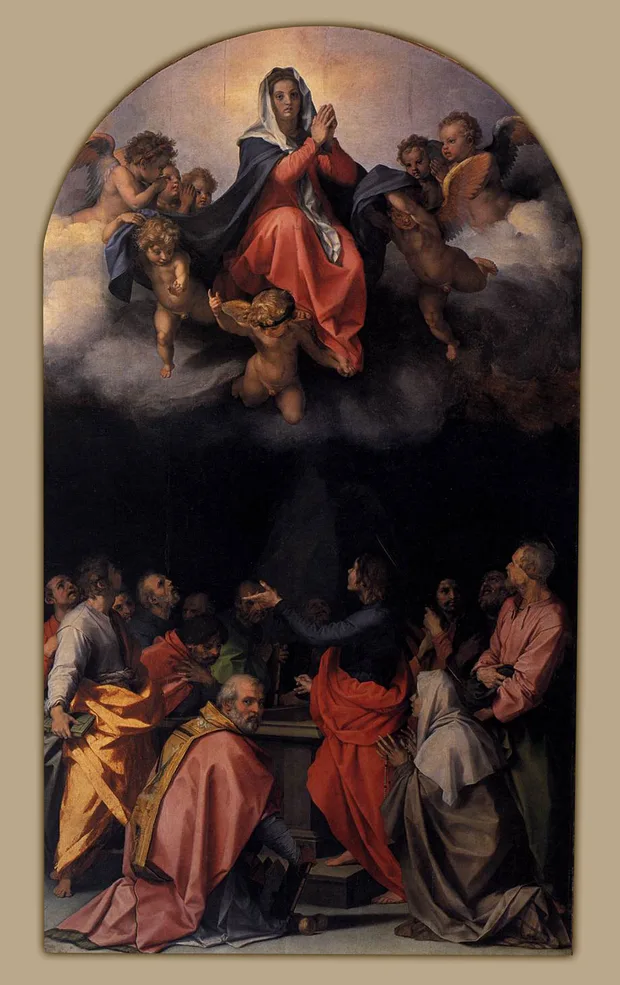
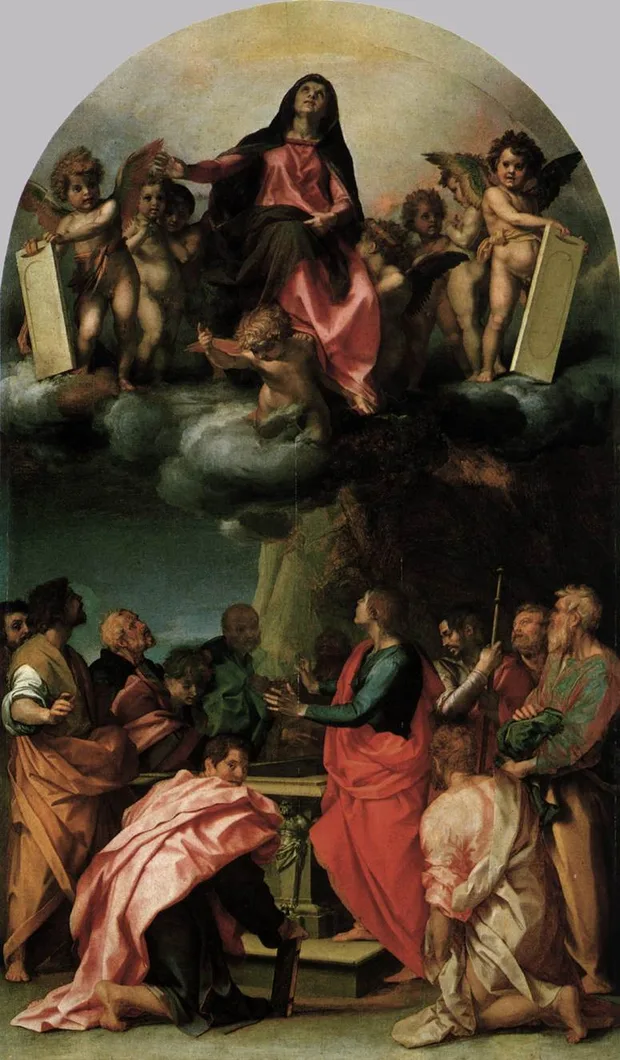
Del Sarto started from his own Assumption, painted a few years earlier for the Florentine Panciatichi family, and reworked a great deal of it. He replaced the landscape and sky at the bottom with dark rock, so that the pink, red and shot-orange robes of the apostles around the tomb stand out brightly against an almost black ground, and Mary on her cloud looks straight at the viewer.
Andrea del Sarto died in 1530, four years after the contract. There are more of his pictures in the Palatine Gallery than by any other Renaissance master. In 1639 a Passerini heir sold the altarpiece to Grand Duke Ferdinando II, who sent it to the picture collection in Palazzo Pitti, and a copy was put on the altar. The Panciatichi Assumption came to the Pitti in 1687, to Grand Prince Ferdinando, and its panel was then extended at the top so that it matched the height of the picture from Cortona.
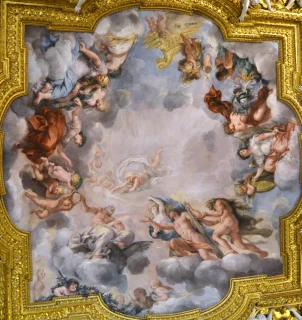
8. Ceilings of the Planetary Rooms — Pietro da Cortona and Ciro Ferri
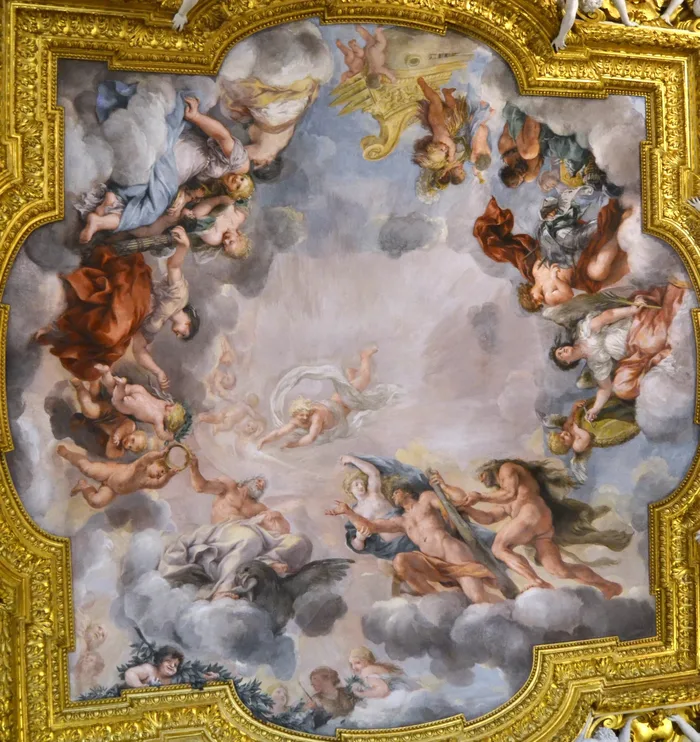
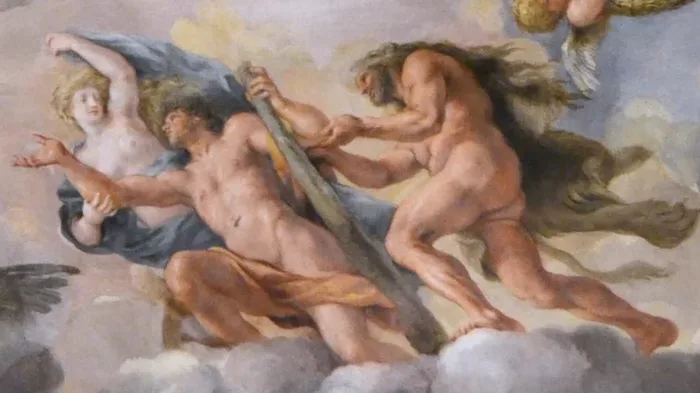
Overhead in these rooms there is more stucco than painting. Gilded frames, white stucco figures reclining along the cornices, gilded putti and atlantes, medallions and cartouches with Latin mottoes cover almost the whole vault, and fresco is left only in the middle. On the ceiling of the Hall of Jupiter, in a quatrefoil frame, a naked young prince in a billowing blue cloak stretches out his arms to Jupiter, who sits on an eagle. Behind the prince stands a bearded Hercules with the club he has handed over to him, and on the right a winged Victory carves the letter M on a shield. The museum also identifies four women among the figures on this ceiling as the “Medicean stars”, the name Galileo gave in 1610 to the moons of Jupiter he had discovered.
In 1641 Grand Duke Ferdinando II commissioned Pietro da Cortona to paint his state apartments. Cortona was at that time a painter, an architect and a master of stucco decoration all at once, and not long before he had painted the ceiling of Palazzo Barberini in Rome. The programme was drawn up by the court librarian Francesco Rondinelli, and in it the virtues a ruler needs from youth to old age followed one another under the signs of the planets. In the Hall of Venus, where people waited for an audience, Minerva pulls a youth from the arms of Venus. In the Hall of Mars, where ambassadors waited, the prince goes to war, and the Hall of Jupiter was the Medici audience room, where the prince is crowned. Last came the Hall of Saturn, in which Saturn receives the prince in his old age.
In 1647 Cortona left for Rome and never came back to Florence. The Hall of Apollo was left unfinished, and in 1659–1661 it was completed by Cortona's pupil Ciro Ferri. The Hall of Saturn Ferri painted entirely by himself in 1663–1665, from his master's designs.
The Medici Collectors
9. The Concert — Titian
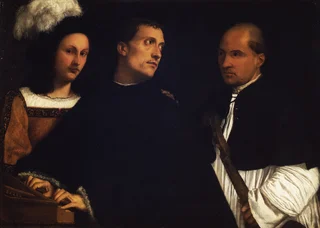
Leopoldo de' Medici, the younger brother of Grand Duke Ferdinando II and later a cardinal, chose as his trusted agent in Venice the Florentine nobleman Paolo del Sera, who had gone there as a young man to trade and stayed for the rest of his life. Over 30 years del Sera sent a great many pictures, drawings and self-portraits to Florence, and he wrote around 650 letters to Leopoldo himself. In 1654 Leopoldo also bought a picture from del Sera's own collection. It was thought to be by Giorgione, and as early as 1648 the Venetian biographer of artists Carlo Ridolfi had, it seems, described this picture as a Giorgione in del Sera's collection.
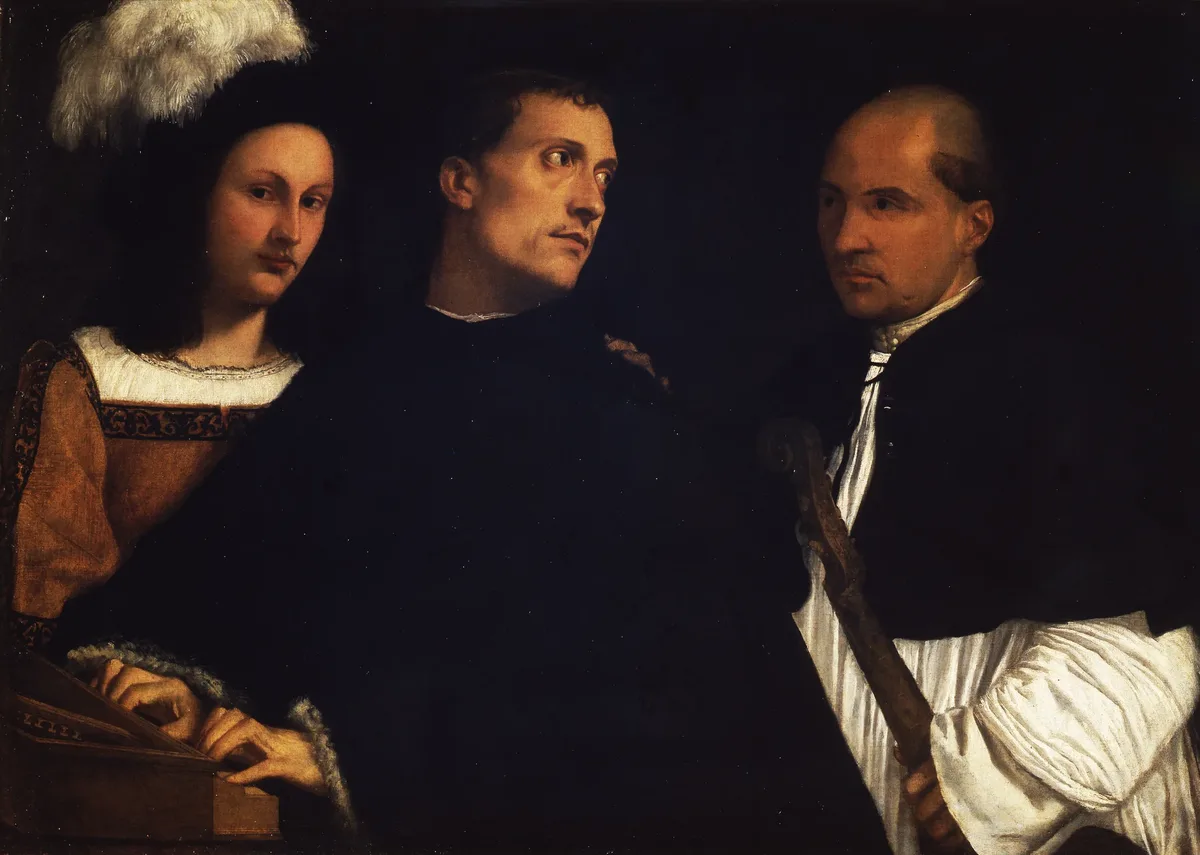
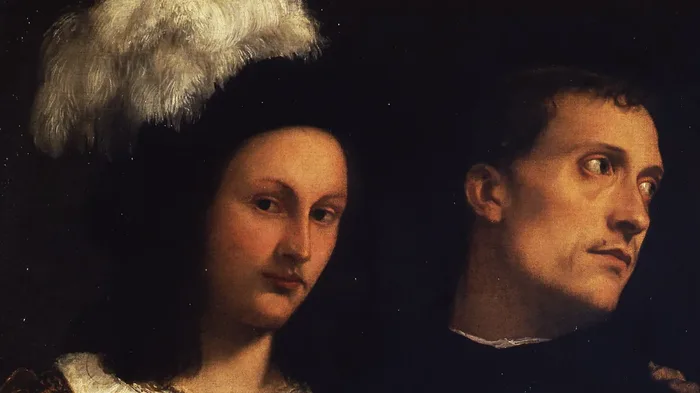
The picture shows three men half-length, pressed close together against a dark background. The musician in the middle still has his fingers on the keys of a spinet, but he has turned sharply over his shoulder towards the man on the right, so that the whites of his eyes show. The man standing on the right has laid a hand on his shoulder and holds the neck of a stringed instrument whose body is lost below the bottom edge. On the left a youth in a black beret with a huge white ostrich plume looks straight at the viewer. The faces are painted differently, the musician's sharply and crisply, the youth's more softly and flatly, and because of that difference some scholars have seen the picture as a joint work by Giorgione and Titian. Who the three men are is disputed as well: the museum calls the musician a layman in a fur-trimmed cloak and the man on the right a Dominican, while the English critic Walter Pater saw a monk in the musician. The youth's plume touches the top edge of the picture, as it was meant to, because in 1976–1978 restorers removed a strip of canvas that had been added along the top at a later date.
In 1675 The Concert was put on show in the Tribuna of the Uffizi, and in 1697 it went back to Palazzo Pitti, to Grand Prince Ferdinando. Throughout the 19th century the picture was considered one of Giorgione's chief works, and in 1877 Pater built his idea of that painter on it. Three years later the Italian connoisseur Giovanni Morelli became the first to call it an early work by Titian, painted around 1510, the year Giorgione died.
10. Judith with the Head of Holofernes — Cristofano Allori
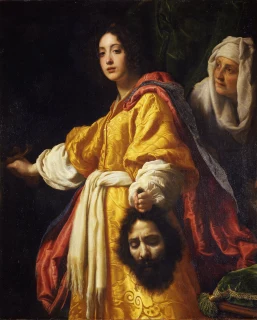
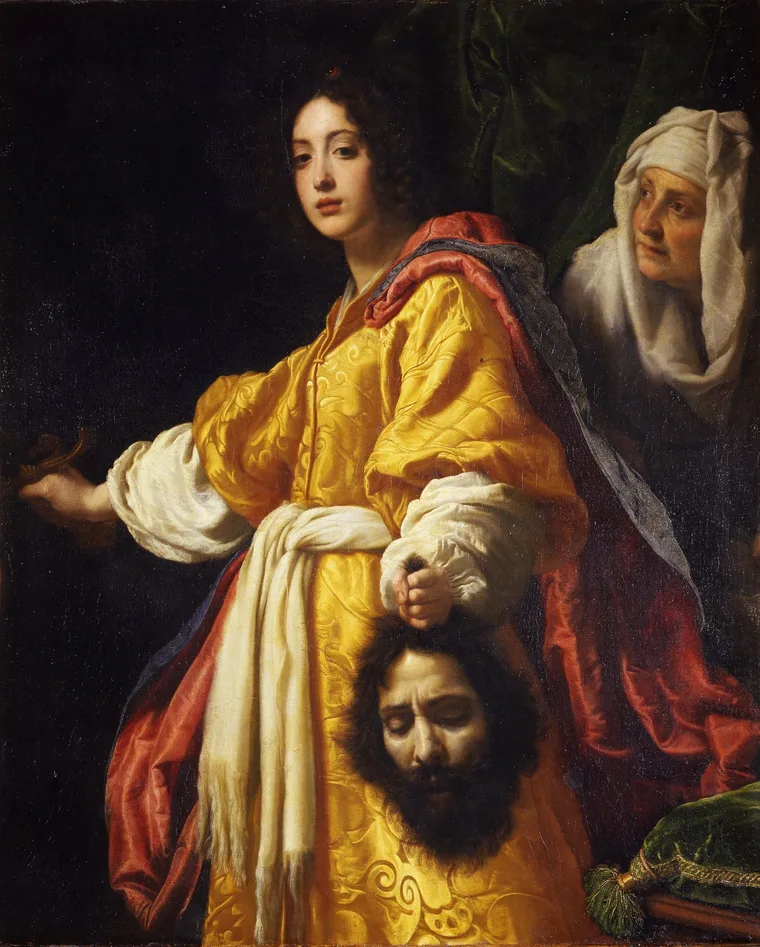
The story of this picture is known from a single author, the art historian Filippo Baldinucci, who wrote about Cristofano Allori at the end of the 17th century, decades after the painter's death, from what he was told by Allori's friend Michelangelo Buonarroti the Younger. According to Baldinucci, Allori painted Judith from La Mazzafirra, a well-known Florentine courtesan and his mistress, the old maidservant from her mother, and the severed head of Holofernes from his own face. The Biblioteca Corsini in Rome holds a drawing by Allori of his own head with the eyes closed, which is considered a study for the head of Holofernes.
Judith stands in a dress of golden-yellow silk with a large pattern, bound with a broad cream sash with a fringe, and a crimson cloak billows behind her shoulders. The Uffizi sees this dress as a tribute to the Florentine silk industry. Judith looks calmly at the viewer, and with her left hand she holds the head by the hair, close against her skirt. Her right arm reaches towards the left edge of the picture, and in it only the gilded hilt of a sword can be seen, the blade lost in the darkness. The maidservant in a white veil at the upper right is the only one who glances aside in fear, as if listening. In the lower right corner lies a green velvet cushion trimmed with gold braid, all that is left of Holofernes' bed.
Allori died in 1621 with the picture still in his hands. After his death it passed to Ferdinando II, in 1626 to Ferdinando's uncle, Cardinal Carlo de' Medici, and in 1666, when Carlo died, to Palazzo Pitti. According to the museum's records, from 1799 to 1815 it was in Paris, in the Luxembourg Palace. The date is disputed. The museum gives 1610–1612, other scholars place the picture at the end of the 1610s, and the British Royal Collection considers its own version, signed and dated 1613, to be the first.
11. Sleeping Cupid — Caravaggio
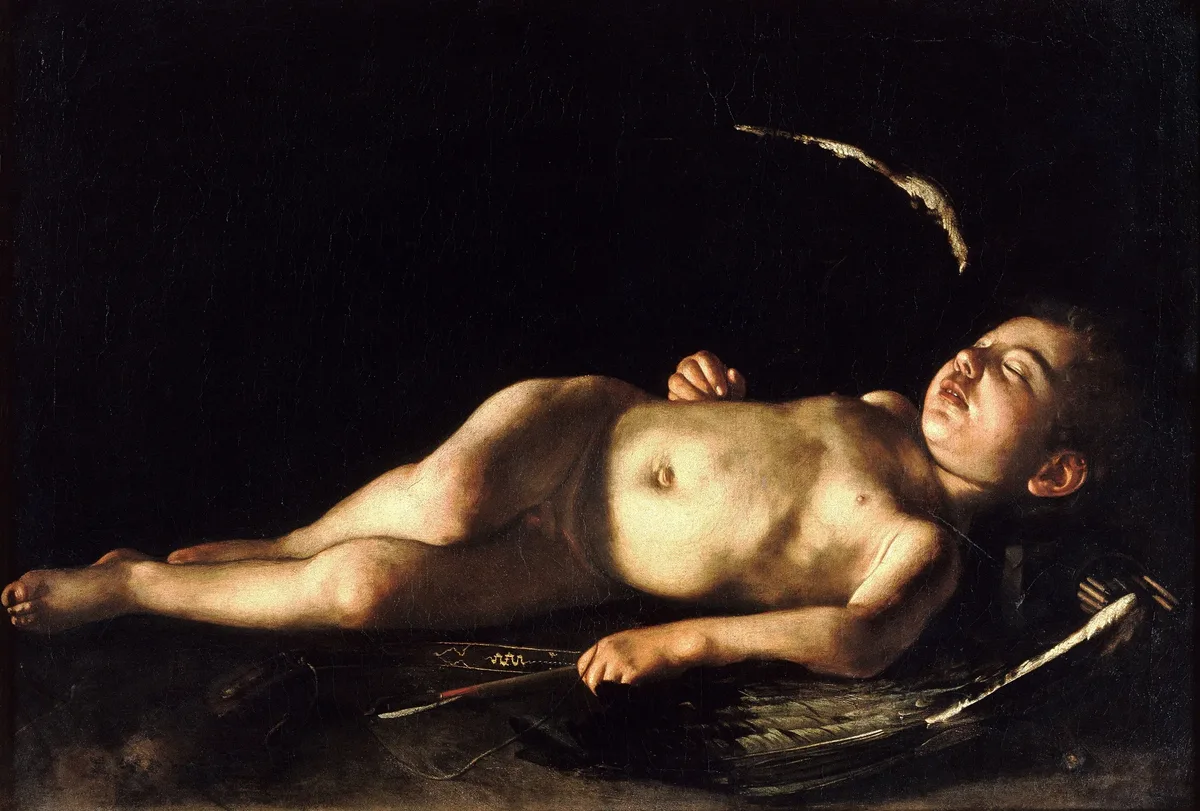
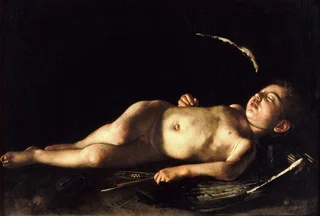
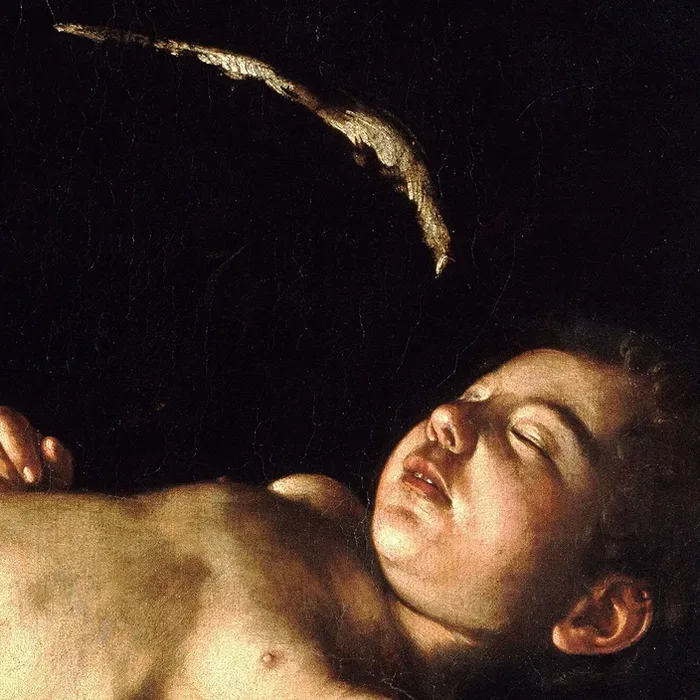
In July 1607 Caravaggio reached Malta by sea as a fugitive. A year earlier, in Rome, he had killed Ranuccio Tomassoni in a fight and been sentenced to death in his absence, and on Malta he hoped to become a knight of the Order of Saint John and win a pardon. For a Florentine, Fra Francesco dell'Antella, a knight of the Order and the Grand Master's secretary for Italian affairs, he painted a sleeping Cupid. On 14 July 1608 Caravaggio was received into the Order. At the end of August, after a brawl in which a knight was wounded, he was put in prison, at the beginning of October he escaped, and on 1 December the Order expelled him as “a rotten and fetid member”.
Almost two-thirds of the canvas is flat black. The naked infant lies across it on a diagonal, from his feet in the lower left corner to his thrown-back head on the right. His eyes are closed, his mouth open, his belly round and swollen, and the light falls most strongly on his navel and his knee. Beneath him lies a bow with a slack string, his head rests on a quiver in place of a pillow, and of the second wing, in the darkness above his head, a single pale arc remains. Dell'Antella, like every knight of the Order, had taken a vow of chastity. Here Cupid is asleep, and his weapons lie thrown down beside him.
In July 1609 the picture reached Florence and the patron's brother, the senator Niccolò dell'Antella. On the back of the canvas someone has written with a brush that it is the “work of Signor Michelangelo Merisi da Caravaggio in Malta 1608”. The note is in the third person, and it is not considered to be the artist's signature. In 1619–1620 the painter Giovanni da San Giovanni repeated the Cupid in a fresco on the façade of Palazzo dell'Antella in Piazza Santa Croce. The picture stayed in the family for 59 years. On 14 January 1667 the prior Donato dell'Antella, the patron's nephew, died without children, and that same year Cardinal Leopoldo de' Medici bought it from his heirs.
12. Consequences of War — Peter Paul Rubens
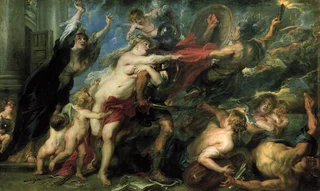
Justus Sustermans was born in Antwerp and from the 1620s until his death was court portraitist to the Medici in Florence. In 1637 he commissioned a picture for himself from his fellow countryman Rubens. On 12 March 1638 Rubens wrote to him in Italian that he had that day received the last 142 florins for the picture and that the crate had left for Italy by way of Lille three weeks before, and he explained what the picture showed. The original letter is lost, and the text survives in a copy published by the historian Filippo Baldinucci.
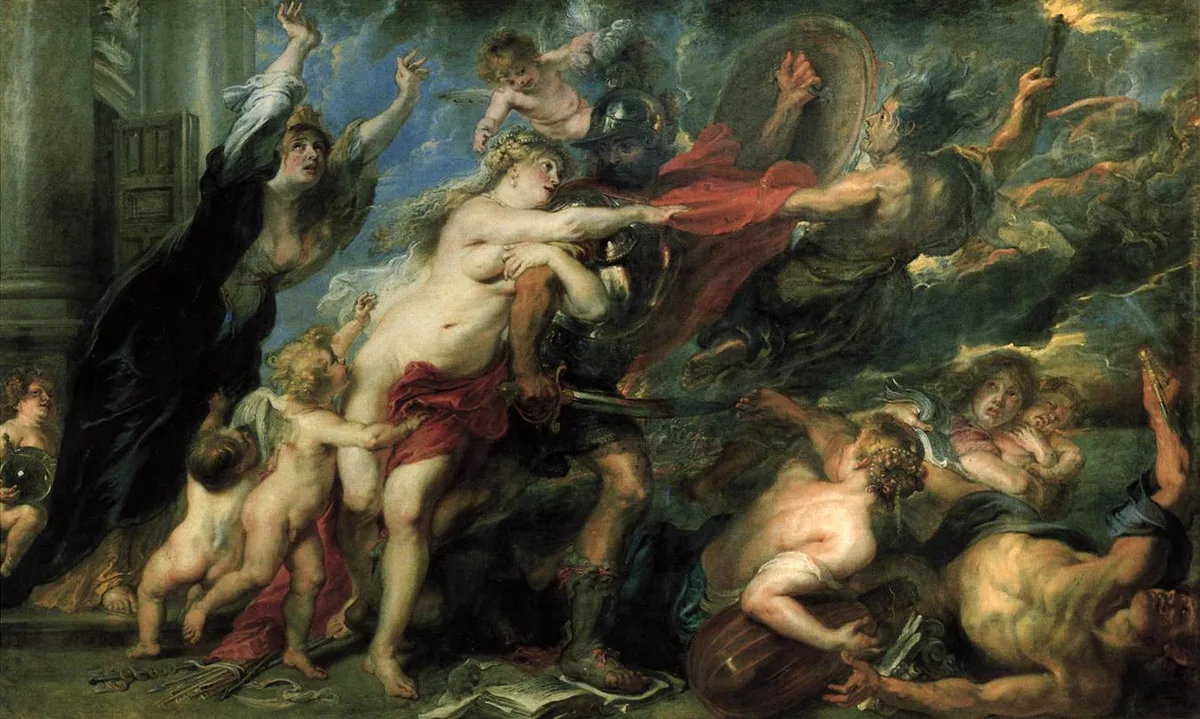
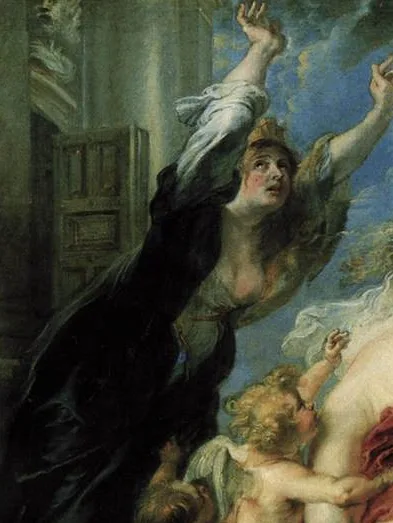
Mars, in armour and a huge red cloak, strides out of the open temple of Janus, which the Romans kept shut in time of peace, and, in Rubens's words, threatens the nations with great calamities. The naked Venus embraces him and tries to hold him back, while the Fury Alecto, torch in hand, drags him forward. On the left, by the door of the temple, stands a woman in black with a torn veil and raised arms, “the unfortunate Europe, who for so many years now has suffered plunder, outrage and misery”. On the ground lie a bundle of arrows with its ribbon untied and a caduceus, the fallen symbols of concord and peace. At the lower right an architect lies on his back with a pair of compasses in his hand, beside him a woman with a broken lute, and above them a mother with a crying child. Mars treads on an open book and some sheets of drawings, and of these Rubens writes “if I remember rightly”, because he was describing the picture from memory after it had already left. In a postscript he worried that the flesh and the whites might have yellowed a little from being packed so long, advised putting the canvas in the sun from time to time, and gave Sustermans leave to retouch it if it needed it.
Rubens was about 60 at the time, and the Thirty Years' War was in its 20th year. He died in May 1640. Sustermans kept the picture until his own death in 1681, and around 1691 his heirs sold it to Grand Prince Ferdinando, the son of Cosimo III. In 1799 the French took it to Paris, and when it was being returned in 1815 the inventory noted cracks in the paint on Venus's back, which had appeared when the canvas was taken off its stretcher in Paris.
13. Madonna of the Baldacchino — Raphael
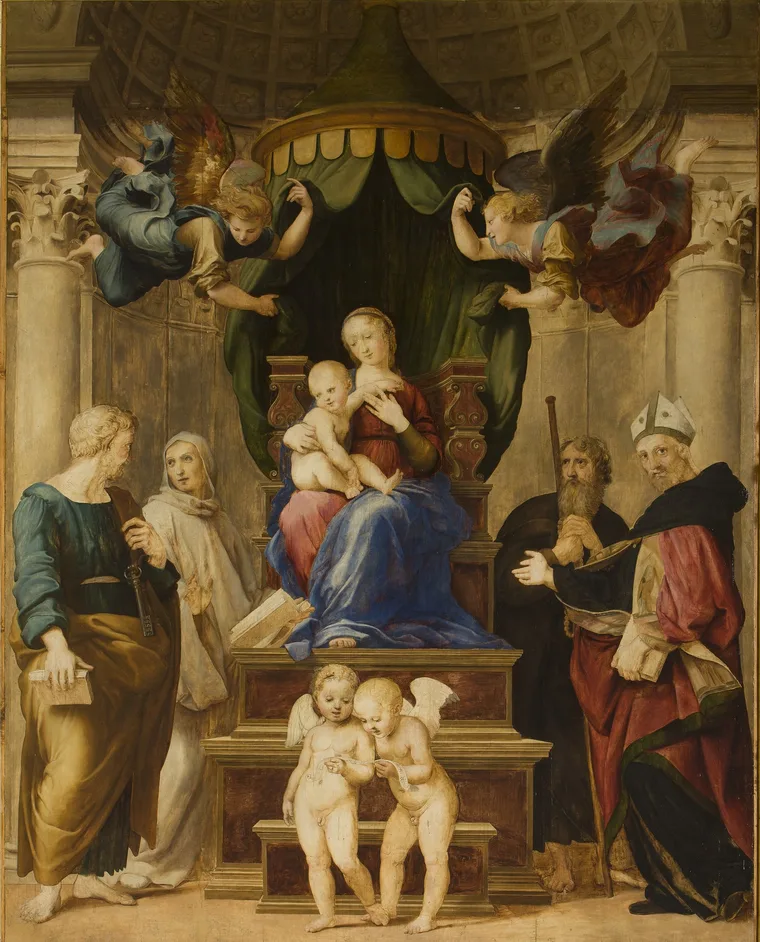
Around 1506–1507 the Florentine Dei family commissioned Raphael to paint an altarpiece for their chapel in the church of Santo Spirito, and in the autumn of 1508, when the painter went to Rome to Pope Julius II, the panel was left unfinished. In 1987–1991 restorers at the Opificio delle Pietre Dure confirmed that the lower parts lack the final glazes, and the difference is visible to the naked eye. The two winged infants at the foot of the throne, singing from an unrolled scroll, are paler than the Madonna and barely modelled in light and shade, and in places Saint Peter's robes and the steps of the throne are painted as thinly as an underpainting.
After Raphael's death the heirs to his workshop, Giulio Romano and Gianfrancesco Penni, let the panel go to Baldassarre Turini of Pescia, papal datary, the painter's friend and his executor. In 1534–1542 Turini built a chapel in Pescia cathedral, and the altarpiece later stood in it. When Grand Prince Ferdinando took it in 1697, the panel, as the museum tells it, was carried out at night, because the people of Pescia were against its removal.
For the prince's collection the panel was extended at the top, and this part was painted by the court painter Niccolò Cassana. Everything above the green canopy with its gilded festoons is his: the pointed top of the canopy itself and the half-dome with gilded coffers behind it. This strip is greyer and flatter than the figures. On the right Saint Augustine in a white mitre looks straight at the viewer and points to the Madonna with an open palm, and behind him stands a bearded old man with a pilgrim's staff, in whom the museum sees San Ranieri, patron saint of Pisa, and the older literature Saint James. Left without their Raphael, the Dei family commissioned a picture for the same altar from Rosso Fiorentino in 1522, and the Grand Prince took that one from Santo Spirito as well, leaving a copy in its place.
The French, Exile and Return
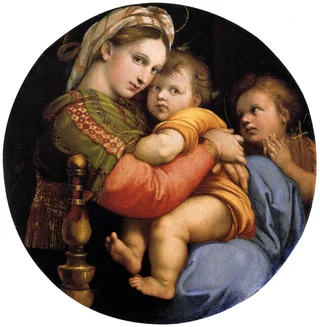
14. Madonna della Seggiola — Raphael
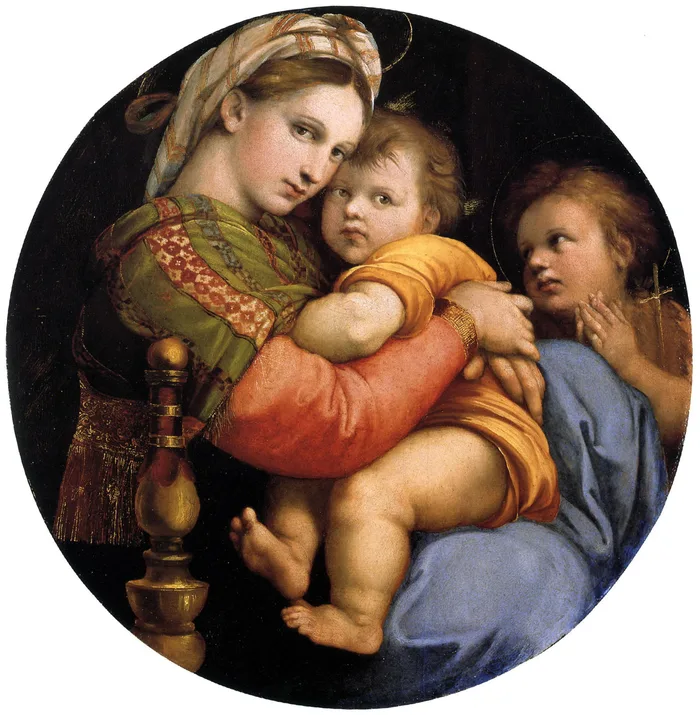
Around 1820 the German writer Ernst von Houwald wrote a fairy tale for children about how this picture came to be. A vine-grower's daughter saved a hermit, Father Bernardo, from wolves by hiding him in an oak tree. The hermit blessed her and the tree and foretold that both of them would be remembered. Years went by, the oak was cut down to make barrels, and the girl became the mother of two children. One day Raphael was passing, saw her with the little ones and sketched all three in charcoal on the head of a wine barrel made from that very oak, which is why the picture is round. The tale was retold afterwards, and in the 19th century painters made pictures of it.
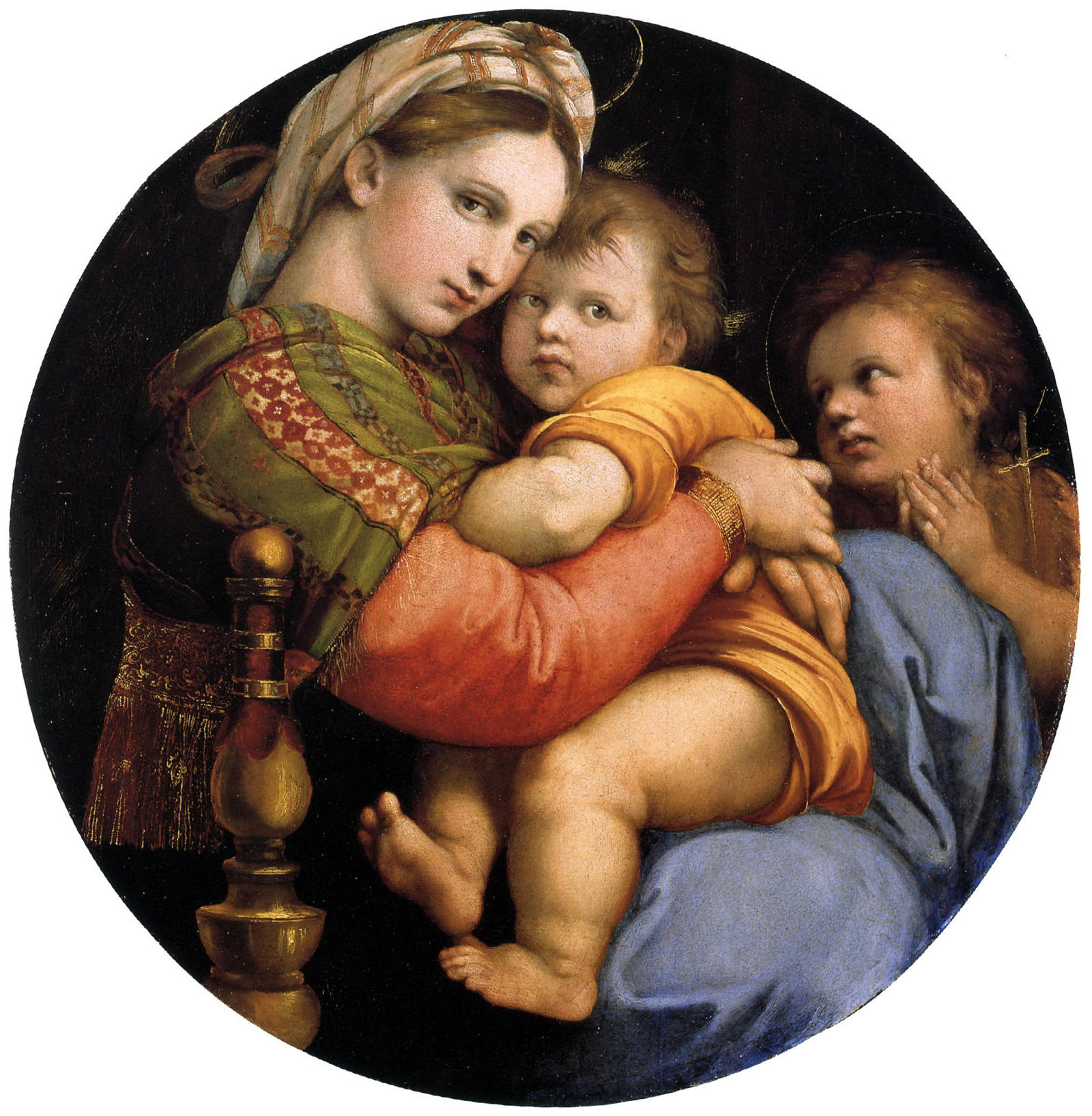
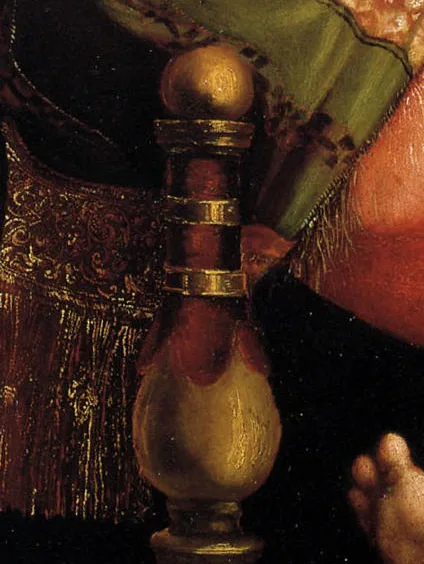
Raphael painted this tondo on panel in Rome, around 1512, for private prayer. The Madonna presses her cheek against the Child's head and looks straight at the viewer, the Child, frowning slightly, also looks out, and only the little John the Baptist at the right edge, his hands joined, raises his eyes to them. The chair that gives the picture its name shows only as a single gilded turned post with a ball on top, at the lower left. The museum calls it a “chamber chair”, of the kind used by high dignitaries of the papal court.
The picture reached Florence by the end of the 16th century, and in 1589 it is listed in the Tribuna of the Uffizi beside two other Raphaels, in a square frame with inlays of brocatello marble at the corners. That frame can be seen in a copy painted on copper in 1648 by the painter Giovanna Garzoni. Grand Prince Ferdinando took the tondo from the Tribuna to his bedroom in Palazzo Pitti and set it in a new rectangular gilt frame with masks at the corners. In 1799 the French took the picture to Paris, and from 1816 it is recorded at Palazzo Pitti again. Some scholars take the ball on the chair post for the Medici heraldic ball and so think of a commission from the Medici pope Leo X, while others see in it the acorn from the arms of the Della Rovere, the family of Pope Julius II.
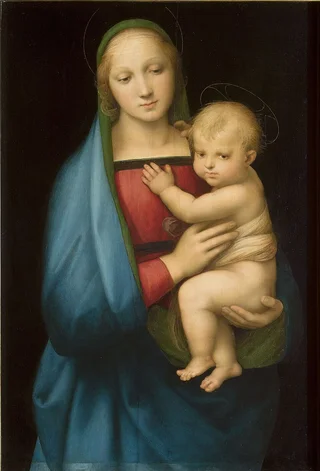
15. Madonna del Granduca — Raphael
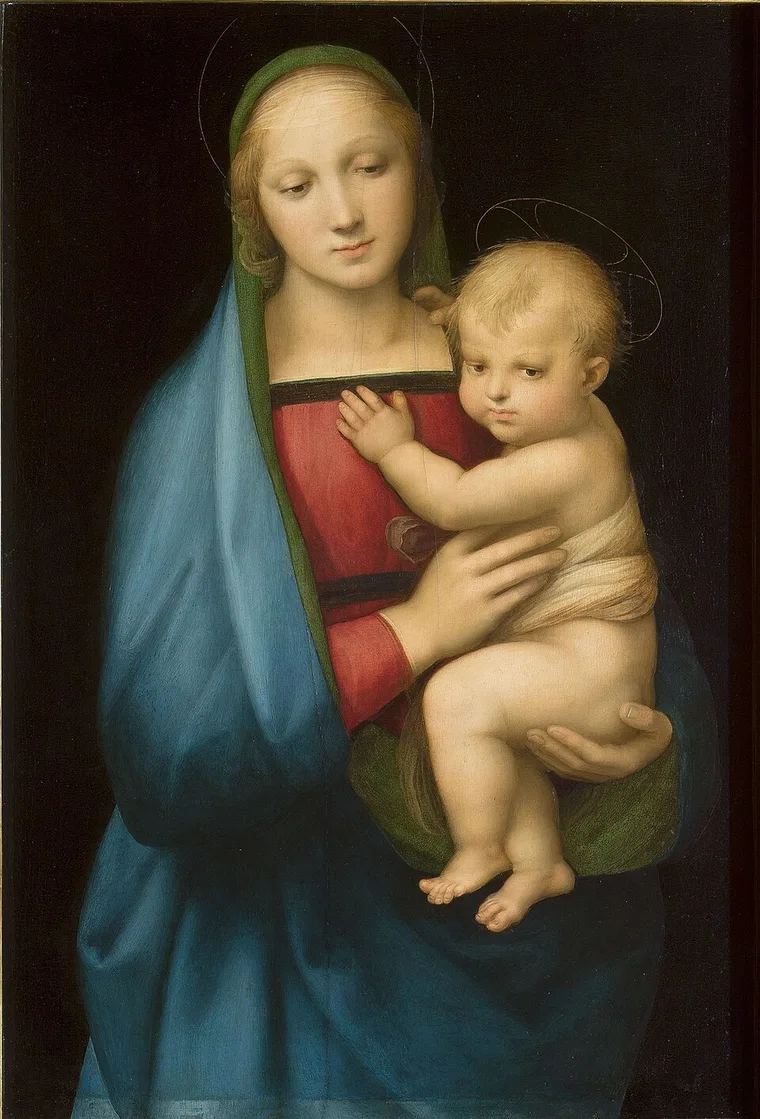
The Madonna is painted down to the knees, facing us almost squarely, against a flat black ground. Her eyes are lowered, and she looks past her son. The Child presses one hand against her bodice, hooks the fingers of the other into the edge of her blue mantle at the shoulder, and looks at the viewer gravely, with a little frown. Their haloes are drawn in thin gold lines and can hardly be seen against the black. Raphael painted this panel in Florence around 1506–1507, and the Uffizi holds a drawing in which he tried fitting the same group into a circle and into an oval before settling on a rectangle.
When the panel was restored in 1983–1984, X-rays taken by the Opificio delle Pietre Dure showed beneath the black ground an interior with a column carrying arches, and a glimpse of landscape. The Opificio's restorers concluded that the black ground had been painted over it later. The Raphael scholar Meyer zur Capellen allows that the painter may have darkened the background himself to give the figures more weight. The restorers chose not to remove the black ground.
The documents on the picture begin in 1799. In the spring of that year the French occupied Tuscany, and Grand Duke Ferdinando III left for Vienna. On 23 November the director of the Uffizi, Tommaso Puccini, informed him that a Florentine dealer, Gaetano Gaglier, was offering a Madonna by Raphael, and in January 1800 Ferdinando authorised the purchase in a letter from Vienna. Gaglier was paid 300 zecchini, and in October the picture was sent to the grand duke. It stayed with him throughout his exile, including in Würzburg, which Ferdinando was given in exchange for Tuscany, and came back to Florence with him in 1814. The name Madonna del Granduca, “the grand duke's Madonna”, comes from this attachment. The Lorraine kept it in their private apartments, and it was moved into the main gallery to join the other Raphaels only in 1882.
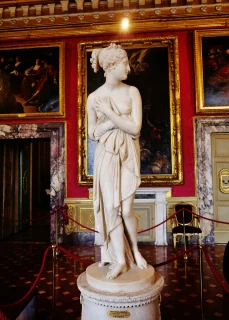
16. Venus Italica — Antonio Canova
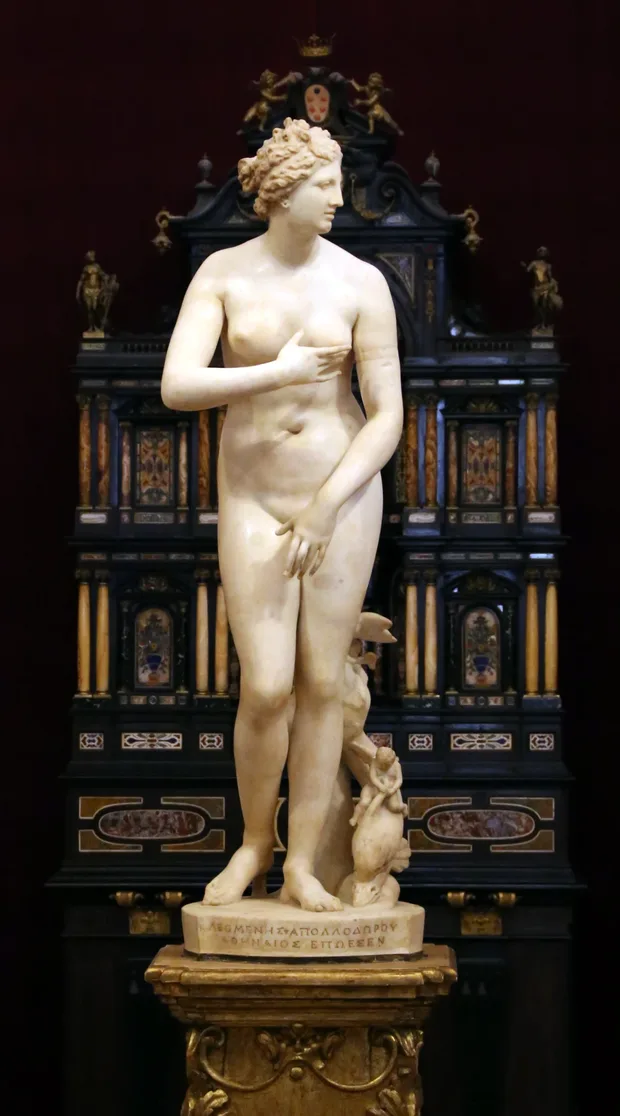
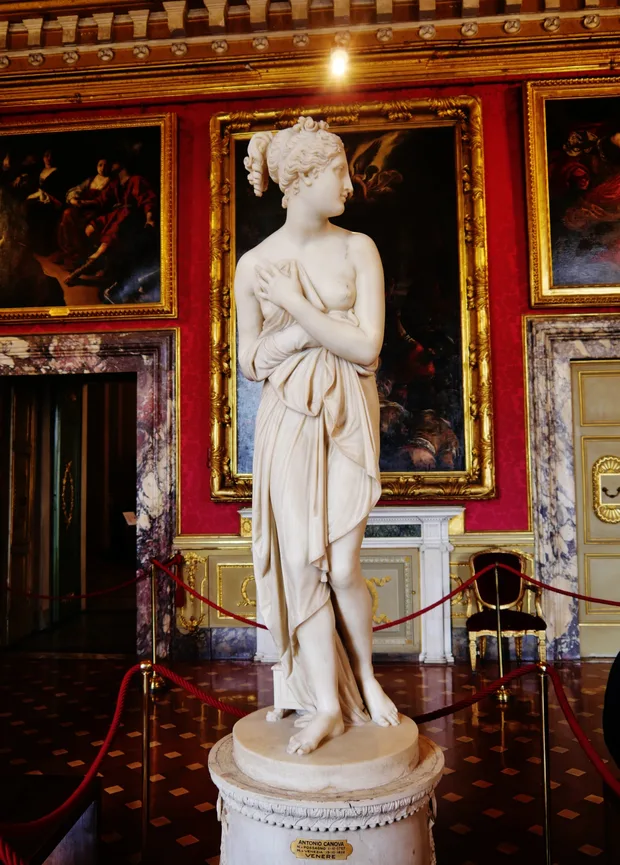
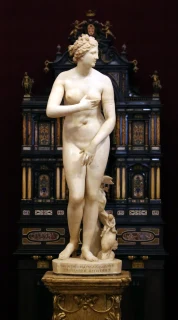
In 1800 the ancient Medici Venus, the principal statue in the Tribuna of the Uffizi, was taken to Palermo to keep it out of French hands. The French requisitioned it there all the same in 1802, and by August 1803 it stood in the Louvre. The King of Etruria, Louis I, to whom Napoleon had given Tuscany, commissioned Antonio Canova to make a copy for the empty place (the museum gives 1802, the Treccani biographical dictionary 1803). Canova did not want to make a copy and proposed a standing Venus of his own design. Louis died in 1803, his widow, the queen regent Maria Luisa, confirmed the commission in 1805, and in 1809 Napoleon's sister Elisa Baciocchi, who had become Grand Duchess of Tuscany, persuaded her brother to pay the sculptor the agreed 25,000 francs.
Canova's Venus stands stooping. Her whole body leans forward, the shoulders drawn in, the knees slightly bent, the weight on the forward leg, and the heel of the other foot is lifting off the base. With both hands she holds a cloth against her breast, and it falls in a long length over her belly and one leg to the ankle, and her head is turned sharply over her shoulder, as if someone had just come in. Her back and side are left entirely bare, so the figure is seen most fully from the side.
On 29 April 1812 she was placed in the Tribuna on a new rotating base, so that the statue could be turned and looked at from every side. That same year the poet Ugo Foscolo wrote that the Medici Venus was a beautiful goddess, and that this one, at which he kept looking and looking, was a beautiful woman. After Napoleon's fall the Medici Venus returned to the Tribuna, and after 1815 Canova's statue was moved to Palazzo Pitti.
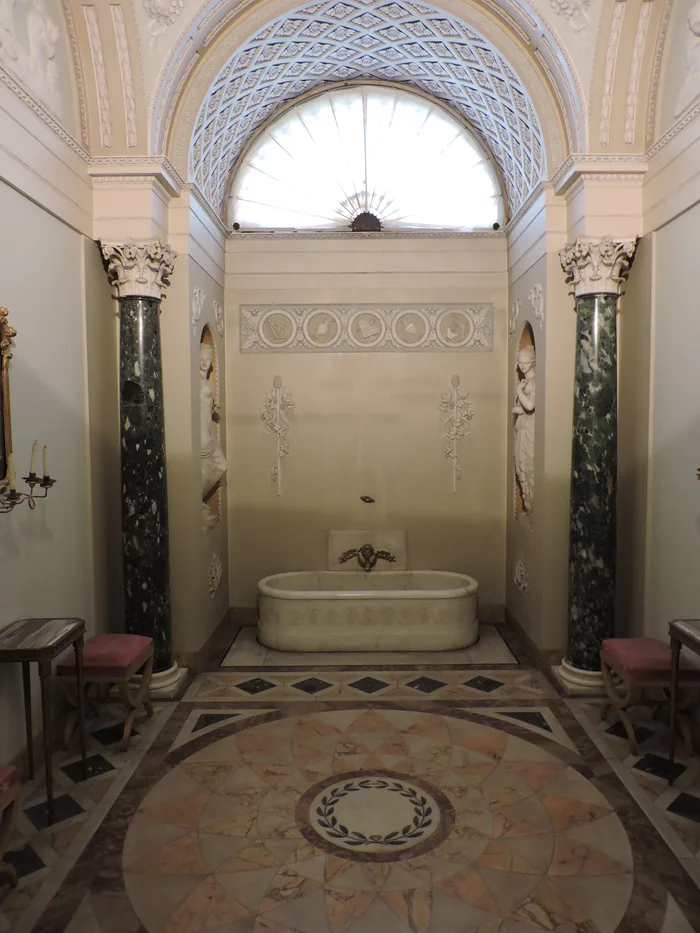
17. Napoleon's Bathroom — Giuseppe Cacialli
Elisa Bonaparte Baciocchi, who had got the money for Canova out of her brother, ruled Tuscany as grand duchess and lived in Palazzo Pitti. In 1813 she commissioned the court architect Giuseppe Cacialli to begin fitting out rooms in the palace for the emperor and empress, Napoleon and Marie Louise, to stay in. The bathroom was part of these rooms. Napoleon never came to Florence as emperor, and in the spring of 1814 his rule fell.
In Elisa's time only the bronze tap was cast, a gilded woman's mask between two winged genii with garlands, from beneath which the water runs. The stucco, the reliefs, the floor and the statues were made under the returned Grand Duke Ferdinando III, and Cacialli, who kept his post, finished for him what he had begun for Napoleon's sister. The floor was laid in inlaid marble, with a rosette of pink, cream and mauve-brown segments and a laurel wreath in a white circle at the centre.
The room is narrow and tall. The white marble bath with rounded ends stands at the far end, in a niche under an arched window, between two columns of dark green marble. In niches at the sides stand marble sea nymphs, Galatea, Doris, Thetis and Amphitrite, carved later, in 1819–1821.
The Lorraine and the Public Gallery
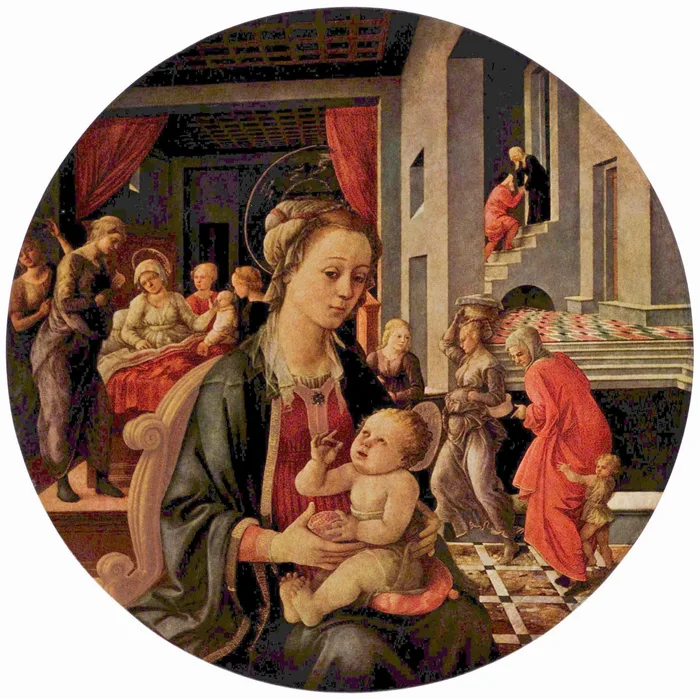
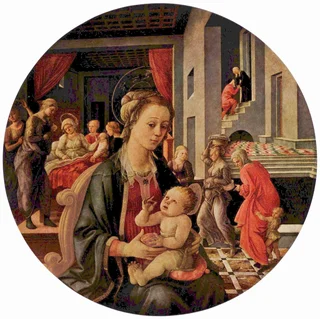
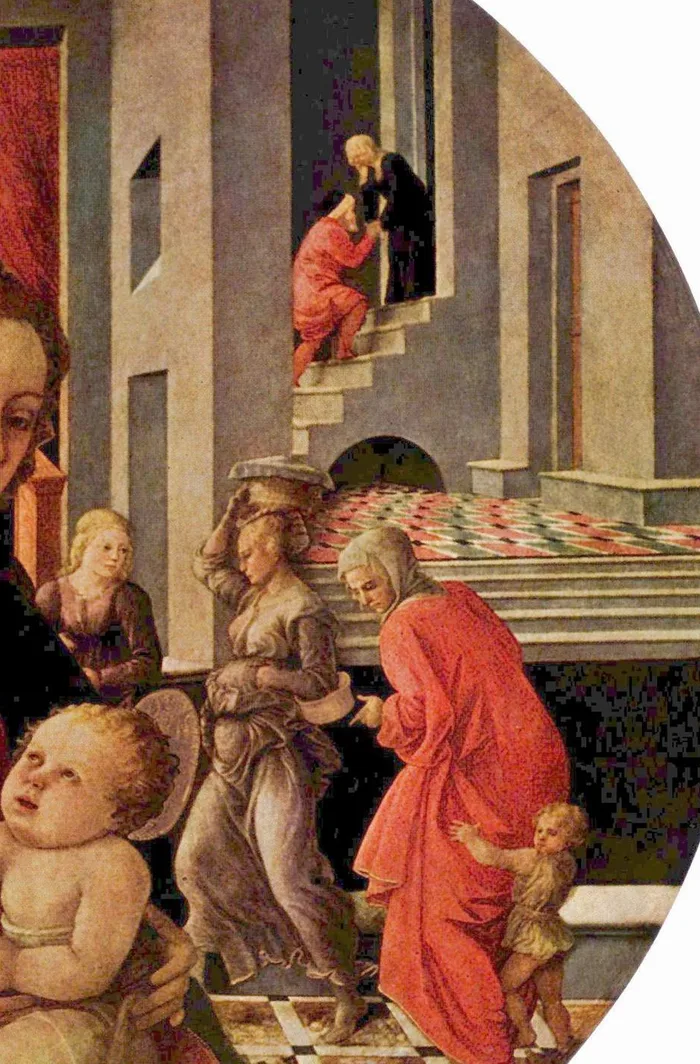
18. Tondo Bartolini — Filippo Lippi
Fra Filippo Lippi promised the Florentine Leonardo Bartolini that he would finish a round picture by 8 December 1452. In April 1453 it was still not ready, and on 16 April Bartolini recovered 22 florins from the painter as a penalty, under a clause that had been drawn up through the wardens of Prato cathedral. Lippi had just then taken on the painting of the choir of that same cathedral.
The Madonna sits large in the foreground on a chair set at an angle, holding a split pomegranate with the Child, and the boy has raised his hand and is pinching a seed between his fingers. Behind them, deeper in, are scenes from the life of her mother, Saint Anne. On the left, in a bedchamber with red curtains, Anne sits half-up in bed after the birth, and a woman beside her holds the newborn Mary in swaddling bands. At the upper right, on an outdoor staircase by a door, Joachim climbs up to meet Anne, and she leans down to embrace him. Nearer the Madonna a young woman in grey walks with a basket on her head, her clothes fluttering as she goes. Until then the round format had been usual for the trays given to women after childbirth, and Lippi's tondo is often called one of the first round pictures of the Madonna.
The tondo is first recorded with certainty in the Palazzo Pitti inventory of 1761, by some accounts in the attics, and by 1834 it was already hanging in the gallery. The printed catalogue of that year lists it as “Fra Filippo Lippi. The Madonna with the Child Jesus on her lap, in the distance various figures around a woman in childbed.” A coat of arms with a griffin is drawn on the back of the panel. The art historian Jeffrey Ruda takes it for the arms of the Martelli family and dates the tondo a decade later, while the Uffizi calls the emblem unidentified and still regards Bartolini as the patron.
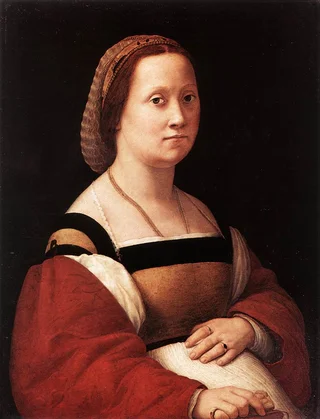
19. La donna gravida — Raphael
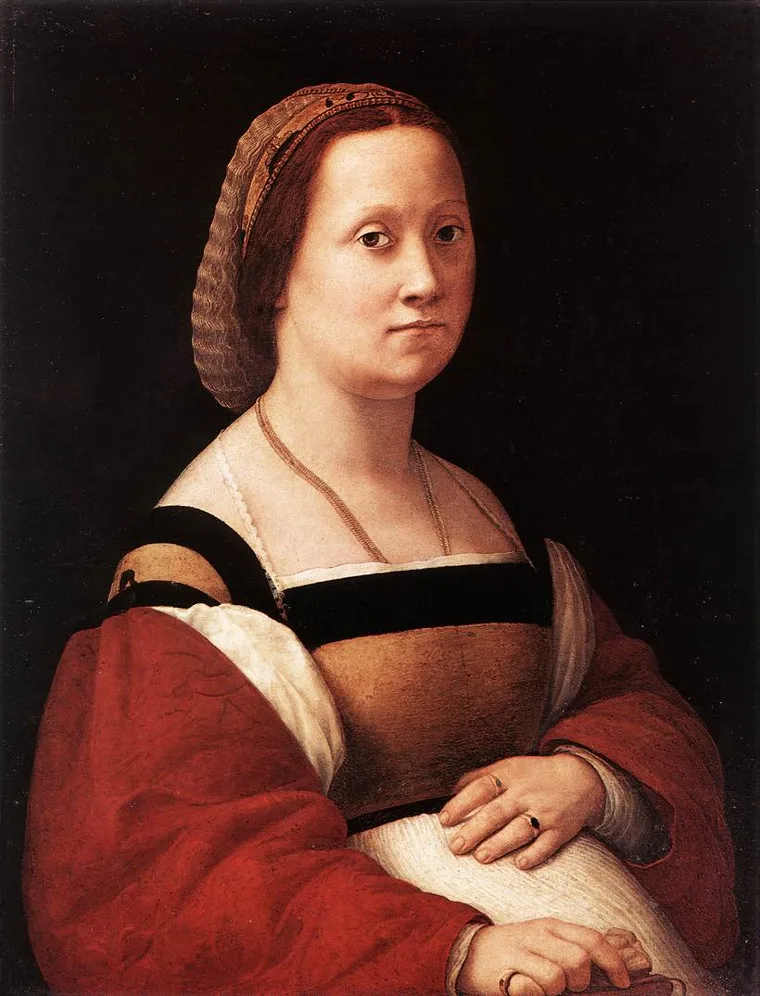
In 1813 this portrait of a young woman was moved to the grand-ducal wardrobe, and later it was brought back to Palazzo Pitti and hung in the gallery in one of the places left empty after the French had taken pictures to Paris. The 1815 inventory gave its painter as Innocenzo da Imola, and the 1829 inventory as an unknown Florentine. In 1839, on the authority of Passavant, the same German connoisseur who had given La velata back to Raphael, the portrait was assigned to Raphael. No purchase, no gift and no earlier owner's name are recorded for this panel.
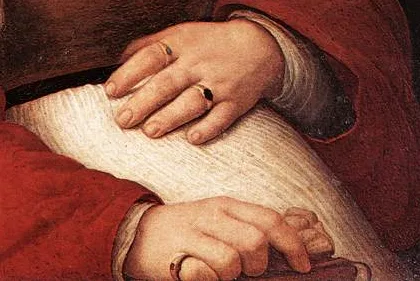
The woman sits turned three-quarters and looks straight at us. She wears a golden-ochre bodice with broad bands of black velvet and wide red sleeves of patterned silk, tied at the shoulders with black bows. She has laid her left hand, with two rings on it, flat on the white skirt gathered over her belly, and in her right hand, lower down, she holds a crumpled yellowish glove. The Uffizi traces the pose and the direct gaze back to Leonardo's Mona Lisa, which Raphael had seen in Florence. X-rays showed that stray locks of hair were first painted against the black background, and that Raphael then took them out.
There are two proposals about the sitter, and the museum has accepted neither. The scholar Filippini suggested Emilia Pia da Montefeltro, and the historian Virzi made out two buffaloes on her gold hairnet and suggested a lady of the Bufalini family of Città di Castello. The title La donna gravida, “the pregnant woman”, was invented in the 19th century by reading the hand on the belly that way, and the museum itself doubts it, because the swelling may simply be the folds of a seated woman's skirt, and she may be using her hand to show her rings.
The Savoy Court
20. The Throne Room of the Royal Apartments
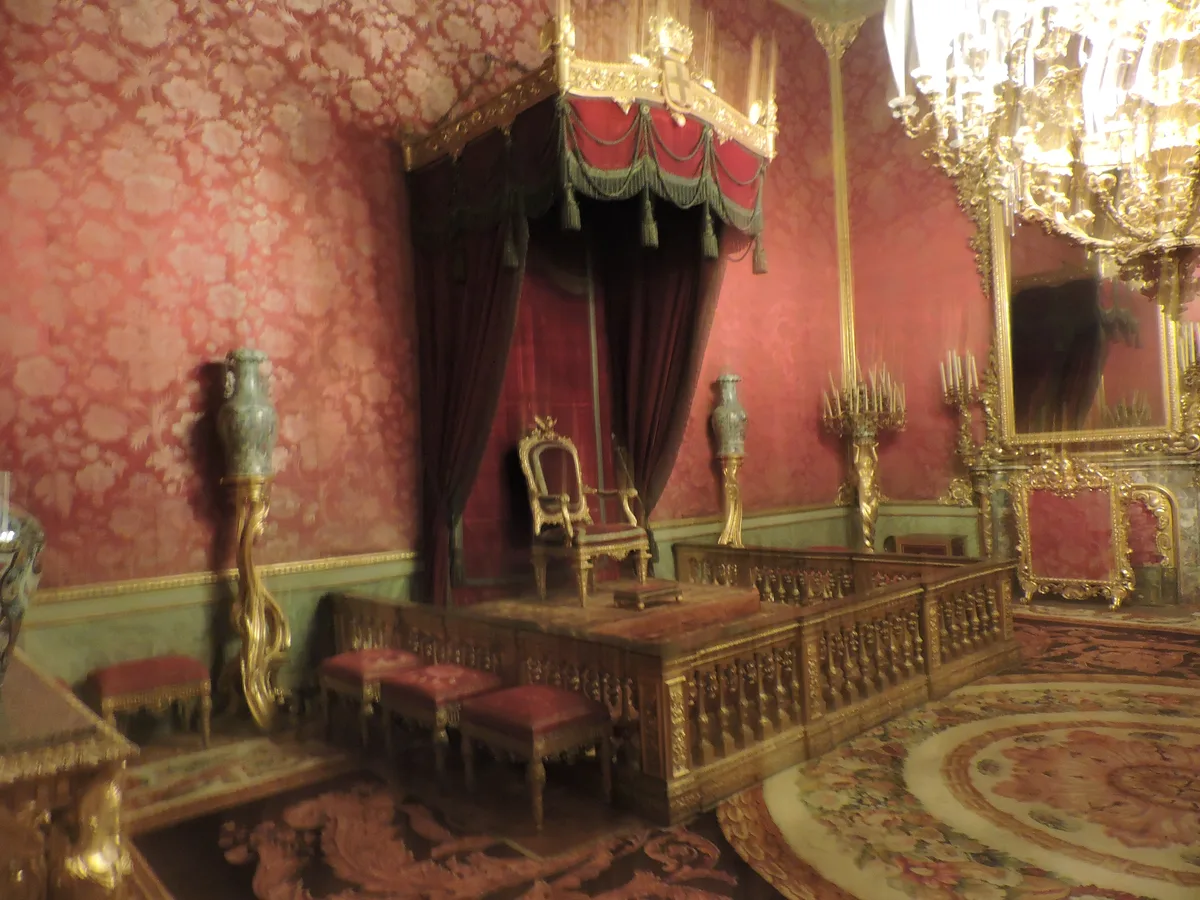
In 1865 the capital of Italy moved from Turin to Florence, and King Victor Emmanuel II took up residence in Palazzo Pitti. He preferred to live in separate rooms, and the throne room was set up in a state room that under the Medici had been Grand Prince Ferdinando's audience hall and under the Lorraine the chamberlains' hall. In 1856, for the wedding of Archduke Ferdinando IV, heir to the Tuscan throne, its walls had been hung with crimson silk patterned with large pale pink flowers, and a huge gilded chandelier with several tiers of candles had been put up. Both the silk and the chandelier were left from the Lorraine.
The throne stands against the long wall under a gilded canopy. The canopy is topped with a crown above a red shield with a white cross, the arms of the House of Savoy, and beneath it stands a small gilded armchair upholstered in red velvet. According to the museum, this is a chair of the grand dukes to which the Savoy arms were added. The gilded balustrade that separates the throne from the rest of the room was put in after 1871, when the capital moved to Rome. The room is shown on accompanied tours of the Royal Apartments.
Even under the Savoy dynasty the palace remained state property, placed at the disposal of the Crown. By a royal decree-law of 3 October 1919 Victor Emmanuel III returned Palazzo Pitti, the square in front of it and the Boboli Gardens to the State, and the museum calls this a donation.
The crimson silk and the huge chandelier in the throne room were left by the Lorraine, the chair by the grand dukes, and above it the House of Savoy set its own arms. Napoleon's bathroom was finished after his fall, and the dense hang of the Palatine Gallery was largely the work of the Lorraine.
What Else to See
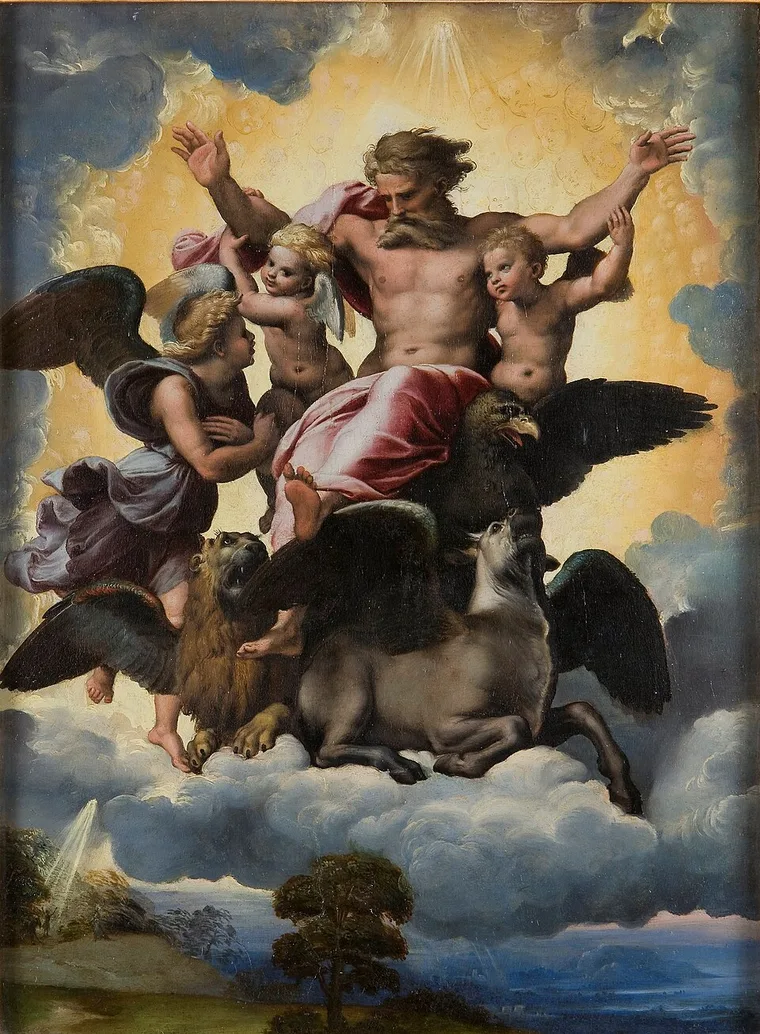
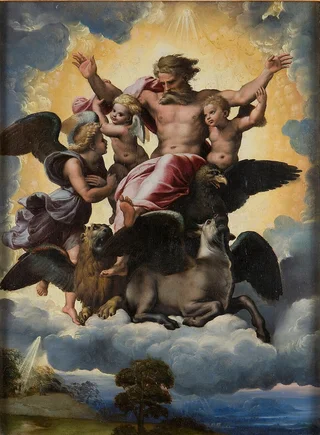
Beyond these twenty stories the palace holds many more first-rate pictures. Among them are Raphael's Ezekiel's Vision and his portrait of Tommaso Inghirami, Rubens's The Four Philosophers, a portrait of a woman by Botticelli, Artemisia Gentileschi's Conversion of the Magdalene and the court portraits of Justus Sustermans. The same palace houses the Gallery of Modern Art, the Museum of Fashion and Costume and the Treasury of the Grand Dukes. Palazzo Pitti has a fashion history of its own, because from 22 July 1952 until 1982 Italian designers showed their collections in its White Hall, the Sala Bianca, in shows that the Florentine businessman Giovanni Battista Giorgini had begun at his own villa a year earlier. In July 1962 the young Valentino showed in the Sala Bianca the collection that made his name.