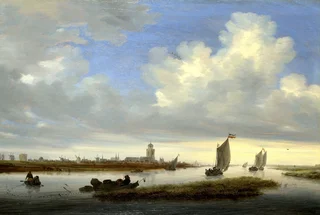
Salomon van Ruysdael
1670 · Dutch Republic · Dutch Golden Age, Landscape painting
The story
Around 1630 a group of painters in the Dutch city of Haarlem began doing something quiet and radical. They drained the colour out of landscape, trading the bright, crowded panoramas that had been fashionable for soft browns, greys and greens, and letting a huge sky and its weather carry the whole picture. Salomon van Ruysdael was one of the two men, alongside Jan van Goyen, who led this turn toward what we now call tonal landscape.
He spent almost his whole life in Haarlem, joined its painters' guild in 1623, and by 1648 was running it. Year after year he came back to one motif above all: a slow river or estuary, a ferry crossing, a stand of great trees leaning in from one bank, and cloud piled to the top of the panel. His earliest dated river scene is from 1626, and he was still refining that same view decades later, his colour growing bolder after about 1645.
The family name is worth untangling. Salomon taught his nephew Jacob, who became the most admired Dutch landscapist of the century and who spelled the shared name Ruisdael, while Salomon kept it as Ruysdael. To thicken the confusion, Salomon's own son was also a landscape painter called Jacob.
Works
6 works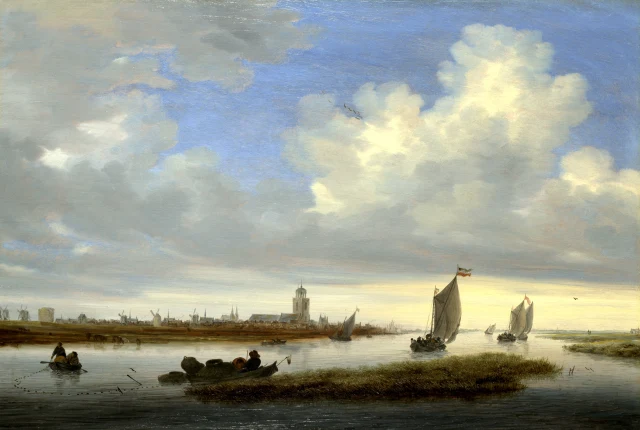 A View of Deventer seen from the North-WestSalomon van Ruysdael, 1657
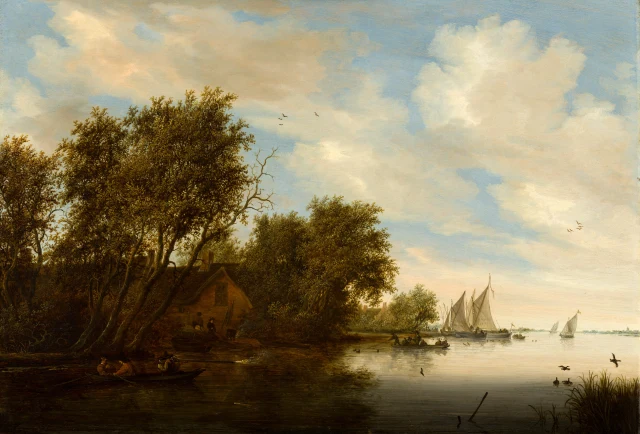 River View with a Man Hunting DucksSalomon van Ruysdael, 1648
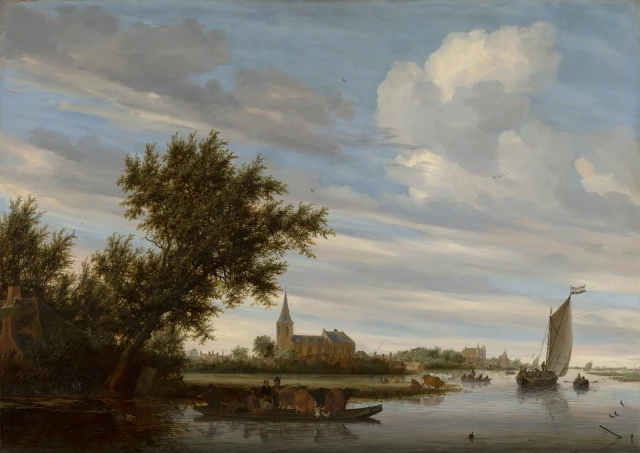 River View with Church and FerrySalomon van Ruysdael, 1649
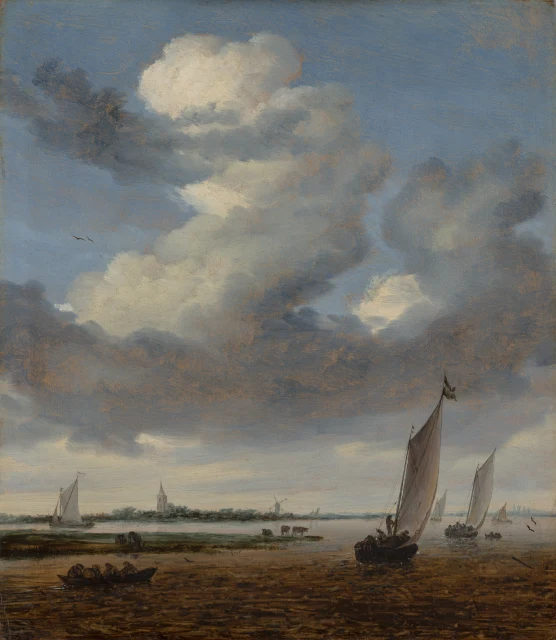 View of Beverwijk from the WijkermeerSalomon van Ruysdael, 1661
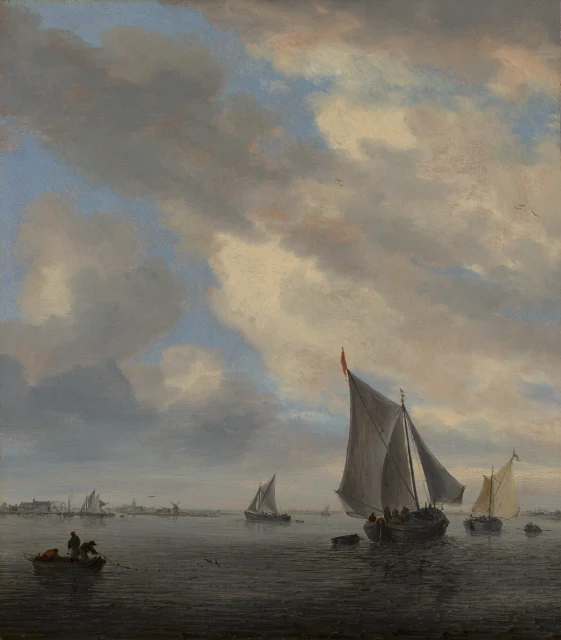 View of Sailing Boats on a LakeSalomon van Ruysdael, 1650
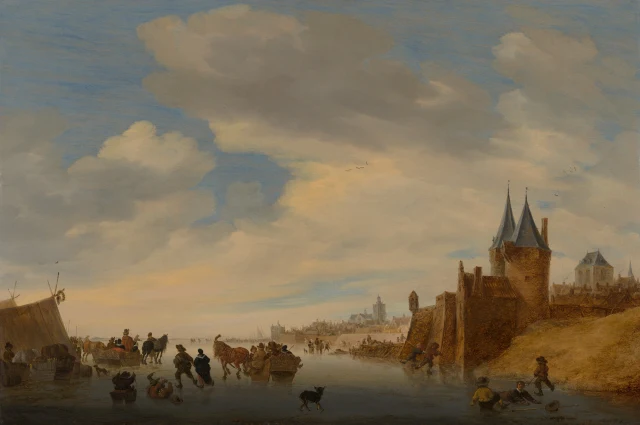 Winter Landscape at ArnhemSalomon van Ruysdael, 1653