Tityos Painter
Etruria
The story
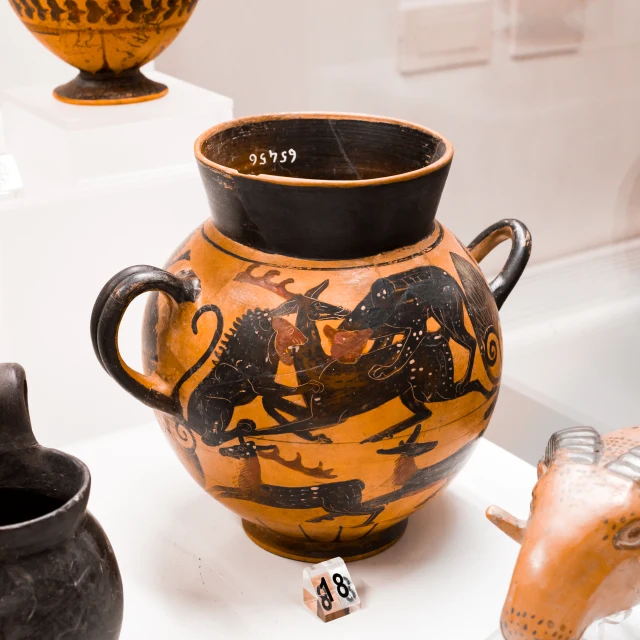
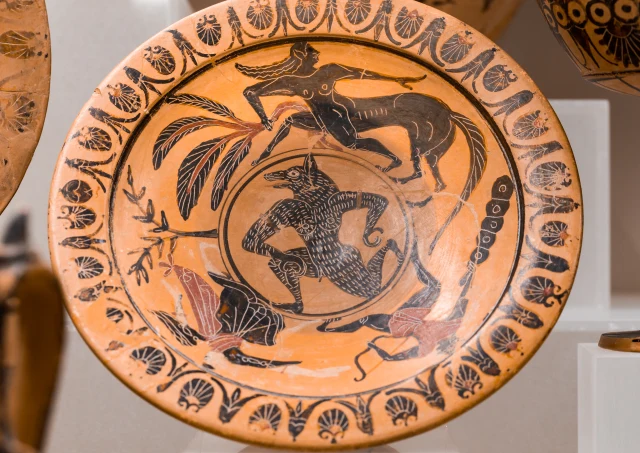
The vases of the Tityos Painter belong to a group with a misleading name. In the 1880s the German scholar Ferdinand Dümmler called them Pontic, after the Black Sea, because he took an archer on one of them for a Scythian from its shores. They were in fact made in Etruria in the second half of the 6th century BC, probably by craftsmen who had come from Ionia, the Greek cities of the eastern Aegean, and most have been found at Vulci.
Within that group the Tityos Painter is counted among the leading hands, second only to the Paris Painter, who strongly influenced him. His modern name comes from an amphora in the Cabinet des Médailles in Paris, where Apollo and Artemis kill the giant Tityos, who had attacked their mother Leto. Some 40 vases are attributed to him, many with nothing but animal friezes. When he painted people, he favoured Herakles, figures in motion and plenty of added colour.