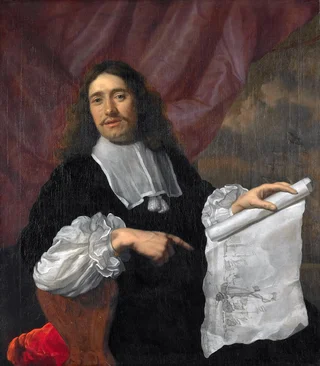
Willem van de Velde the Younger
1633–1707 · Dutch Republic · Dutch Golden Age, Baroque, Marine painting
The story
In the winter of 1672, the Dutch Republic was reeling. A French and English invasion had thrown the country into what the Dutch still call the rampjaar, the disaster year, and work for a painter of ships had dried up. So Willem van de Velde and his father, also a marine painter and also named Willem, packed up and sailed to England, the very country they had just been at war with.
King Charles II took them straight into royal service, each on a salary of 100 pounds a year, with a studio in the Queen's House at Greenwich beside the Thames. The father made precise pen drawings of naval battles, often from a small boat in the thick of the action, and the son worked them up into finished paintings in colour. The son became the finer painter of the two.
What he did better than almost anyone was weather and light on water, a grey calm with sails hanging slack, or a stiff breeze heeling a warship over. A century later the young Turner, England's great painter of storms and sea, kept copies of his work and said one of them had made him a painter. Van de Velde died at Westminster in 1707, still turning out sea pieces for the country that had once been the enemy across the water.
More articles
Works
6 works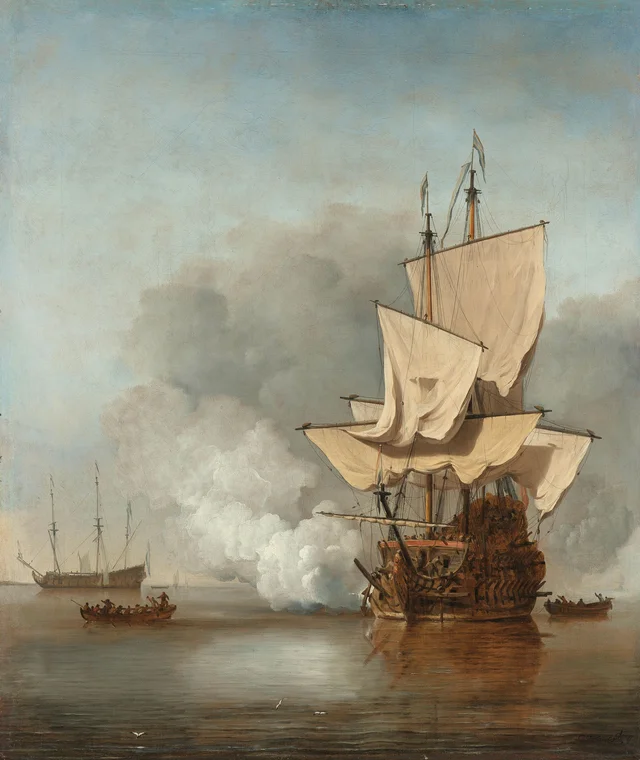 The Cannon ShotWillem van de Velde the Younger, 1680
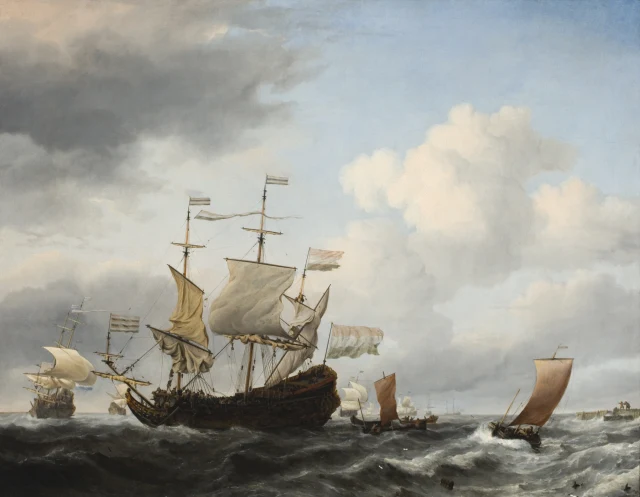 A Dutch Flagship Coming to Anchor Close to the Land in a Fresh BreezeWillem van de Velde the Younger, 1672
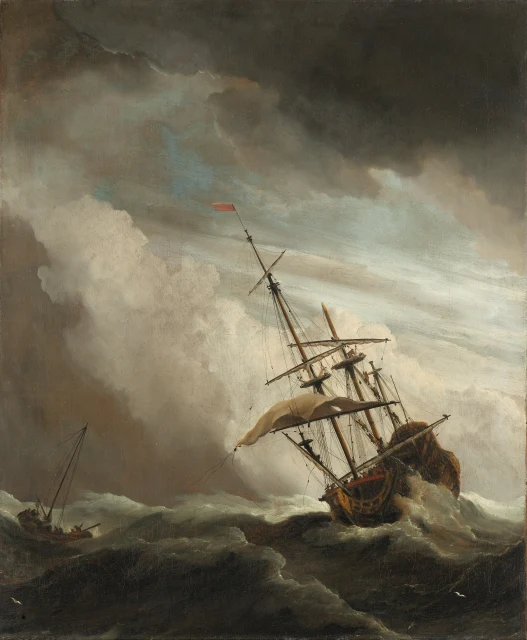 A Ship on the High Seas Caught by a Squall, Known as ‘The Gust’Willem van de Velde the Younger, 1680
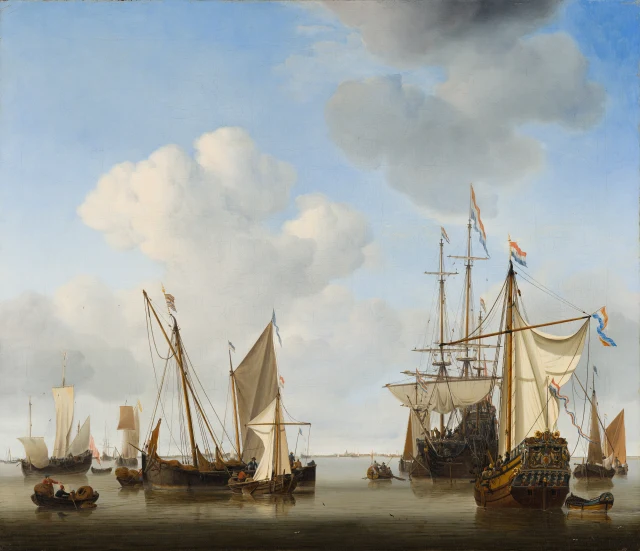 Ships in the RoadsWillem van de Velde the Younger, 1658
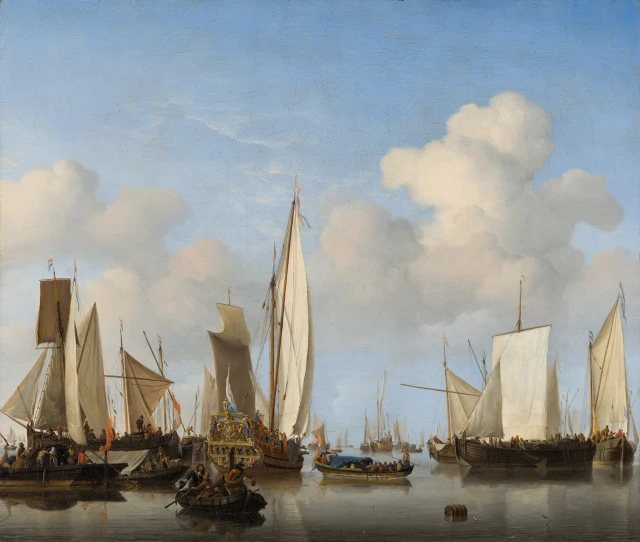 Ships in the RoadsWillem van de Velde the Younger, 1658
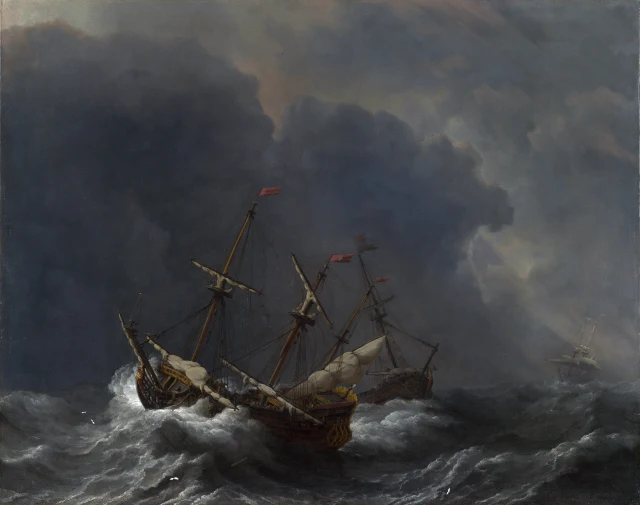 Three Ships in a GaleWillem van de Velde the Younger, 1673