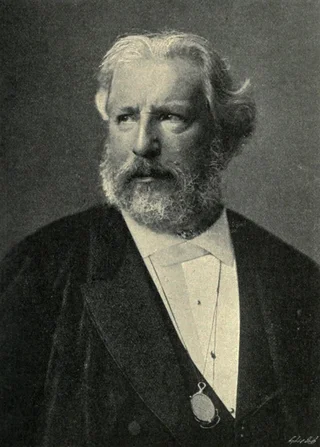
William-Adolphe Bouguereau
1825–1905 · France · Academic art
The story
By the 1870s Bouguereau was arguably the most successful painter in France, a fixture of the Salon whose smooth, classically finished nudes and mythological scenes sold for enormous sums and made him rich. He also sat on the juries that decided what could hang at the Salon, and used that position, along with most of the academic establishment, to keep the Impressionists out.
The Impressionists returned the contempt. Degas and his circle coined the word "Bouguereauté" for any painting they thought too polished and artificial, a slick, licked finish they considered dishonest about how paint actually behaves. Bouguereau never budged from his own conviction that painting should hide its brushwork entirely and present the illusion of flesh as convincingly as possible. He also taught for decades at the Académie Julian, one of the few Parisian ateliers that admitted women, and pushed for their inclusion in life-drawing classes at a time when most academies refused it outright.
Within twenty years of his death in 1905, his reputation had collapsed almost completely, and museums stored his paintings in basements for most of the twentieth century as too sentimental and too polished to take seriously. A 1984 exhibition at the Petit Palais in Paris, the first major retrospective of his work in generations, is usually credited with reviving interest in it, and his paintings now sell for millions at auction.
Works
85 works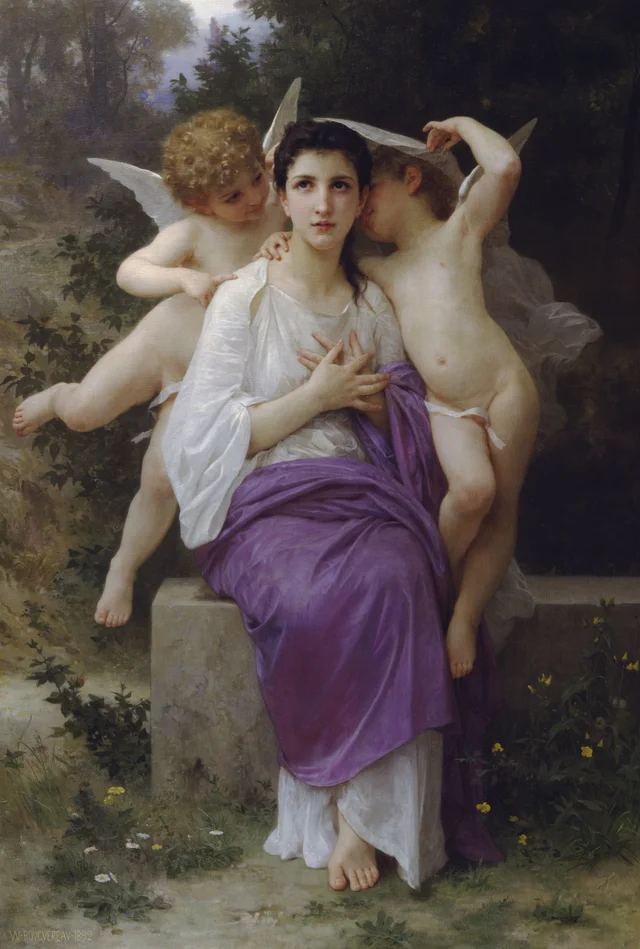 The Heart's AwakeningWilliam-Adolphe Bouguereau, 1892
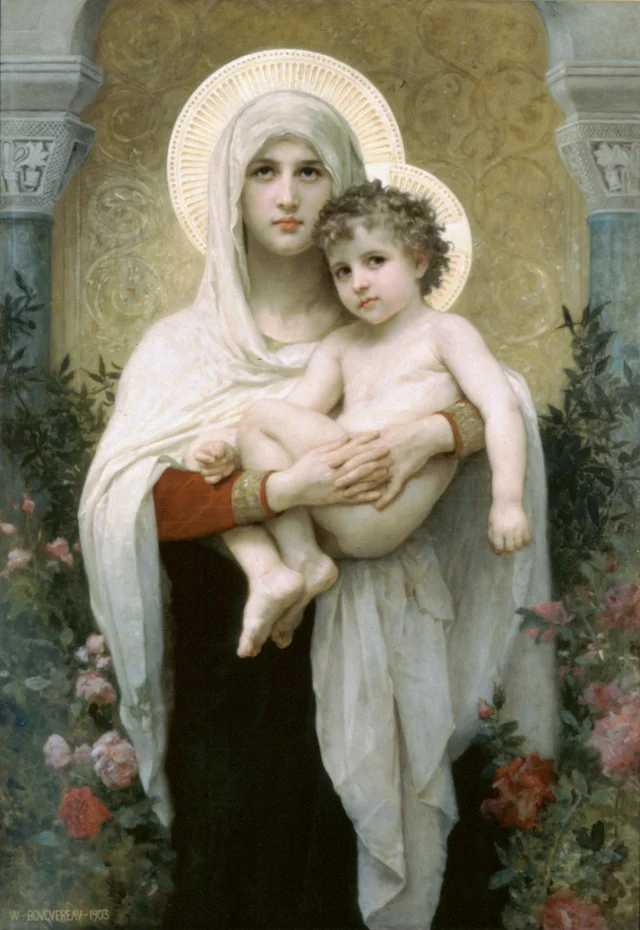 The Madonna of the RosesWilliam-Adolphe Bouguereau, 1903
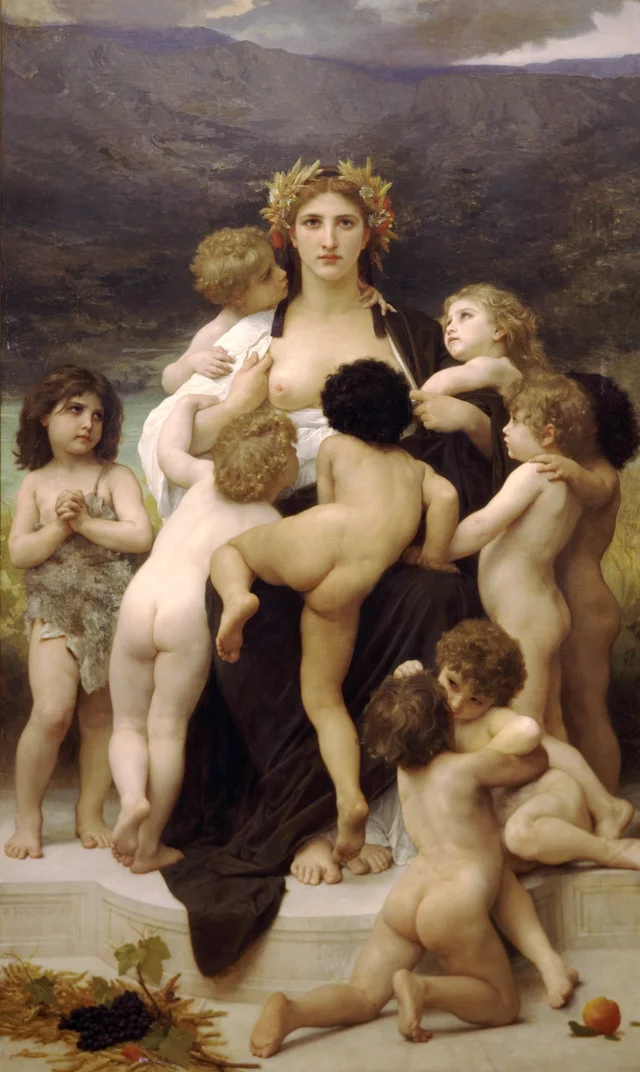 The MotherlandWilliam-Adolphe Bouguereau, 1883
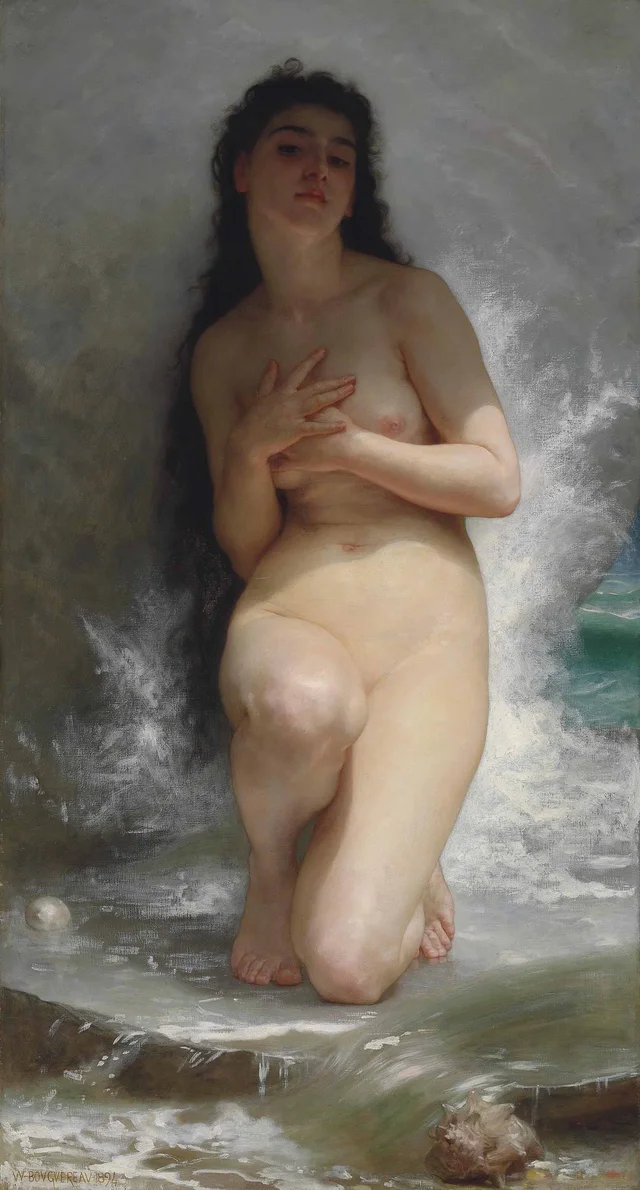 The PearlWilliam-Adolphe Bouguereau, 1894
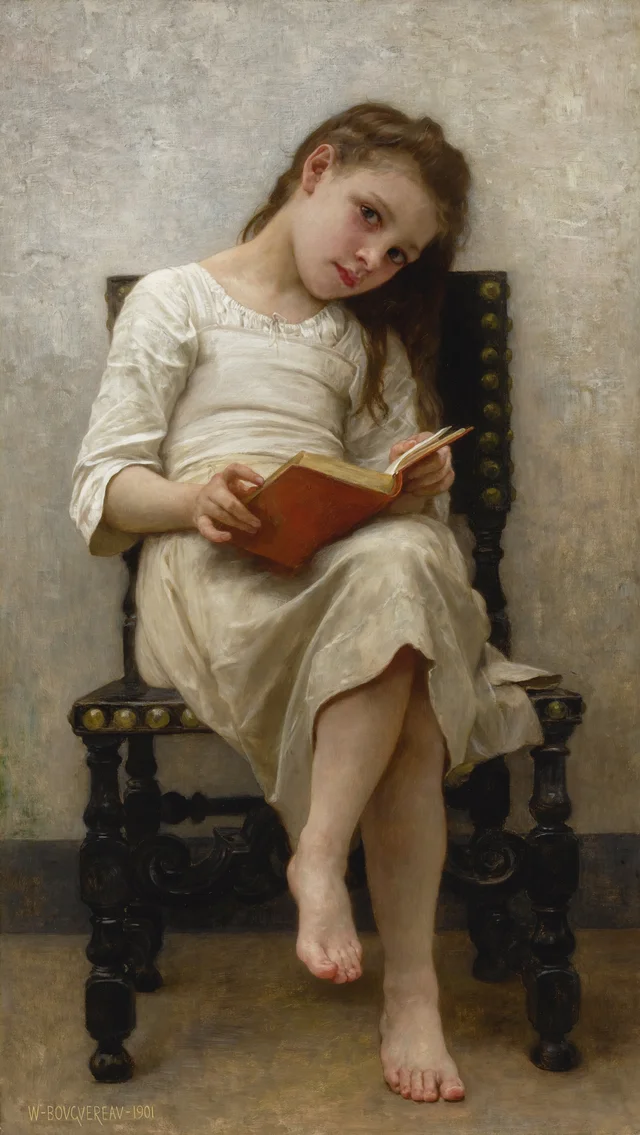 The Prize BookWilliam-Adolphe Bouguereau, 1901
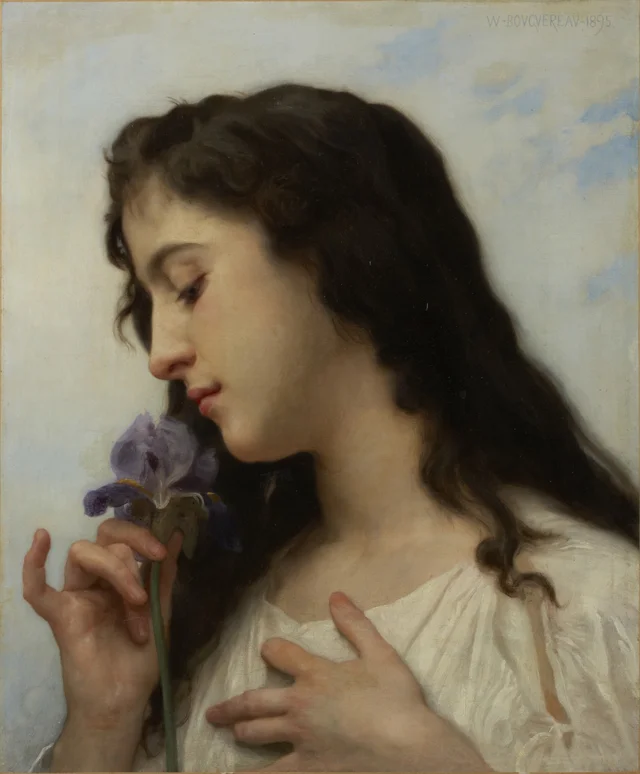 Woman with IrisWilliam-Adolphe Bouguereau, 1895
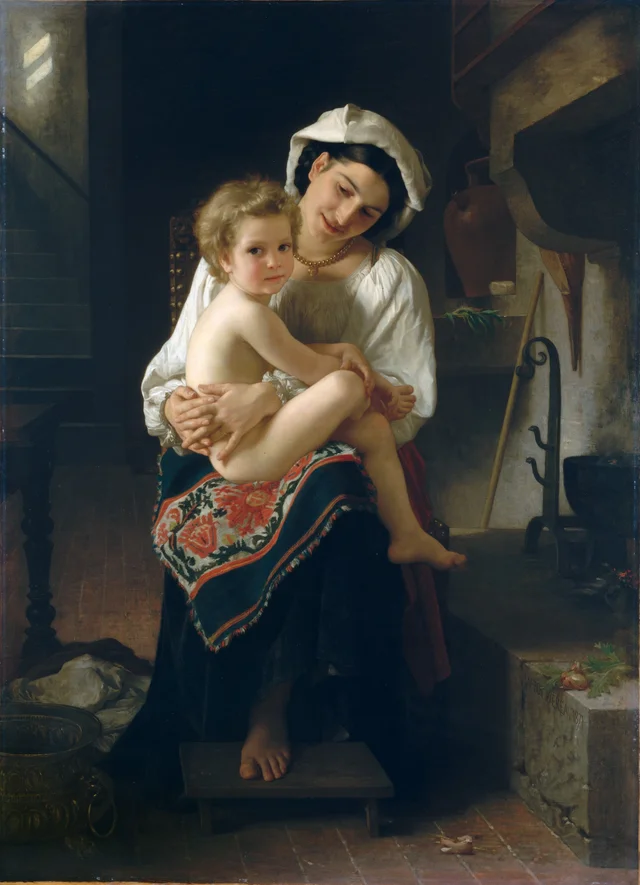 Young Mother Gazing at Her ChildWilliam-Adolphe Bouguereau, 1871
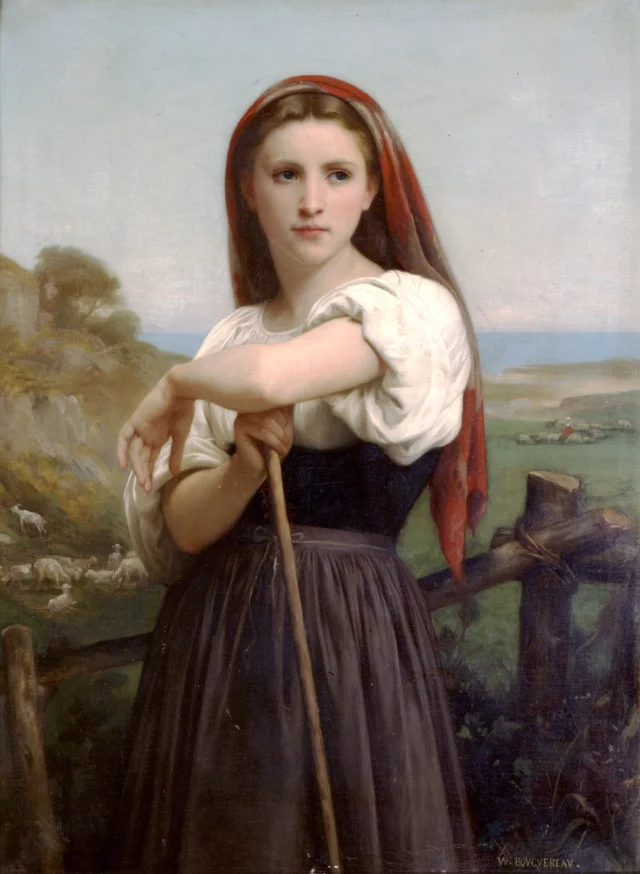 Young ShepherdessWilliam-Adolphe Bouguereau, 1868
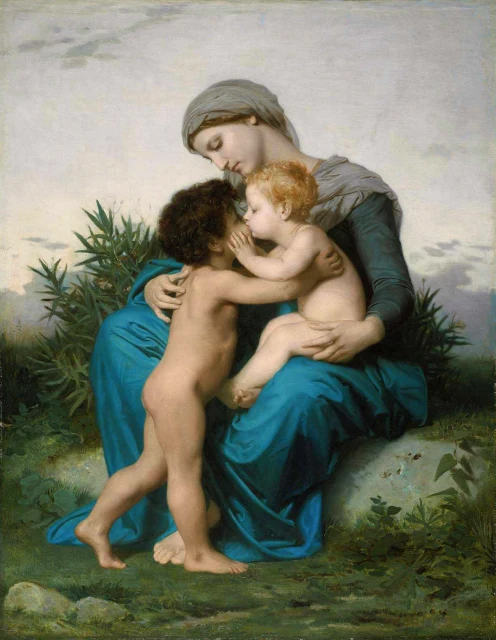 Fraternal LoveWilliam-Adolphe Bouguereau, 1851
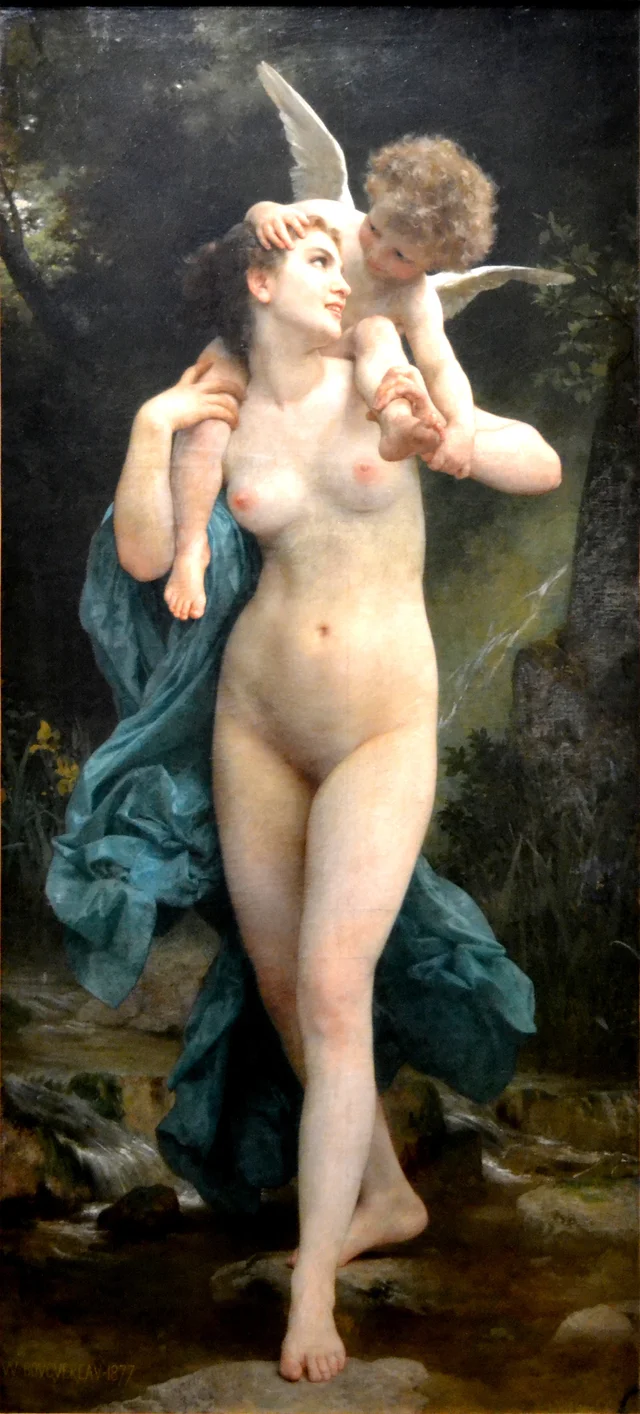 Youth and LoveWilliam-Adolphe Bouguereau, 1877