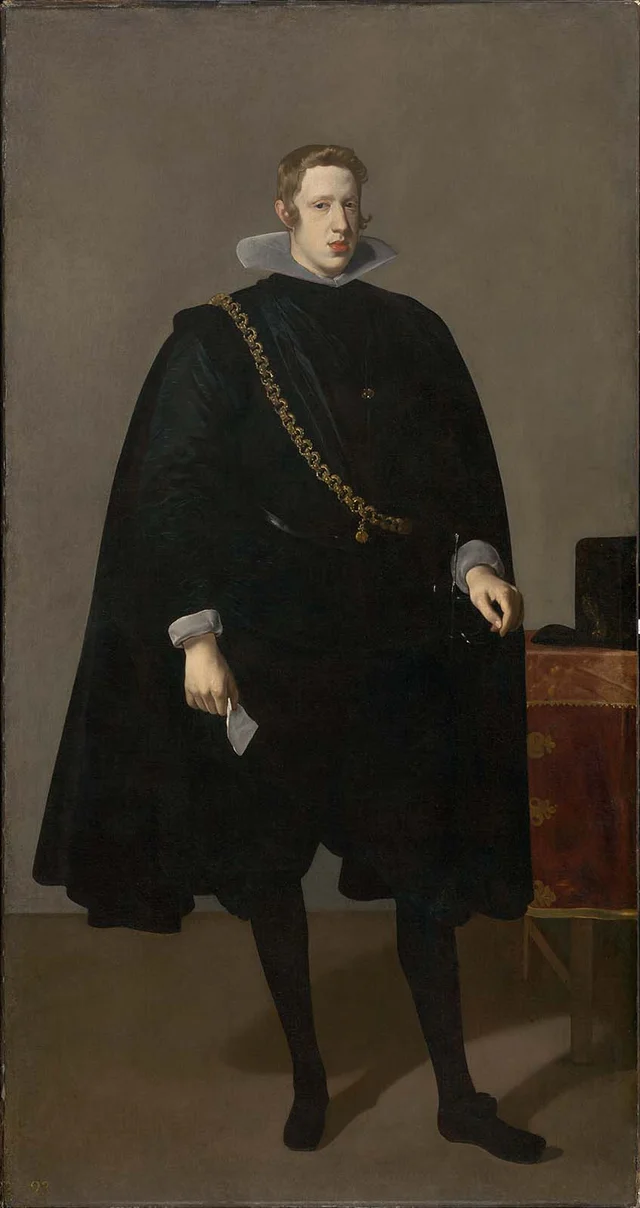
Workshop of Diego Velázquez
Spain · Baroque
The story
In the summer of 1623 a young painter from Seville finished his first portrait of Philip IV, the 18-year-old king of Spain. According to Francisco Pacheco, the young painter's teacher and father-in-law, the king's chief minister, the Count-Duke of Olivares, declared that nobody had truly painted the king before, and Philip ordered that from then on no other painter would portray him. The young man was Diego Velázquez.
That order created a problem of supply. Embassies, viceroys, convents and noble houses all wanted the royal likeness, and one man could not paint them all. So the studio Velázquez kept in the royal palace in Madrid turned out replicas, painted by assistants working from his own portraits.
Workshop of is the label for a picture made that way. It says the design is Velázquez's and the canvas came out of his studio, while the museum does not see his own brush in it. It claims more than follower of, which means another painter working in his manner, and less than Velázquez and workshop, where the master shares the canvas with his assistants. Among the replicas that survive are several of his full-length of the young king standing in black.